

10 Cash – Fukien Province
China
Context
Year: 1912
Country: China 
Issuer: Fukien Province
Period:
(1912—1949)
Currency:
(1896—1949)
Demonetized: Yes
Material
References
Y: #Click to copy to clipboard379a
Numista: #275941
Obverse
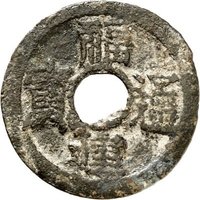
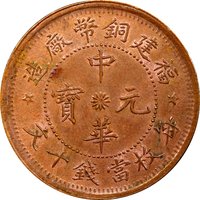
Description:
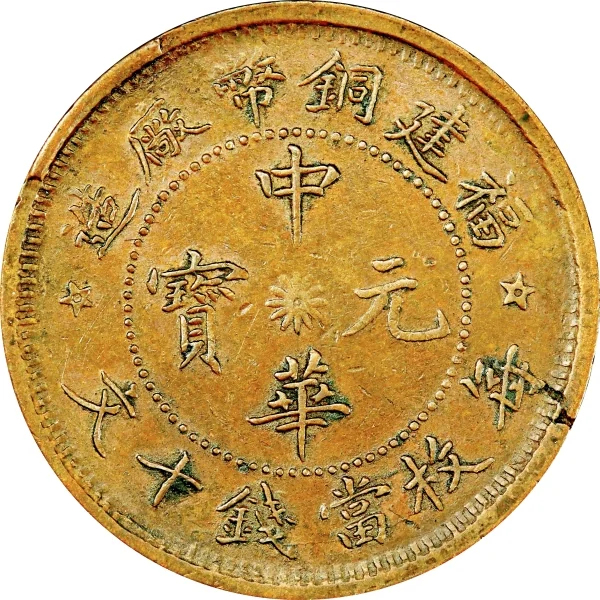
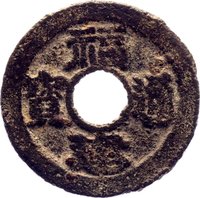
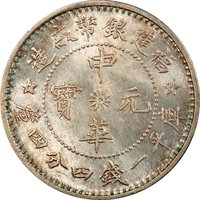
Four Chinese ideograms read vertically, flanking a central flower, all encircled by more text.
Inscription:
造廠幣銅建福
中
寳元
華
文十錢當枚每
中
寳元
華
文十錢當枚每
Translation:
Copper Coin Minted by the Construction Blessing Factory
Zhong
Treasure Yuan
Hua
Ten Cash Coins, Each Piece Worth Ten.
Zhong
Treasure Yuan
Hua
Ten Cash Coins, Each Piece Worth Ten.
Language: Chinese
Reverse
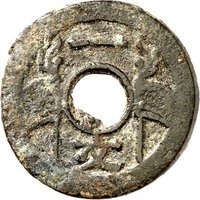
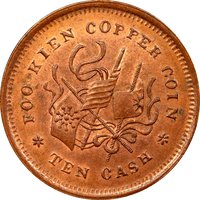
Description:
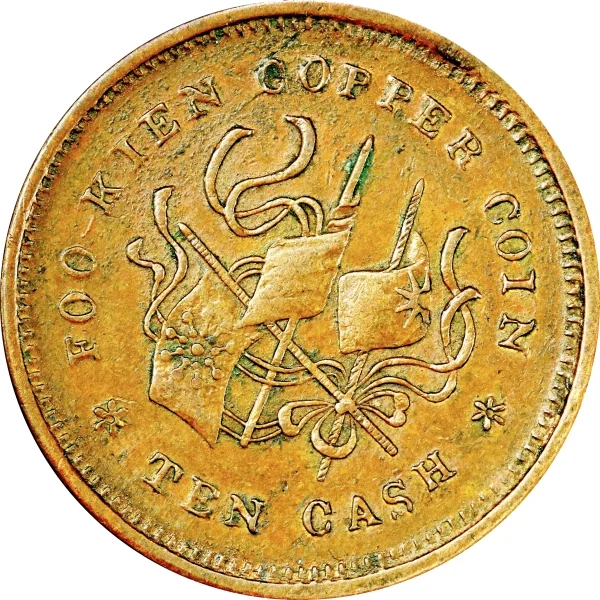
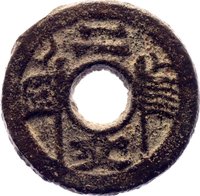
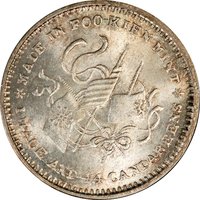
Three flag-topped poles with ribbons, encircled by English text.
Inscription:
FOO-KIEN COPPER COIN
TEN CASH
TEN CASH
Edge
Plain
Mintings
| Year | Mint Mark | Mintage | Quality | Collection |
|---|---|---|---|---|
| 1912 | — | — |
Historical background
In 1912, Fukien (Fujian) Province, like much of China, was in a state of monetary disarray following the collapse of the Qing Dynasty and the declaration of the Republic. The province did not have a unified currency; instead, its economy operated on a complex and chaotic mix of old Qing silver sycees (taels), Mexican and other foreign silver dollars, copper cash coins, and a plethora of privately issued banknotes. These notes were issued by local native banks (qianzhuang), merchant guilds, and even large commercial firms, leading to a fragmented and unreliable monetary environment where creditworthiness and exchange rates varied wildly from one city to another, such as Fuzhou, Xiamen, or Quanzhou.
The new Republican government in Nanjing, and later Beijing, aimed to establish a national currency system to assert central authority and economic control. It declared the "Yuan" as the new standard unit and began plans for a central bank. However, in 1912, these central policies were largely theoretical in Fujian. The province's coastal economy, heavily engaged in overseas trade and remittances from the Nanyang (Southeast Asia) diaspora, remained deeply tied to physical silver, particularly the silver dollar coins which were the most trusted medium for larger transactions. The provincial authority itself had limited capacity to impose a new currency, leaving the old system functionally in place.
Consequently, the primary monetary characteristics in Fujian in 1912 were instability and localization. The value of money depended heavily on the intrinsic value of silver, the fluctuating reputation of private note-issuers, and local market conditions. This fragmentation reflected the broader political reality of the early Republic—a period often called the "Warlord Era"—where central power was weak, and provincial authorities, military commanders, and local commercial interests held de facto control, including over the crucial matter of currency issuance and circulation.
The new Republican government in Nanjing, and later Beijing, aimed to establish a national currency system to assert central authority and economic control. It declared the "Yuan" as the new standard unit and began plans for a central bank. However, in 1912, these central policies were largely theoretical in Fujian. The province's coastal economy, heavily engaged in overseas trade and remittances from the Nanyang (Southeast Asia) diaspora, remained deeply tied to physical silver, particularly the silver dollar coins which were the most trusted medium for larger transactions. The provincial authority itself had limited capacity to impose a new currency, leaving the old system functionally in place.
Consequently, the primary monetary characteristics in Fujian in 1912 were instability and localization. The value of money depended heavily on the intrinsic value of silver, the fluctuating reputation of private note-issuers, and local market conditions. This fragmentation reflected the broader political reality of the early Republic—a period often called the "Warlord Era"—where central power was weak, and provincial authorities, military commanders, and local commercial interests held de facto control, including over the crucial matter of currency issuance and circulation.
✨ Legendary