

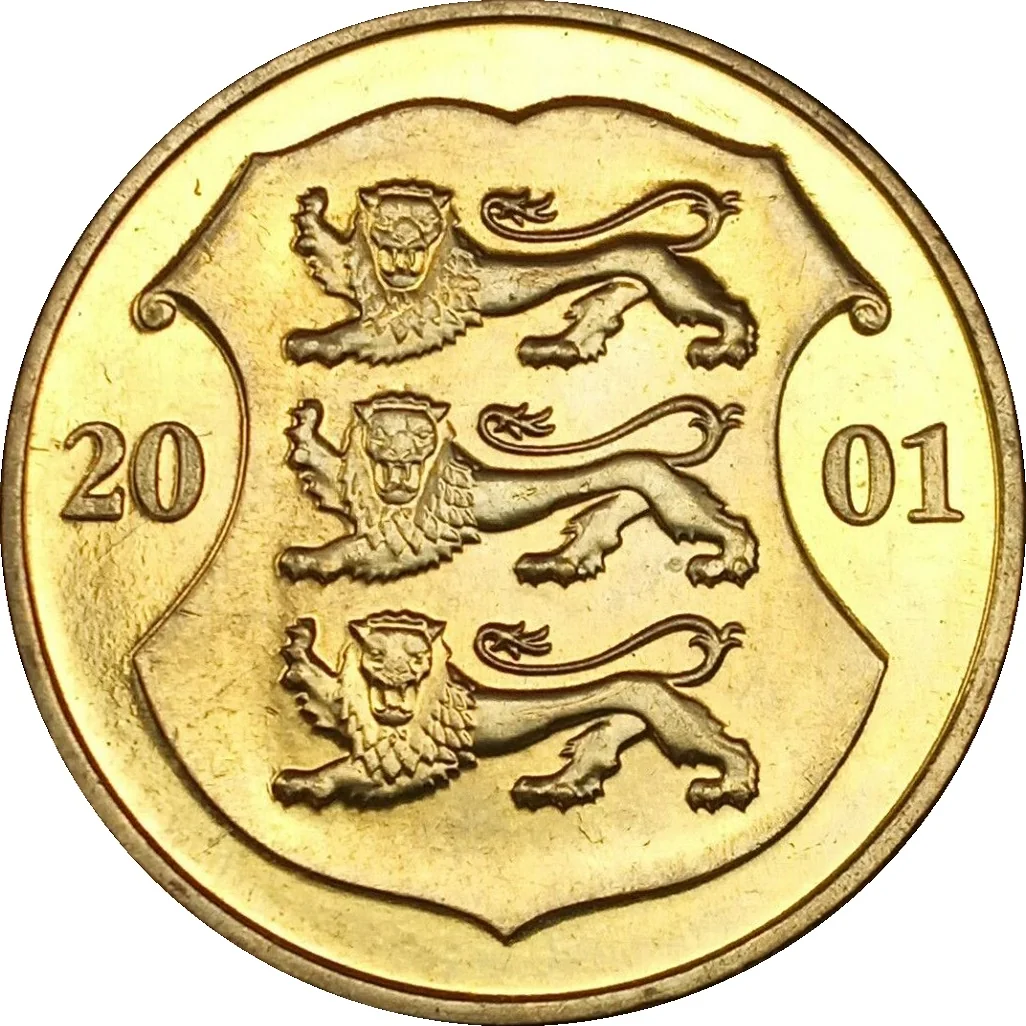
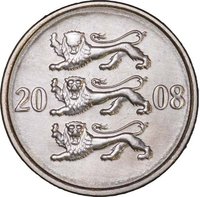
Obverse
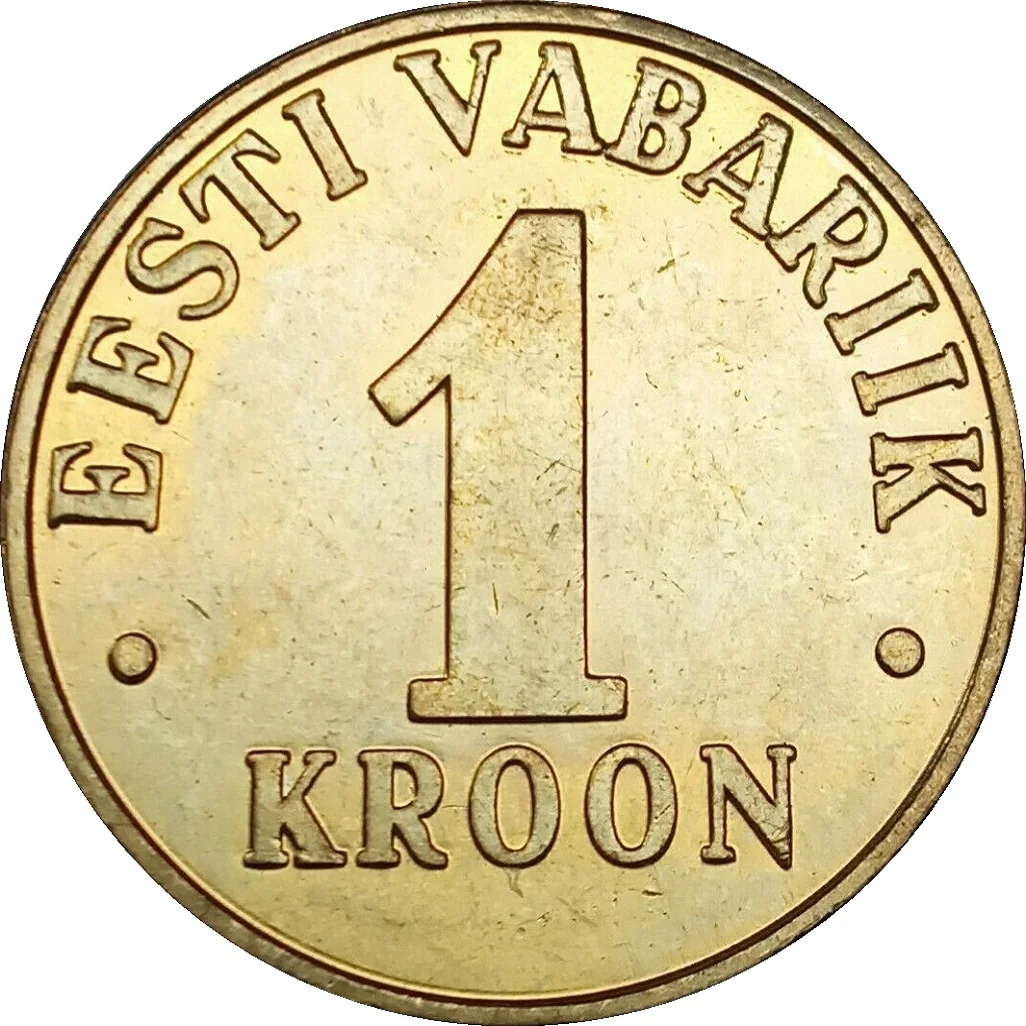
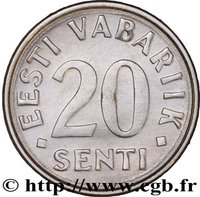
Reverse
Edge
Three reeded and plain sections
Mints
| Name | Mark |
|---|---|
| Mint of Finland | — |
| Royal Dutch Mint | — |
Mintings
| Year | Mint Mark | Mintage | Quality | Collection |
|---|---|---|---|---|
| 1998 | — | 15,000,000 | ||
| 2000 | — | 15,000,000 | ||
| 2001 | — | 15,000,000 | ||
| 2003 | — | 15,000,000 | ||
| 2006 | — | 15,170,000 |
Historical background
In 1998, Estonia's currency situation was defined by the unwavering stability of its currency board arrangement, which had been in place since the nation regained independence. The Estonian kroon (EEK) was firmly pegged to the Deutsche Mark at a fixed rate of 8:1, a cornerstone policy designed to crush hyperinflation, attract foreign investment, and signal economic discipline to the West. This rigid system mandated that every kroon in circulation be fully backed by foreign reserves, severely limiting the central bank's ability to conduct independent monetary policy but providing a crucial anchor of credibility.
This framework was severely tested in 1998 by the aftershocks of the Russian financial crisis. As a key trading partner, Russia's economic collapse and the devaluation of the ruble led to a sharp contraction in Estonian exports eastward. The crisis exposed structural vulnerabilities, particularly a large current account deficit, and triggered a slowdown in economic growth. However, the currency peg itself remained unshaken. The government, committed to the currency board, opted for internal adjustment through fiscal restraint and allowed the economy to absorb the shock through reduced demand and wages, rather than devaluing.
Consequently, while the broader economy felt significant pressure, the kroon's exchange rate exhibited remarkable resilience. The fixed peg was successfully defended, reinforcing Estonia's reputation for orthodox financial policy. This steadfastness during regional turmoil was pivotal, demonstrating the system's robustness and strengthening the political will to maintain it, which later smoothed the path for Estonia's eventual adoption of the euro in 2011. The 1998 experience underscored that the primary challenge was not currency stability, but managing real economic adjustments under the constraints of a hard peg.
This framework was severely tested in 1998 by the aftershocks of the Russian financial crisis. As a key trading partner, Russia's economic collapse and the devaluation of the ruble led to a sharp contraction in Estonian exports eastward. The crisis exposed structural vulnerabilities, particularly a large current account deficit, and triggered a slowdown in economic growth. However, the currency peg itself remained unshaken. The government, committed to the currency board, opted for internal adjustment through fiscal restraint and allowed the economy to absorb the shock through reduced demand and wages, rather than devaluing.
Consequently, while the broader economy felt significant pressure, the kroon's exchange rate exhibited remarkable resilience. The fixed peg was successfully defended, reinforcing Estonia's reputation for orthodox financial policy. This steadfastness during regional turmoil was pivotal, demonstrating the system's robustness and strengthening the political will to maintain it, which later smoothed the path for Estonia's eventual adoption of the euro in 2011. The 1998 experience underscored that the primary challenge was not currency stability, but managing real economic adjustments under the constraints of a hard peg.
🌱 Very Common