

1 sovereign – South Africa
Add to wishlist
South Africa
Context
Years: 1929–1932
Issuer: South Africa
Ruler: George V
Currency:
(1825—1961)
Demonetized: Yes
Total mintage: 31,630,335
Material
References
KM: #
Numista: #27532
Value
Bullion value: $1127.51
Obverse
Description:
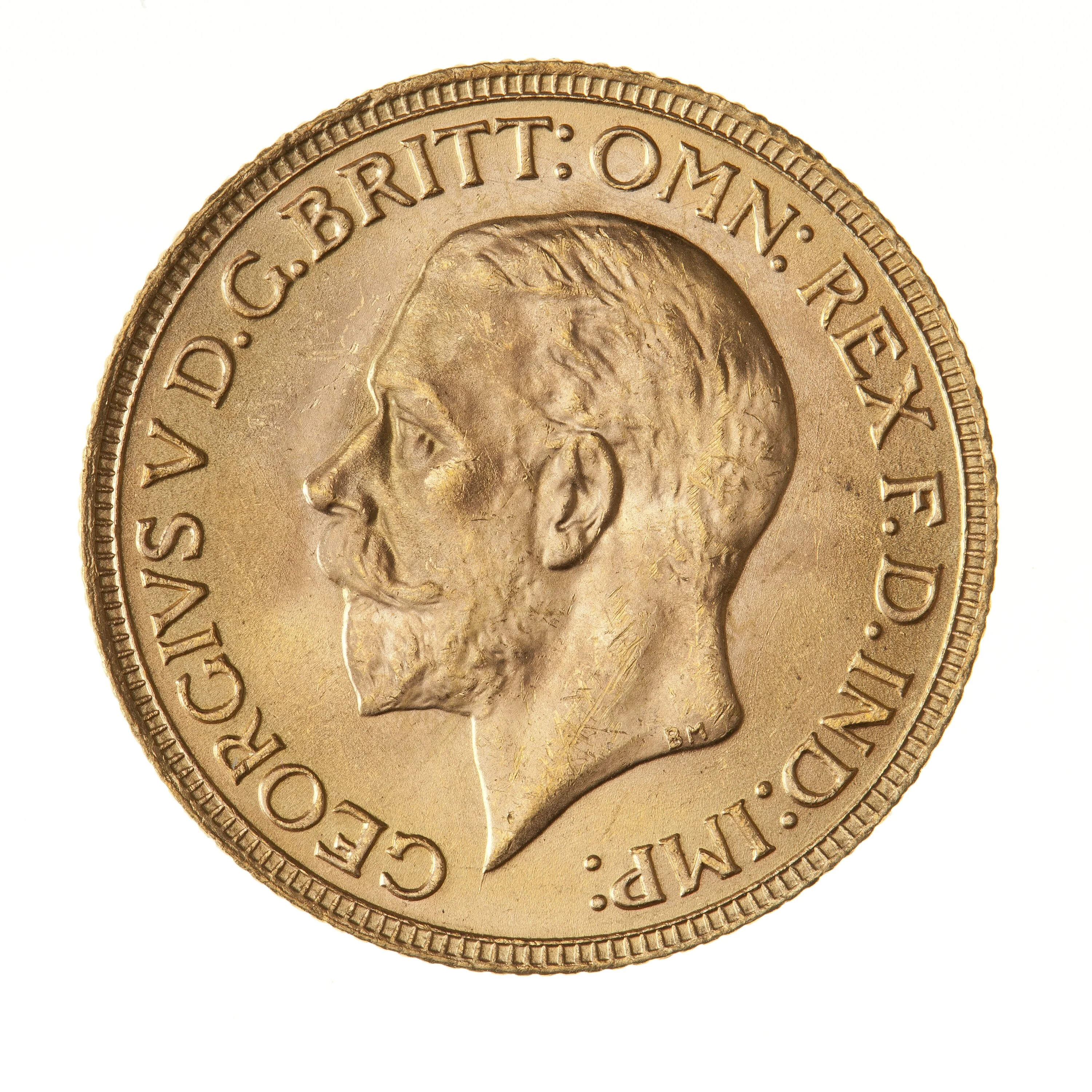
King George V left-facing portrait, legend around, engraver's initials on neck. Smaller size.
Inscription:
GEORGIVS V D.G.BRITT:OMN:REX F.D.IND:IMP:
B.M.
B.M.
Translation:
George V, by the Grace of God, King of all the Britains, Defender of the Faith, Emperor of India.
Script: Latin
Language: Latin
Engraver: Edgar Bertram MacKennal
Reverse
Description:
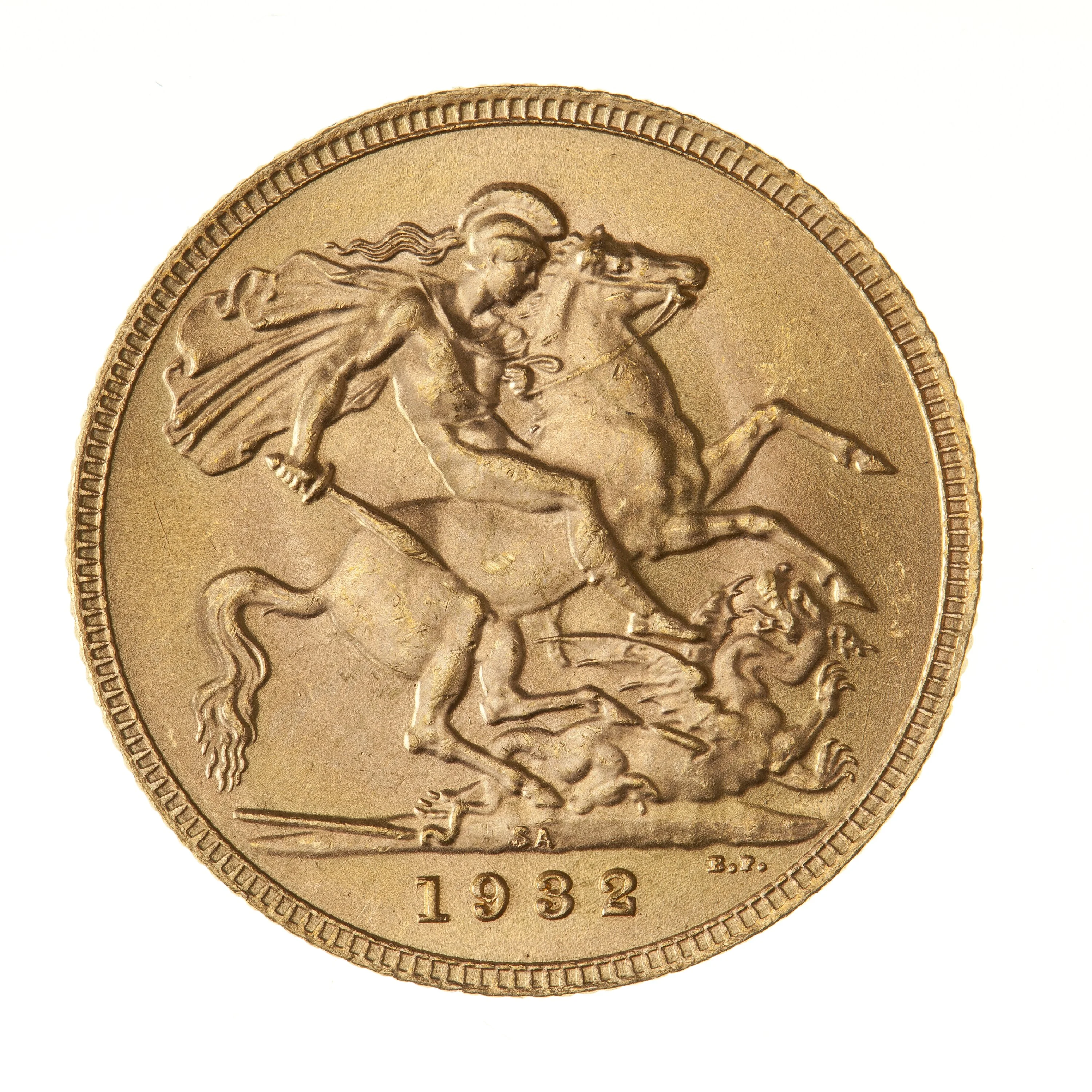
Saint George slaying the dragon, with date and engraver's initials below, mintmark beneath the horse.
Inscription:
SA B.P.
1932
1932
Script: Latin
Engraver: Benedetto Pistrucci
Edge
Reeded
Categories
| Mythology> Fantastic animal |
| Animal> Horse |
| Object> Armour |
| Person> Monarch |
| Person> Religious figure |
| Mustache/Beard |
| Object> Cold weapons |
Mints
| Name | Mark |
|---|---|
| Pretoria | — |
Mintings
| Year | Mint Mark | Mintage | Quality | Collection |
|---|---|---|---|---|
| 1929 | SA | 12,024,107 | ||
| 1930 | SA | 10,027,756 | ||
| 1931 | SA | 8,511,792 | ||
| 1932 | SA | 1,066,680 |
Historical background
In 1929, South Africa's currency situation was defined by its position within the British Empire's monetary system, operating on the gold standard through the sterling exchange standard. The South African pound (ZAR) was pegged at par with the British pound sterling, meaning its value was directly linked to and fully convertible into sterling. This arrangement provided stability and facilitated vital trade and capital flows with Britain, the country's dominant economic partner. The currency was managed by the South African Reserve Bank (SARB), which had been established in 1921 precisely to centralize gold reserves and manage this sterling-linked system.
The entire structure was fundamentally underpinned by South Africa's status as the world's leading gold producer. The vast output from the Witwatersrand mines not only generated immense export revenue but also directly supplied the gold that backed the imperial monetary system. This gold flowed to London, bolstering the Empire's reserves and, in turn, South Africa's own currency credibility. The system, however, made the South African economy highly sensitive to British monetary policy and the international price of gold, with domestic interest rates largely dictated by the Bank of England.
By late 1929, this externally dependent framework faced imminent global strain. While the Wall Street Crash of October initially seemed a distant event, its deflationary shockwaves would soon threaten the core of the gold standard itself. South Africa, with its economy and currency so deeply tied to gold and British finance, was poised to be severely impacted by the coming global depression, which would test the sustainability of the sterling peg and ultimately lead to its abandonment in 1932.
The entire structure was fundamentally underpinned by South Africa's status as the world's leading gold producer. The vast output from the Witwatersrand mines not only generated immense export revenue but also directly supplied the gold that backed the imperial monetary system. This gold flowed to London, bolstering the Empire's reserves and, in turn, South Africa's own currency credibility. The system, however, made the South African economy highly sensitive to British monetary policy and the international price of gold, with domestic interest rates largely dictated by the Bank of England.
By late 1929, this externally dependent framework faced imminent global strain. While the Wall Street Crash of October initially seemed a distant event, its deflationary shockwaves would soon threaten the core of the gold standard itself. South Africa, with its economy and currency so deeply tied to gold and British finance, was poised to be severely impacted by the coming global depression, which would test the sustainability of the sterling peg and ultimately lead to its abandonment in 1932.
🌟 Uncommon