

Obverse
Description:
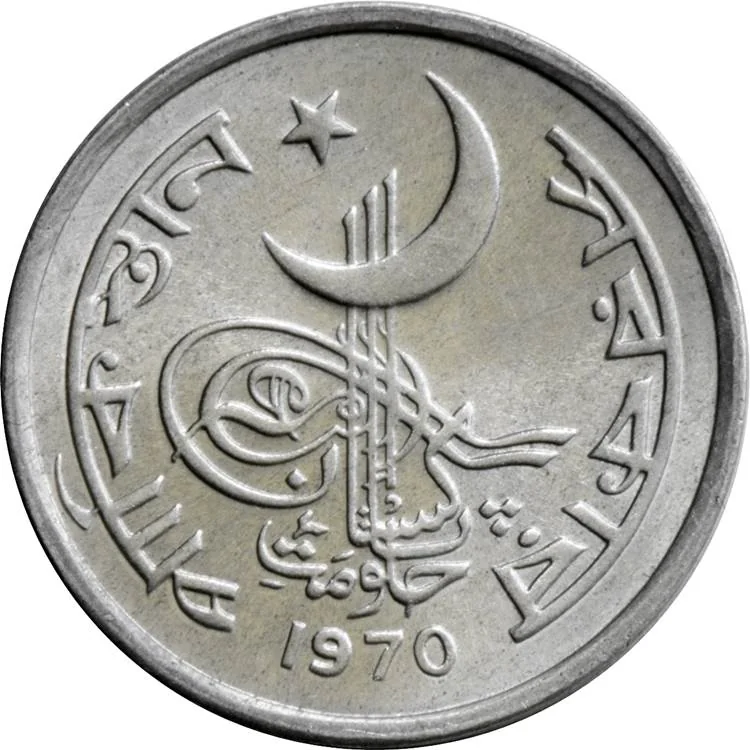
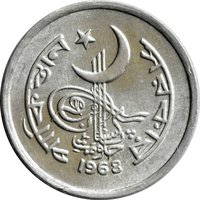
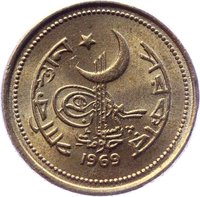
Crescent, star, tughra.
Inscription:
পাকিস্তান সরকার
حكومت پاكستان
1970
حكومت پاكستان
1970
Translation:
Government of Pakistan
1970
1970
Scripts: Arabic, Devanagari
Reverse
Description:
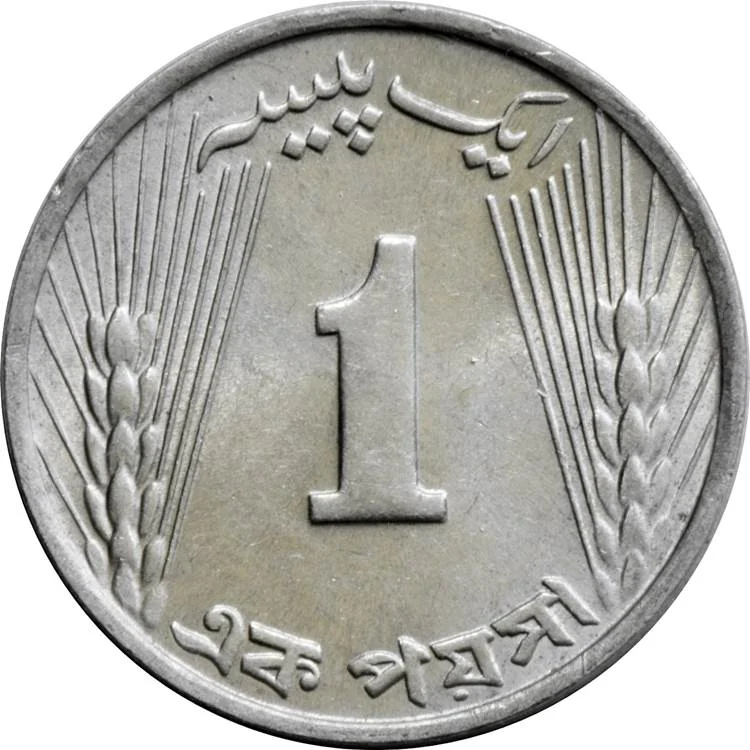
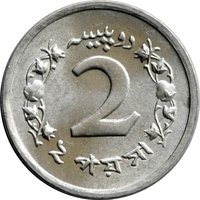
Oats between sprigs.
Inscription:
ایک پیسہ
1
এক পয়সা
1
এক পয়সা
Translation:
One Paisa
Scripts: Arabic, Devanagari
Edge
Plain
Mints
| Name | Mark |
|---|---|
| Lahore | — |
Mintings
| Year | Mint Mark | Mintage | Quality | Collection |
|---|---|---|---|---|
| 1967 | — | 170,070,000 | ||
| 1968 | — | 161,780,000 | ||
| 1969 | — | 160,230,000 | ||
| 1970 | — | 204,606,000 | ||
| 1971 | — | 191,880,000 | ||
| 1972 | — | 108,510,000 | ||
| 1973 | — | 9,370,000 |
Historical background
In 1967, Pakistan's currency system was operating under the Bretton Woods framework, with the Pakistani rupee pegged to the British pound sterling at a fixed rate of Rs. 4.76 to £1. This indirect peg, through sterling, also linked the rupee to the U.S. dollar at approximately Rs. 4.76 = $1, given the dollar-sterling parity of the time. The State Bank of Pakistan managed this fixed exchange rate regime, which provided stability for international trade and was backed by the country's membership in the International Monetary Fund (IMF). The system was seen as a pillar of economic predictability during a period of significant industrial growth under the government's guided capitalist policies.
However, underlying pressures were mounting. The economy was heavily reliant on foreign aid and concessional loans, and the costly 1965 war with India had strained public finances, leading to increased defense spending and a growing budget deficit. While not yet in crisis, the fixed parity was beginning to be questioned as export competitiveness wavered and the import-substitution industrialization model showed limitations. The stability of 1967, therefore, was somewhat fragile, existing in the calm before the storm of major economic and political upheaval.
The situation would change dramatically just a few years later. Following the war of 1971 and the loss of East Pakistan, the country faced a severe balance of payments crisis. This forced a major devaluation in May 1972, when the rupee was sharply devalued by approximately 131% against the U.S. dollar, moving to a rate of Rs. 11 per dollar and effectively ending the stable parity that had characterized the 1967 period. Thus, 1967 represents the final phase of Pakistan's initial post-independence currency stability before a new era of managed floats and repeated devaluations began.
However, underlying pressures were mounting. The economy was heavily reliant on foreign aid and concessional loans, and the costly 1965 war with India had strained public finances, leading to increased defense spending and a growing budget deficit. While not yet in crisis, the fixed parity was beginning to be questioned as export competitiveness wavered and the import-substitution industrialization model showed limitations. The stability of 1967, therefore, was somewhat fragile, existing in the calm before the storm of major economic and political upheaval.
The situation would change dramatically just a few years later. Following the war of 1971 and the loss of East Pakistan, the country faced a severe balance of payments crisis. This forced a major devaluation in May 1972, when the rupee was sharply devalued by approximately 131% against the U.S. dollar, moving to a rate of Rs. 11 per dollar and effectively ending the stable parity that had characterized the 1967 period. Thus, 1967 represents the final phase of Pakistan's initial post-independence currency stability before a new era of managed floats and repeated devaluations began.
🌱 Very Common