

5 Centimes – Belgium
Belgium

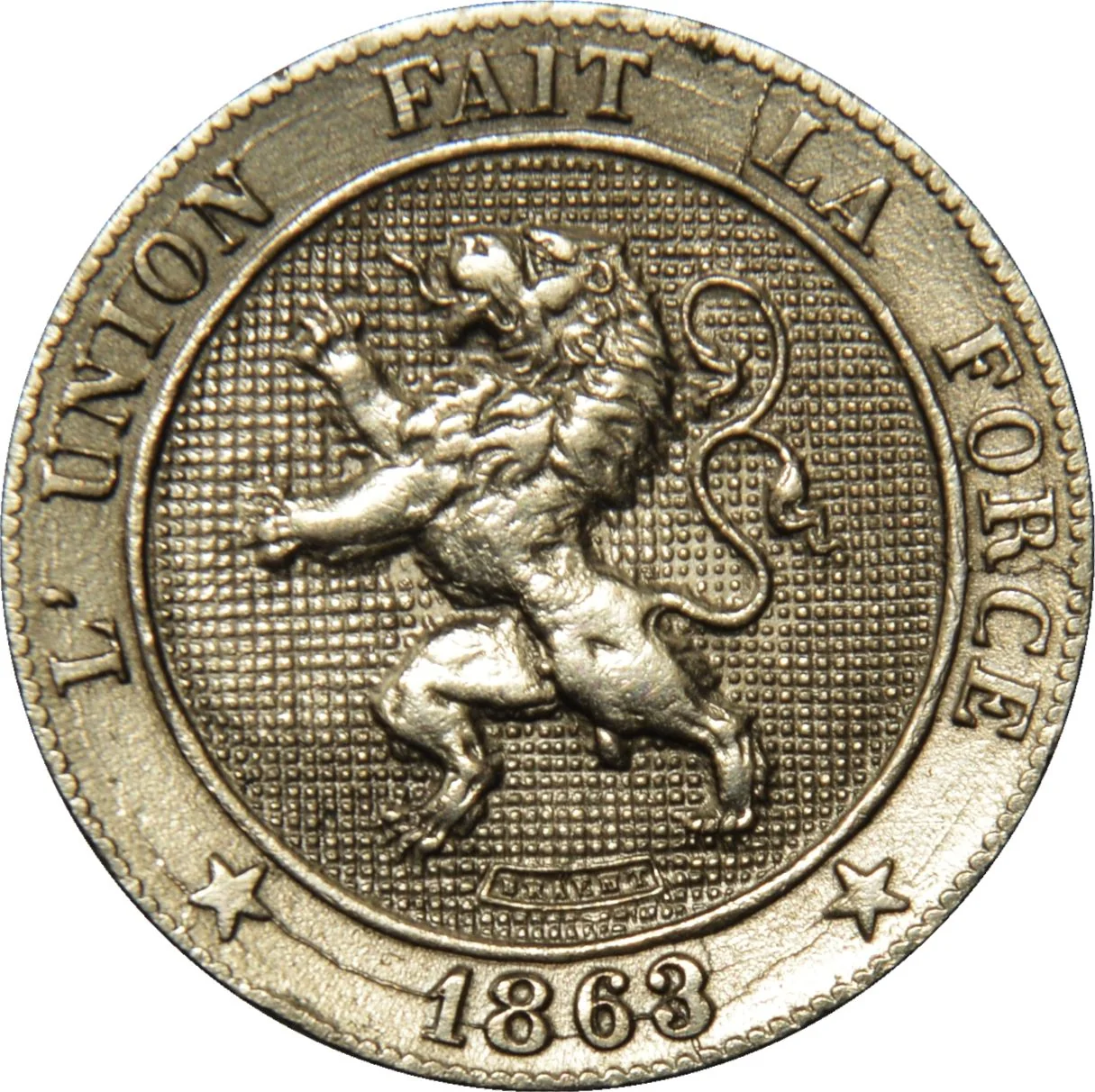
Obverse
Description:
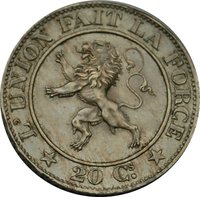
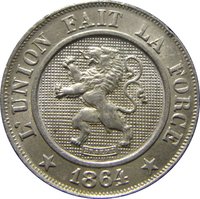
Belgian motto encircling a heraldic lion.
Inscription:
L'UNION FAIT LA FORCE
BRAEMT
★ 1863 ★
BRAEMT
★ 1863 ★
Translation:
Union makes strength
BRAEMT
★ 1863 ★
BRAEMT
★ 1863 ★
Script: Latin
Language: French
Engraver: Joseph-Pierre Braemt
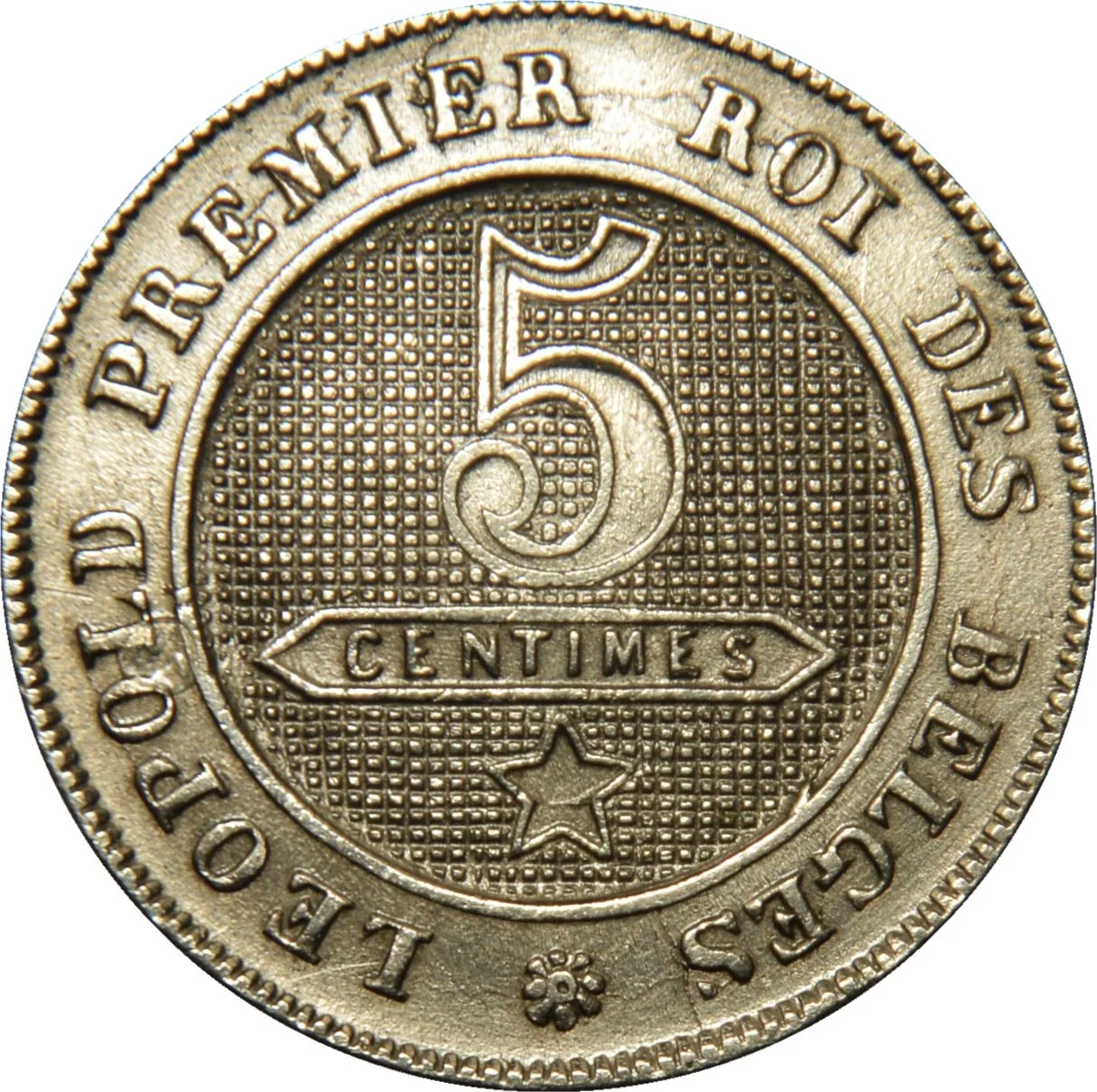
Reverse
Description:
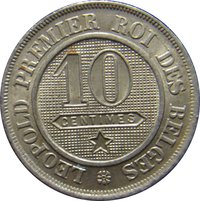
Face value and lettering.
Inscription:
❁ LEOPOLD PREMIER ROI DES BELGES
5
CENTIMES
★
5
CENTIMES
★
Translation:
Leopold First King of the Belgians
5
Centimes
5
Centimes
Script: Latin
Language: French
Engraver: Joseph-Pierre Braemt
Edge
Security edge
Mints
| Name | Mark |
|---|---|
| Royal Mint of Belgium | — |
Mintings
| Year | Mint Mark | Mintage | Quality | Collection |
|---|---|---|---|---|
| 1861 | — | 8,259,264 | ||
| 1862 | — | 14,149,380 | ||
| 1863 | — | 16,055,072 | ||
| 1864 | — | 2,512,574 |
Historical background
In 1861, Belgium operated under a complex and transitional monetary system, a legacy of its recent independence and the broader European economic landscape. The country was officially on a bimetallic standard, legally recognizing both gold and silver as legal tender at a fixed ratio. However, the global market value of these metals frequently diverged from the official rate, leading to the practical disappearance of undervalued coins from circulation—a classic consequence of Gresham's Law. This instability was exacerbated by the circulation of a wide variety of foreign coins, particularly French, Dutch, and German, which created confusion and hindered domestic commerce.
The situation was a significant concern for the government and the National Bank of Belgium, founded in 1850. The coexistence of multiple coinages and the ineffective bimetallic system were seen as impediments to economic modernization and the growing industrial sector. Efforts to reform the system were underway, influenced by the Latin Monetary Union (LMU) negotiations, which Belgium would help found in 1865. The goal was to create a stable, uniform, and decimal-based currency that could facilitate international trade with its key partners, especially France.
Therefore, the currency situation in 1861 was one of mounting pressure for change. While the Belgian franc existed as the unit of account, the physical reality of money in circulation was messy and unreliable. The year fell within a pivotal decade where Belgium moved decisively from a fragmented system toward a standardized, gold-centric franc aligned with the impending LMU, seeking the monetary stability required for its continued industrial and commercial expansion.
The situation was a significant concern for the government and the National Bank of Belgium, founded in 1850. The coexistence of multiple coinages and the ineffective bimetallic system were seen as impediments to economic modernization and the growing industrial sector. Efforts to reform the system were underway, influenced by the Latin Monetary Union (LMU) negotiations, which Belgium would help found in 1865. The goal was to create a stable, uniform, and decimal-based currency that could facilitate international trade with its key partners, especially France.
Therefore, the currency situation in 1861 was one of mounting pressure for change. While the Belgian franc existed as the unit of account, the physical reality of money in circulation was messy and unreliable. The year fell within a pivotal decade where Belgium moved decisively from a fragmented system toward a standardized, gold-centric franc aligned with the impending LMU, seeking the monetary stability required for its continued industrial and commercial expansion.
🌱 Very Common