Logo Title
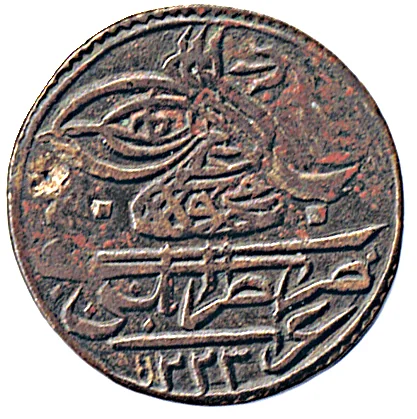
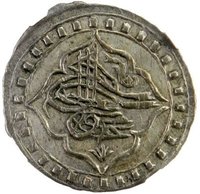
obverse
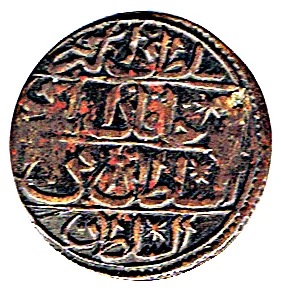
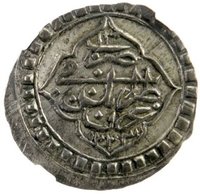
reverse
Arcadius

30 Para – Regency of Tripoli

Libya
Context
Year: 1810
Islamic (Hijri) Year: 1223
Country: Libya Country flag
Ruler: Mahmud II
Currency:
(1688—1844)
Demonetized: Yes
Material
Diameter: 34 mm
Shape: Round
Composition: Silver
Magnetic: No
Alignment: Medal alignment
Obverse
OBVERSE ↑
flip
Reverse
REVERSE ↑
References
KM: #Click to copy to clipboard174
Numista: #27457

Obverse

Description:
Mahmud II toughra with flower above mint and date, encircled.
Inscription:
محمود

في

ضرب طرابلس

غرب

١٢٢٣
Translation:
Mahmud

struck in Tripoli

West

1223
Script: Arabic
Language: Arabic

Reverse

Description:
Sultan's title
in four lines,
with regnal year,
encircled.
Inscription:
سلطان البرين

وخاقان البحرين

٣

السلطان ابن

السلطان
Translation:
Sultan of the Two Lands
and Khagan of the Two Seas
The Sultan, son of
the Sultan
Script: Arabic
Language: Arabic

Edge

Mintings

YearMint MarkMintageQualityCollection
1810

Historical background

In 1810, the Regency of Tripoli, a semi-autonomous Ottoman province on the North African coast, operated within a complex and fragmented monetary system. The primary currency in official and large-scale trade was the Spanish silver dollar, or "piece of eight," a global currency of the era. Alongside this, various European gold and silver coins circulated, particularly the Austrian thaler and Venetian sequin, reflecting Tripoli's active Mediterranean commerce. However, the local economy for most daily transactions relied heavily on a debased and chronically unstable Ottoman copper coinage, the mangır.

This dual system created significant economic strain. The local Pasha, Yusuf Karamanli, facing constant financial pressures from tribal politics, a large navy, and tribute demands from the Ottoman Porte, frequently resorted to currency manipulation. He would periodically call in the copper coinage, re-mint it with reduced metal content, and re-issue it at the same face value, a practice known as ta'fīsh. This deliberate inflation acted as a stealth tax, eroding the savings and purchasing power of the common population and merchants engaged in local trade, while enriching the ruling treasury.

The currency situation was further exacerbated by the Regency's geopolitical position. Having concluded the costly First Barbary War with the United States in 1805, and with the ongoing Napoleonic Wars disrupting Mediterranean trade, state revenues were unpredictable. Consequently, the reliance on foreign silver for stability and debased copper for internal finance underscored the Regency's fragile economy, caught between Ottoman tradition, regional piracy, and the pressures of an integrating global trade system. This monetary instability was a key symptom of the wider political and economic decline that would lead to increased European intervention in the decades to follow.
Legendary