Logo Title

1 Para – Regency of Tripoli

Libya
Context
Years: 1819–1828
Islamic (Hijri) Year: 1223
Country: Libya Country flag
Ruler: Mahmud II
Currency:
(1688—1844)
Demonetized: Yes
Material
Composition: Copper
Magnetic: No
Technique: Hammered
References
KM: #Click to copy to clipboard99
Numista: #79885

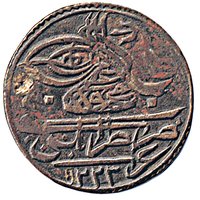
Obverse

Description:
Legend and date in beaded diamond within beaded circle.
Inscription:
ضرب

في

١٢٢٣
Translation:
Struck in 1223
Language: Arabic

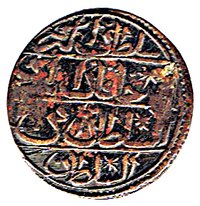
Reverse

Description:
Mint and regnal year in decorative lozenge.
Inscription:
طرا

بلس

٢١
Translation:
Twenty-One

Paris
Language: Arabic

Edge

Irregular hammered

Mintings

YearMint MarkMintageQualityCollection
1819
1820
1827
1828

Historical background

In 1819, the Regency of Tripoli, a semi-autonomous Ottoman province on the North African coast, was navigating a complex and challenging monetary environment following the conclusion of the Second Barbary War (1815). The state's economy, heavily reliant on corsairing (state-sanctioned piracy) and tribute payments from foreign powers, had been severely disrupted. The war with the United States and subsequent treaties enforced by European powers had drastically curtailed this primary source of revenue, pushing the Regency toward greater dependence on legitimate trade and exposing the weaknesses of its local currency system.

The domestic currency situation was characterized by a chronic shortage of specie (gold and silver coin) and the circulation of heavily debased copper and billon (base metal) coins, known as mangır. The Ottoman central minting authority often supplied substandard coinage to its provinces, and local rulers, including the Pasha Yusuf Karamanli, frequently resorted to debasement to finance government expenses. This led to severe inflation and a loss of public confidence in the coinage. Consequently, a multitude of foreign silver coins—most notably Spanish dollars (pieces of eight), Austrian thalers, and Venetian sequins—circulated as the preferred medium for larger transactions and foreign trade, creating a dual monetary system.

This monetary instability reflected the broader political and economic fragility of the Regency. With its traditional predatory economy dismantled and its currency in disarray, the Tripolitanian government struggled to stabilize its finances. The situation would contribute to growing internal unrest, culminating in a civil war in the 1830s that provided the Ottoman Empire with a pretext to re-establish direct control, ending the Karamanli dynasty and further integrating Tripoli's monetary system with that of Constantinople.
Legendary