

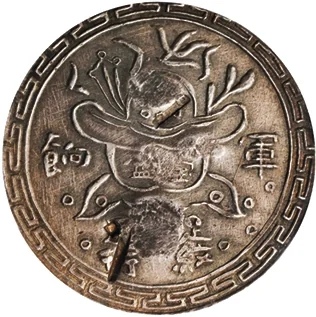
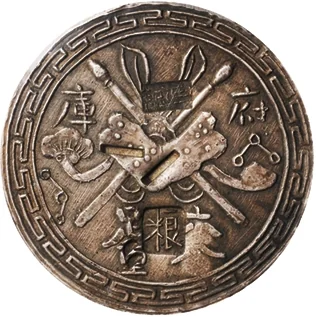

Obverse
Description:
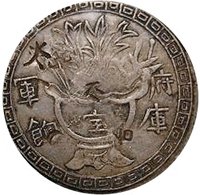
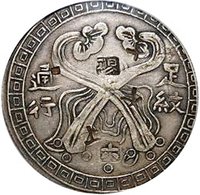
Crossed brushes and lotus flowers flanked by Chinese characters, one incused above and below.
Reverse
Description:
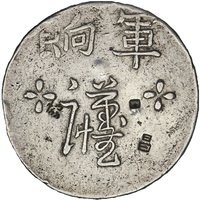
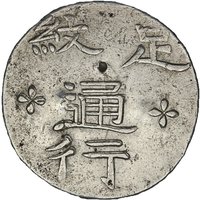
Hellenic style.
Edge
Mintings
| Year | Mint Mark | Mintage | Quality | Collection |
|---|---|---|---|---|
| 1853 | — | — |
Historical background
In 1853, Taiwan Province, under the administration of China's Qing Dynasty, operated within a complex and fragmented monetary system characteristic of the late imperial period. The primary official currency was the silver tael, a unit of weight in which sycee (silver ingots) were cast, but its value and purity varied locally. Alongside this, copper cash coins (with square holes) issued by the Qing mints were the everyday currency for common transactions. However, a chronic shortage of official coinage, combined with the island's vibrant maritime trade, led to widespread circulation of diverse foreign currencies. These included Spanish and Mexican silver dollars (carolus pesos and "eagle dollars"), Japanese kan mon coins, and even old Chinese coins from previous dynasties, all valued by weight and accepted in commercial ports like Tainan and Taipei.
This multi-currency environment created significant challenges for trade and taxation. Exchange rates between silver, copper, and the various foreign coins fluctuated constantly, often manipulated by local merchants and money changers. The Qing government's limited capacity to mint and regulate currency on the island exacerbated the problem, leading to regional inconsistencies and frequent counterfeiting of copper cash. The monetary chaos reflected both Taiwan's integrated position in East Asian trade networks and the weakening central control of the Qing state during the turbulent Taiping Rebellion era (1850-1864), which strained imperial resources and attention.
Consequently, the currency situation in 1853 was one of pragmatic hybridity and localized control. While the Qing dynasty's systems nominally provided the framework, actual economic life was dictated by a mix of imported silver, scarce official coinage, and private commercial agreements. This instability would persist and contribute to broader economic tensions on the island throughout the mid-19th century, as Taiwan's economy continued to evolve within both the Qing imperial system and the broader regional maritime economy.
This multi-currency environment created significant challenges for trade and taxation. Exchange rates between silver, copper, and the various foreign coins fluctuated constantly, often manipulated by local merchants and money changers. The Qing government's limited capacity to mint and regulate currency on the island exacerbated the problem, leading to regional inconsistencies and frequent counterfeiting of copper cash. The monetary chaos reflected both Taiwan's integrated position in East Asian trade networks and the weakening central control of the Qing state during the turbulent Taiping Rebellion era (1850-1864), which strained imperial resources and attention.
Consequently, the currency situation in 1853 was one of pragmatic hybridity and localized control. While the Qing dynasty's systems nominally provided the framework, actual economic life was dictated by a mix of imported silver, scarce official coinage, and private commercial agreements. This instability would persist and contribute to broader economic tensions on the island throughout the mid-19th century, as Taiwan's economy continued to evolve within both the Qing imperial system and the broader regional maritime economy.
✨ Legendary