

5 centesimi – Italy
Add to wishlist
Italy
Context
Years: 1908–1918
Issuer: Italy
Ruler: Vittorio Emanuele III
Currency:
(1861—2001)
Demonetized: Yes
Total mintage: 10,545,066
Material
References
KM: #
Numista: #2741
Value
Exchange value: 0.05 ITL
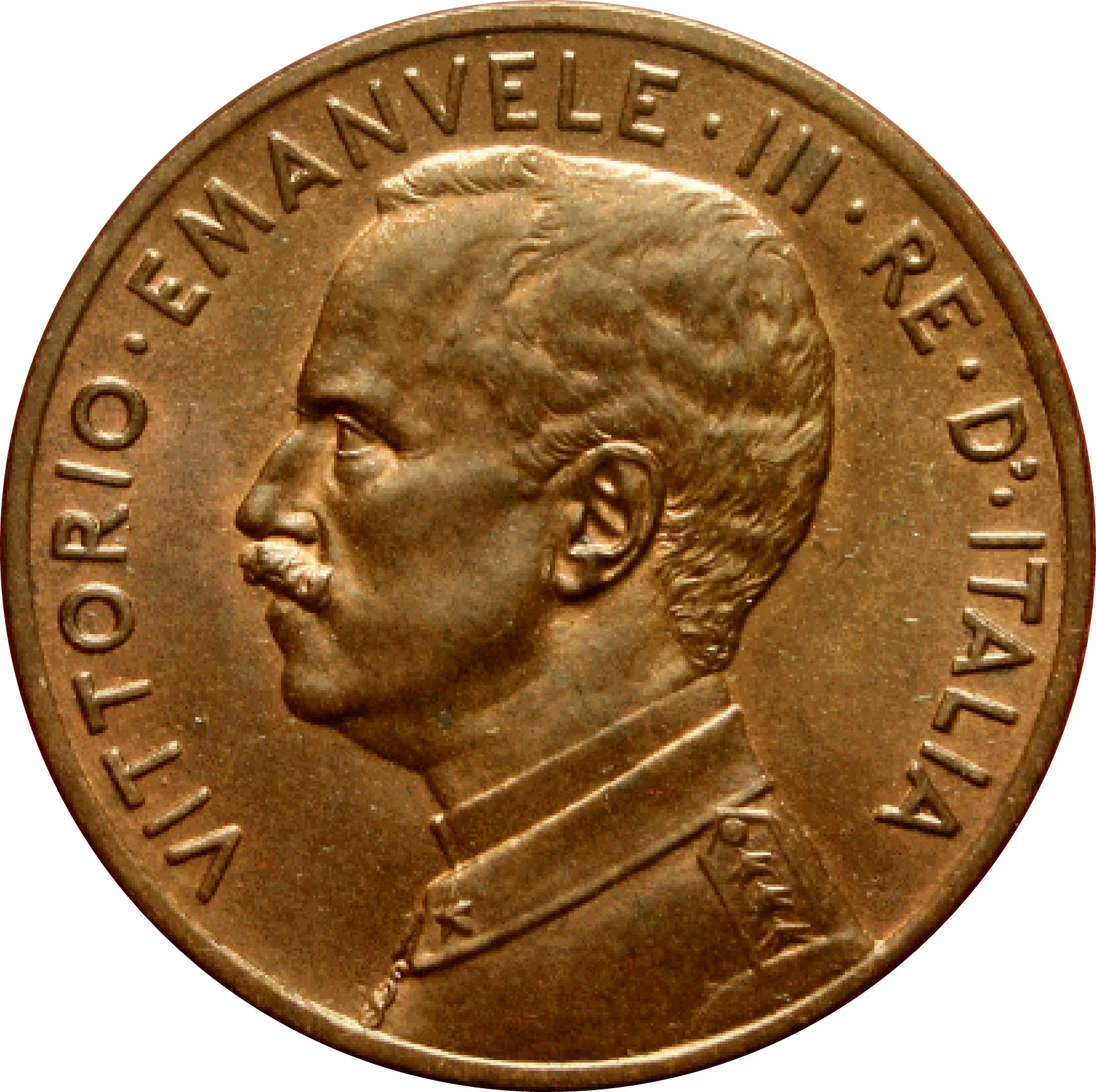
Obverse
Description:
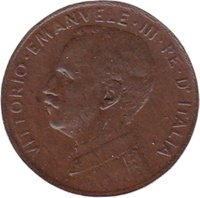
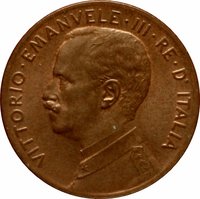
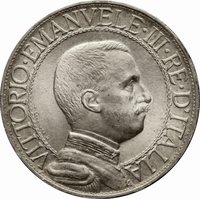
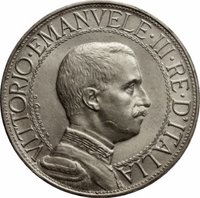
King Vittorio Emanuele III, left-facing bust.
Inscription:
VITTORIO·EMANUELE·III·RE·D'ITALIA
Translation:
Victor Emmanuel III King of Italy
Script: Latin
Language: Italian
Engraver: Luigi Giorgi
Reverse
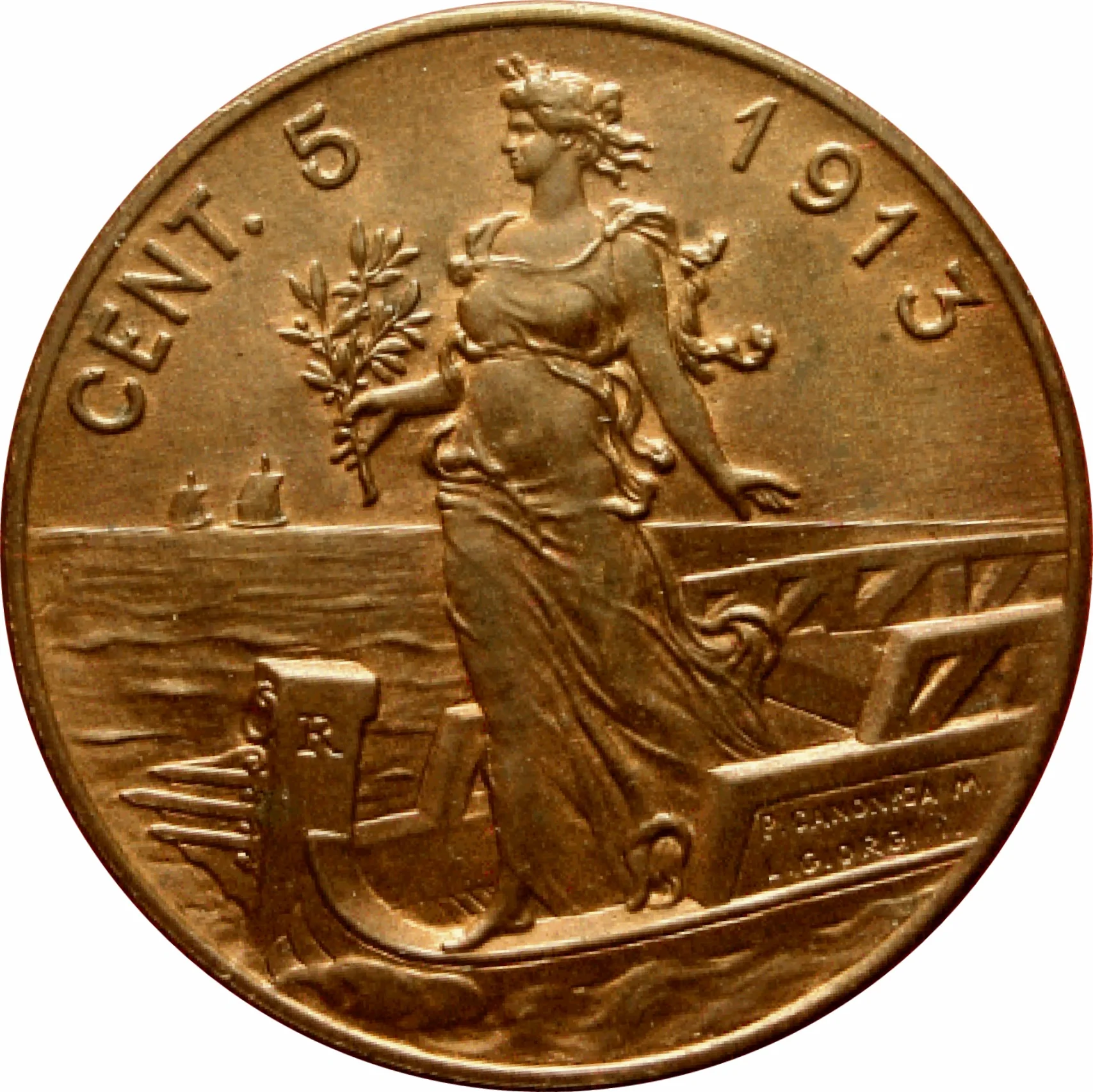
Description:
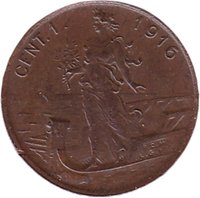
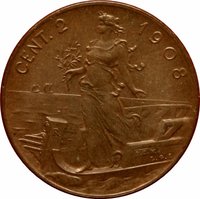
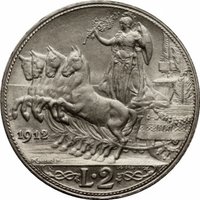
Italy personified stands on a ship's prow, holding an olive branch. The date is to the right of the value, the mintmark on the prow, and the artists' names on the ship's side.
Inscription:
CENT. 5
1913
R
P.CANONICA M.
L.GIORGI I.
1913
R
P.CANONICA M.
L.GIORGI I.
Translation:
Five Cents
1913
R
P. Canonica, Master Engraver
L. Giorgi, Engraver
1913
R
P. Canonica, Master Engraver
L. Giorgi, Engraver
Script: Latin
Engraver: Luigi Giorgi
Edge
Plain
Mints
| Name | Mark |
|---|---|
| Rome | R |
Mintings
Historical background
In 1908, Italy's currency situation was defined by its adherence to the Classical Gold Standard, a system it had joined in 1883. The national currency was the Italian lira, which was legally convertible into a fixed amount of gold. This membership in an international system of fixed exchange rates aimed to provide monetary stability, facilitate trade, and attract foreign investment. However, Italy's experience was often described as being on the "gold standard limping," as the government and the Banca d'Italia frequently resorted to "forced circulation" (corso forzoso), suspending gold convertibility during periods of fiscal strain.
The underlying challenge was a persistent conflict between the state's fiscal needs and the constraints of the gold standard. The government ran chronic budget deficits, financing ambitious public works and military expenditures through heavy borrowing. This led to high public debt and periodic bouts of inflation, which put pressure on the lira's gold reserves as citizens and foreigners sought to convert paper money into the more secure metal. Consequently, while officially on the gold standard, Italy maintained a precarious position, with its paper lira often trading at a discount against gold-convertible currencies like the British pound or French franc.
By 1908, the economy was in a phase of moderate growth following the banking crisis of 1907, but structural weaknesses remained. The government, under Prime Minister Giovanni Giolitti, pursued a policy of fiscal consolidation to strengthen the lira and fully restore confidence in its gold convertibility. This period was one of cautious management, balancing the desire for the prestige and stability of a solid gold-backed currency with the political and economic realities of a state still grappling with industrialization, regional disparities, and the financial legacy of its unification.
The underlying challenge was a persistent conflict between the state's fiscal needs and the constraints of the gold standard. The government ran chronic budget deficits, financing ambitious public works and military expenditures through heavy borrowing. This led to high public debt and periodic bouts of inflation, which put pressure on the lira's gold reserves as citizens and foreigners sought to convert paper money into the more secure metal. Consequently, while officially on the gold standard, Italy maintained a precarious position, with its paper lira often trading at a discount against gold-convertible currencies like the British pound or French franc.
By 1908, the economy was in a phase of moderate growth following the banking crisis of 1907, but structural weaknesses remained. The government, under Prime Minister Giovanni Giolitti, pursued a policy of fiscal consolidation to strengthen the lira and fully restore confidence in its gold convertibility. This period was one of cautious management, balancing the desire for the prestige and stability of a solid gold-backed currency with the political and economic realities of a state still grappling with industrialization, regional disparities, and the financial legacy of its unification.
Series: 1908 Italy circulation coins
🌱 Very Common