

1 Yuan – Republic of China
Circulating commemorative coins
Commemoration: Constitution: Cao Kun
China
Context
Year: 1923
Country: China 
Issuer: Republic of China
Period:
(1912—1949)
Currency:
(1912—1948)
Subdivision: 1 Yuan = 1 Dollar
Demonetized: Yes
Material
References
Y: #Click to copy to clipboard–
Numista: #27332
Value
Bullion value: $69.33
Obverse
Description:
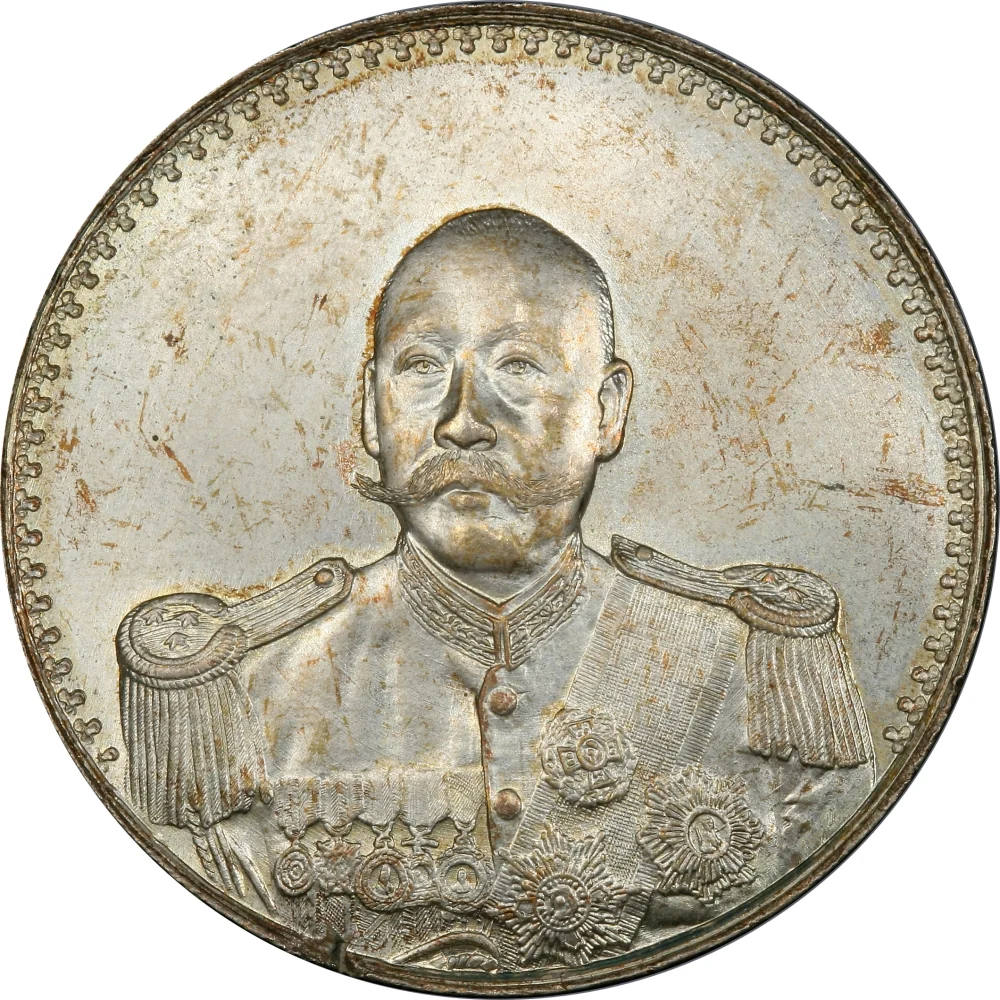
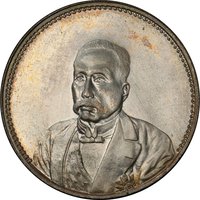
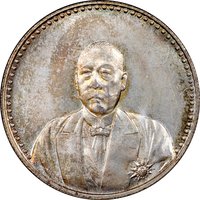
Bust of Cao Kun, frontal.
Reverse
Description:
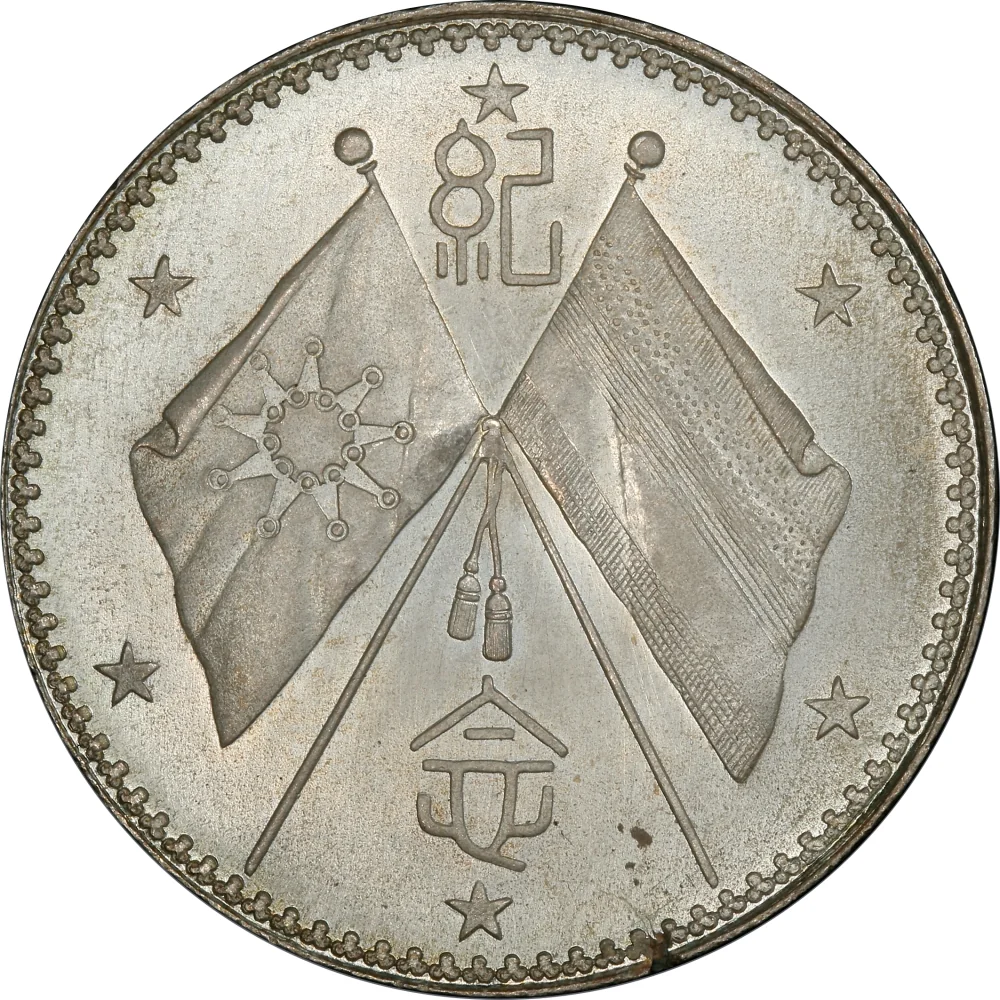
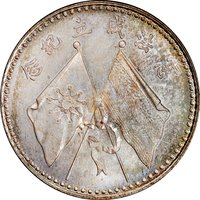
Two crossed flags flank a Chinese ideogram above and below.
Inscription:
紀
念
念
Translation:
Commemorate
Language: Chinese
Edge
Categories
| Person> Politician |
| Symbol> Flag |
| Mustache/Beard |
Mintings
| Year | Mint Mark | Mintage | Quality | Collection |
|---|---|---|---|---|
| 1923 | — | — |
Historical background
In 1923, the currency situation in the Republic of China was one of profound complexity and instability, a direct reflection of the country's fragmented political landscape. The central government in Beijing, led by various warlord-backed cabinets, exercised minimal real authority. Its primary currency, the silver yuan (or "yuan dollar"), remained a theoretical standard, but its issuance and value were inconsistent. More critically, vast regions of China were under the control of rival militarists, provincial authorities, and foreign concessions, each of which often issued their own banknotes, copper coinage, and scrip with little to no centralized backing. This resulted in a chaotic mosaic of circulating media, where exchange rates and acceptance could change dramatically across territorial borders.
The period was further defined by the severe debasement of subsidiary coinage and the flooding of low-quality banknotes. Provincial warlords, in desperate need of revenue to fund their armies, would frequently overstrike existing copper coins with higher denominations or force local banks to print unsecured paper money. This led to rampant inflation in many areas, a loss of public trust in paper currency, and a retreat to the intrinsic value of silver. Consequently, silver sycee (measured by the tael) and foreign silver coins, particularly the Mexican "Eagle" dollar, continued to circulate widely as more reliable stores of value, especially for large transactions and in treaty ports.
This monetary disarray had crippling economic effects. It hindered inter-provincial trade, complicated taxation, and discouraged domestic investment. The situation also starkly highlighted the weakness of the Beiyang Government and served as a potent justification for the competing nationalist movements, most notably the Kuomintang based in Guangzhou, which sought to unify the country and implement modern financial reforms. Thus, the currency chaos of 1923 was not merely an economic issue but a symptom and accelerator of the political disintegration that would characterize China's "Warlord Era."
The period was further defined by the severe debasement of subsidiary coinage and the flooding of low-quality banknotes. Provincial warlords, in desperate need of revenue to fund their armies, would frequently overstrike existing copper coins with higher denominations or force local banks to print unsecured paper money. This led to rampant inflation in many areas, a loss of public trust in paper currency, and a retreat to the intrinsic value of silver. Consequently, silver sycee (measured by the tael) and foreign silver coins, particularly the Mexican "Eagle" dollar, continued to circulate widely as more reliable stores of value, especially for large transactions and in treaty ports.
This monetary disarray had crippling economic effects. It hindered inter-provincial trade, complicated taxation, and discouraged domestic investment. The situation also starkly highlighted the weakness of the Beiyang Government and served as a potent justification for the competing nationalist movements, most notably the Kuomintang based in Guangzhou, which sought to unify the country and implement modern financial reforms. Thus, the currency chaos of 1923 was not merely an economic issue but a symptom and accelerator of the political disintegration that would characterize China's "Warlord Era."
✨ Legendary