

14 ECUs – Gibraltar
United Kingdom
Context
Year: 1994
Country: United Kingdom 
Issuer: Gibraltar 
Ruler: Elizabeth II
Currency:
(1990—1996)
Demonetized: Yes
Total mintage: 30,000
Material
References
KM: #Click to copy to clipboard485
Numista: #133646
Value
Bullion value: $26.29
Obverse
Description:
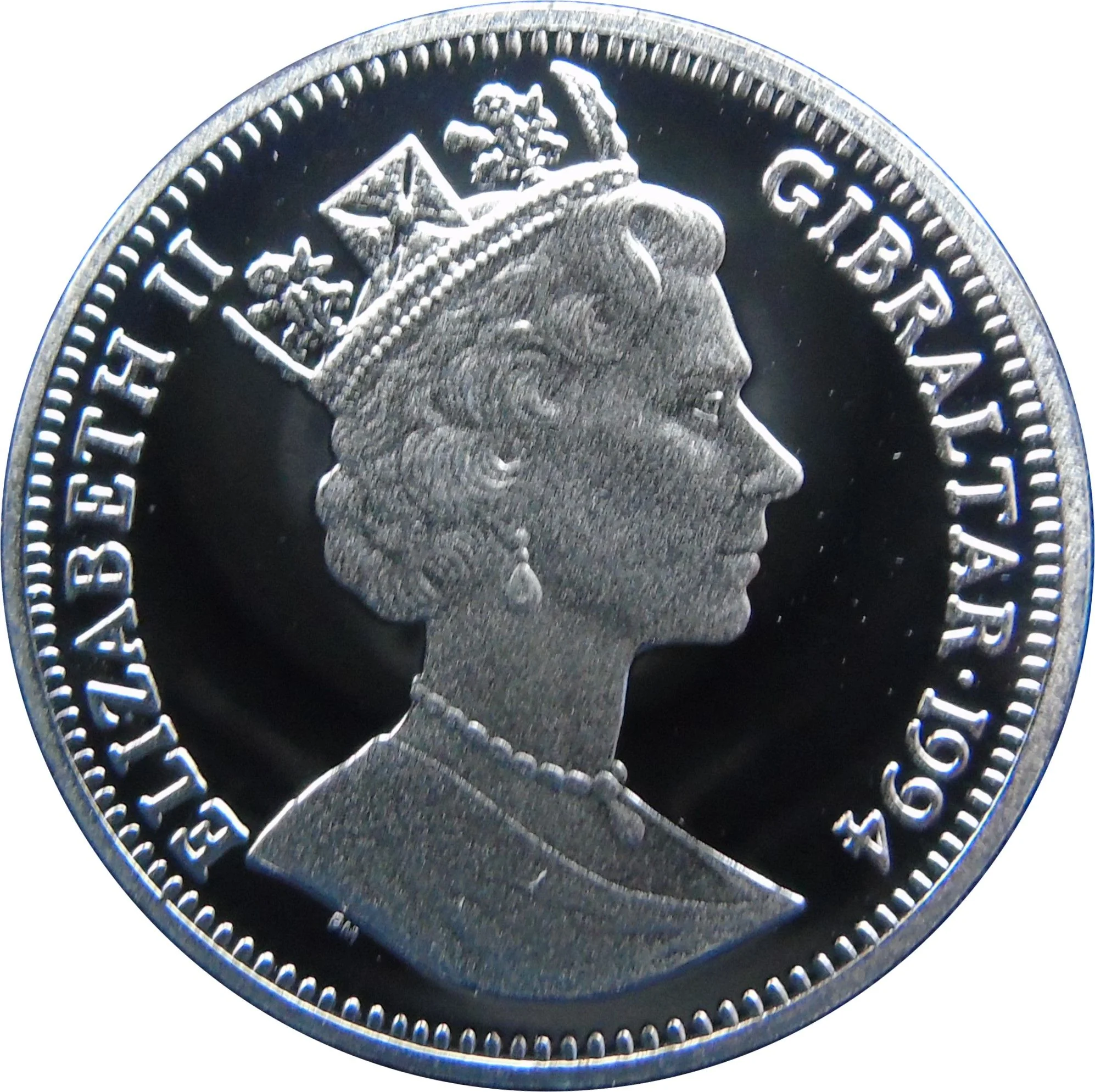
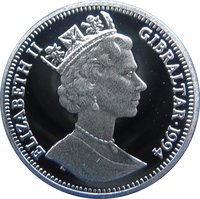
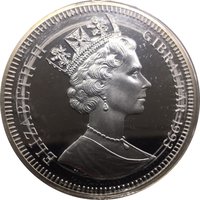
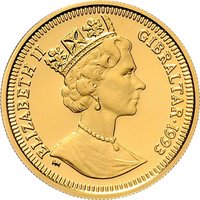
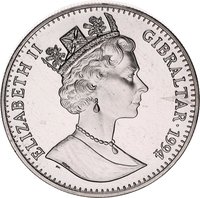
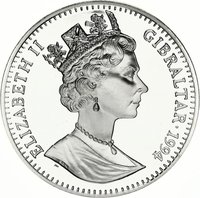
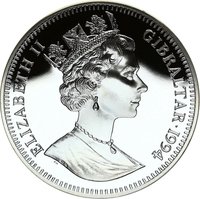
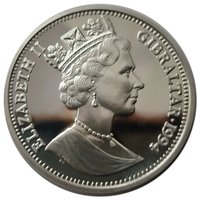
Queen Elizabeth II facing right, wearing the George IV State Diadem, surrounded by legend and date.
Inscription:
ELIZABETH II GIBRALTAR · 1994
RDM
PM
RDM
PM
Script: Latin
Designer: Raphael David Maklouf
Reverse
Description:
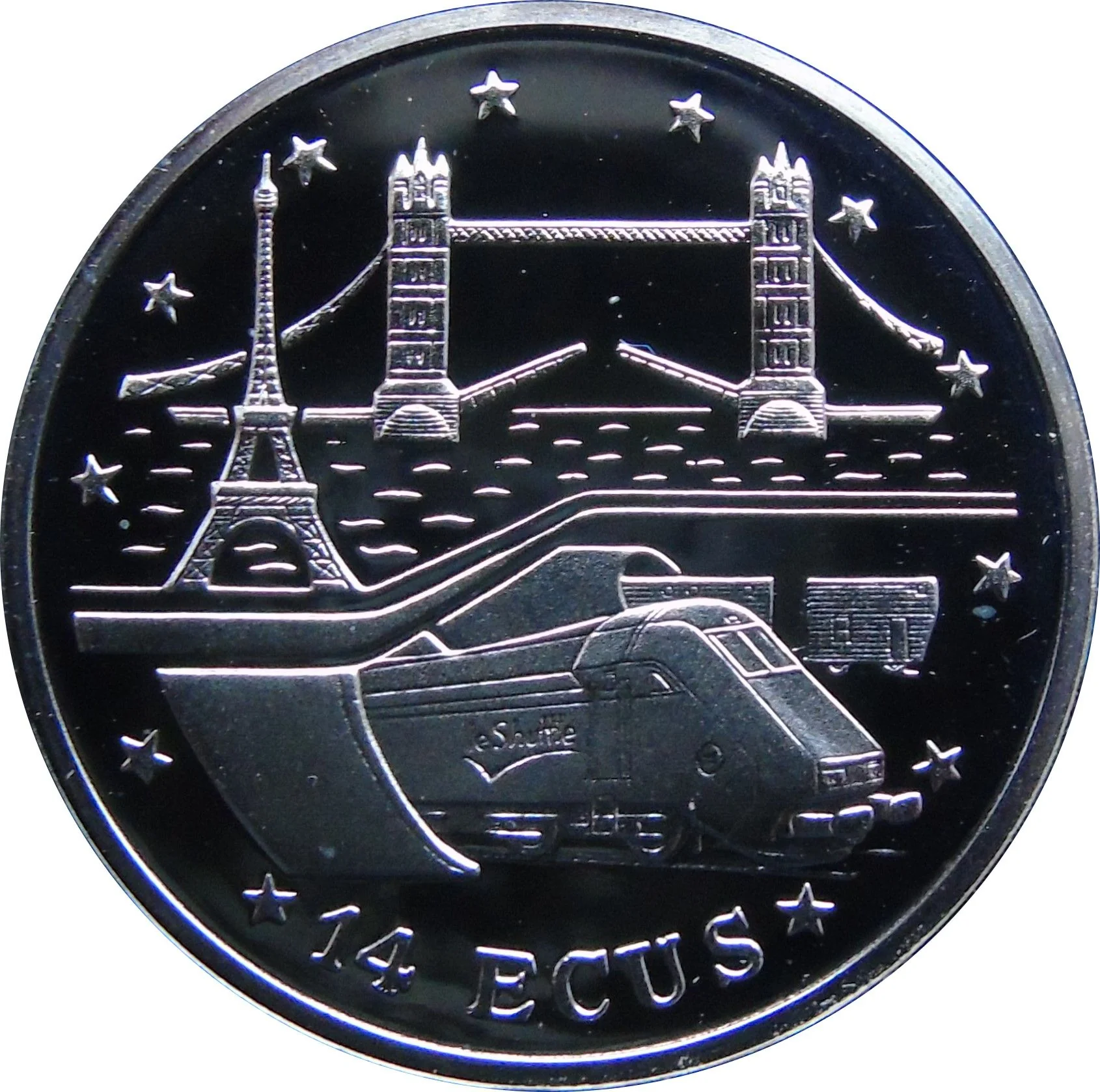
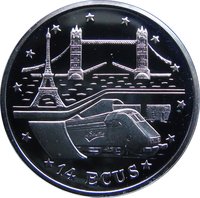
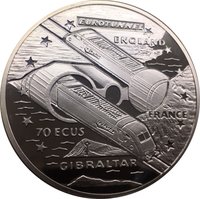
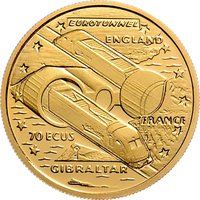
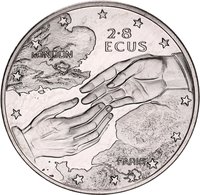
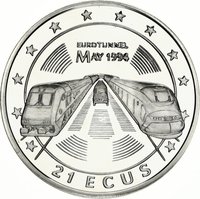
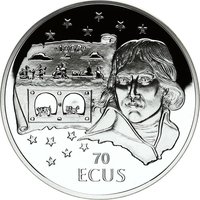
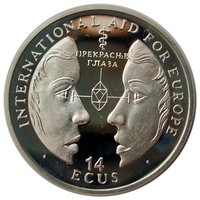
Train emerging from a tunnel, passing the Eiffel Tower and Tower Bridge.
Inscription:
14 ECUS
Script: Latin
Edge
Reeded
Categories
| Transportation> Train |
| Building> Bridge |
| Building> Tower |
| Transportation> Tunnel |
Mints
| Name | Mark |
|---|---|
| Pobjoy Mint | (PM) |
Mintings
| Year | Mint Mark | Mintage | Quality | Collection |
|---|---|---|---|---|
| 1994 | PM | 30,000 | Proof |
Historical background
In 1994, Gibraltar’s currency situation was defined by its unique political status as a British Overseas Territory and its practical economic integration with neighbouring Spain. The legal tender was, and remains, the Gibraltar pound (GIP), issued by the Government of Gibraltar and pegged at par with the Pound Sterling (GBP). Sterling notes and coins also circulated freely and were accepted interchangeably with local currency, reflecting Gibraltar's close constitutional and financial ties to the United Kingdom. However, this formal arrangement existed alongside a widespread de facto reality of a dual-currency economy.
Due to the high volume of daily cross-border traffic from Spain, the Spanish peseta was also ubiquitously accepted in most Gibraltarian retail and hospitality businesses. This was a pragmatic response to the influx of Spanish workers and tourists, who formed the backbone of the local consumer economy. Shop prices were often displayed in both currencies, though the exchange rates used could be unfavourable to peseta users. This created a fluid monetary environment where transactions in three forms of cash—Gibraltar pounds, British pounds, and Spanish pesetas—were commonplace.
The year 1994 fell within a period of relative stability for the Gibraltar pound's peg, but it also preceded significant monetary changes in Europe. As a member of the European Community (but not part of the UK's VAT area or the EU Customs Union), Gibraltar watched the developments toward European Economic and Monetary Union. The future adoption of the euro by Spain (in 1999) would eventually transform the cross-border currency dynamic, gradually phasing out the peseta over the following years. Thus, 1994 represented the latter phase of a long-standing, informal peseta-sterling duality on the Rock.
Due to the high volume of daily cross-border traffic from Spain, the Spanish peseta was also ubiquitously accepted in most Gibraltarian retail and hospitality businesses. This was a pragmatic response to the influx of Spanish workers and tourists, who formed the backbone of the local consumer economy. Shop prices were often displayed in both currencies, though the exchange rates used could be unfavourable to peseta users. This created a fluid monetary environment where transactions in three forms of cash—Gibraltar pounds, British pounds, and Spanish pesetas—were commonplace.
The year 1994 fell within a period of relative stability for the Gibraltar pound's peg, but it also preceded significant monetary changes in Europe. As a member of the European Community (but not part of the UK's VAT area or the EU Customs Union), Gibraltar watched the developments toward European Economic and Monetary Union. The future adoption of the euro by Spain (in 1999) would eventually transform the cross-border currency dynamic, gradually phasing out the peseta over the following years. Thus, 1994 represented the latter phase of a long-standing, informal peseta-sterling duality on the Rock.
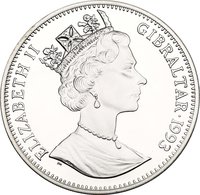
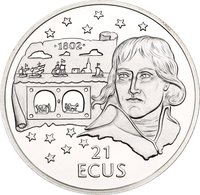
Series: Eurotunnel
💎 Very Rare