

Japan

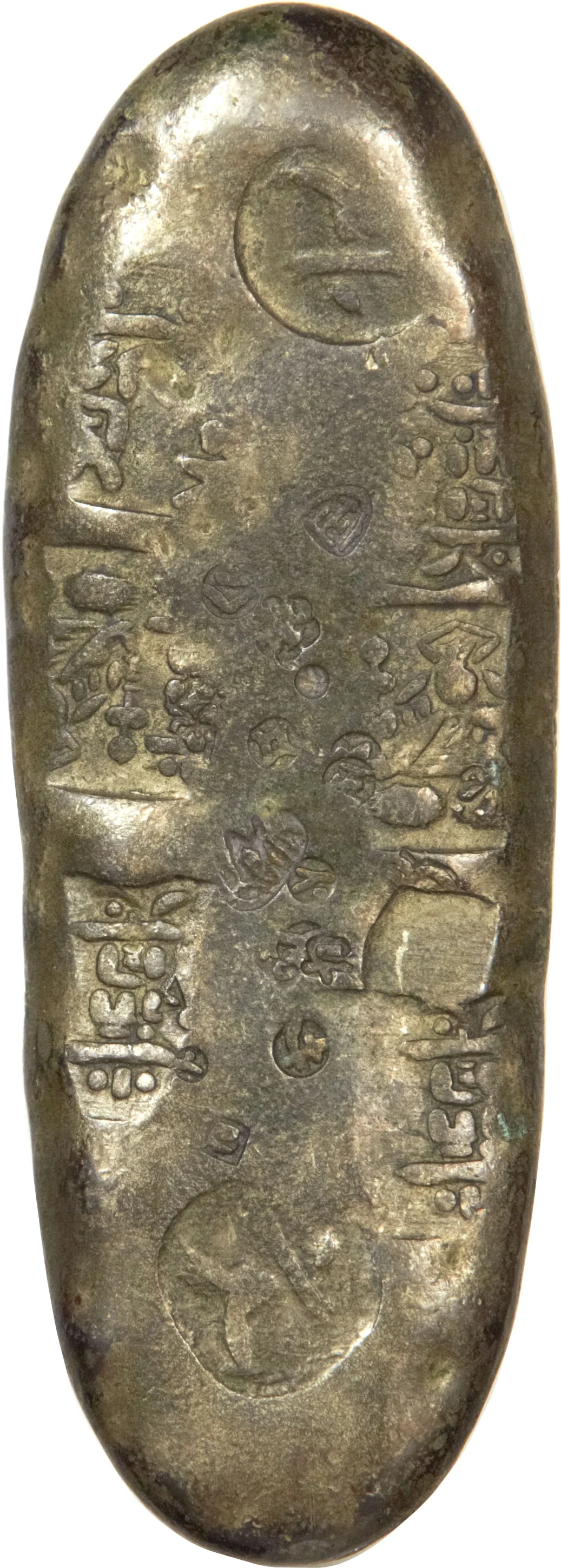
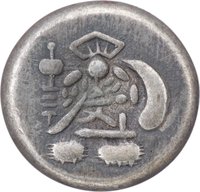
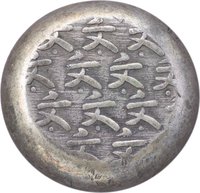
Obverse
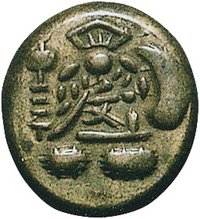
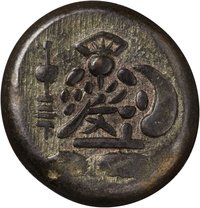
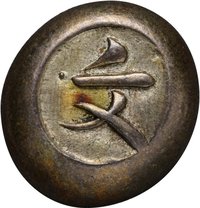
Description:
Six stamps with small end stamps.
Inscription:
文
文
文
Translation:
Civilization / Culture / Writing
Language: Classical Chinese
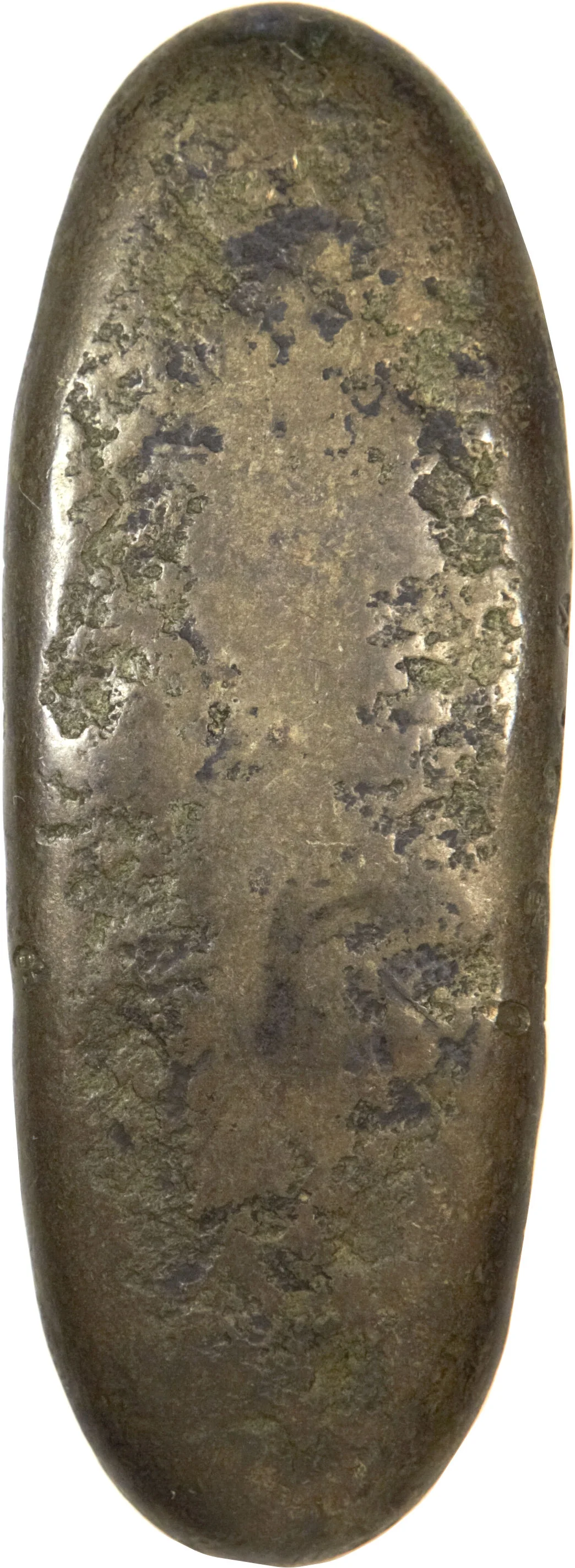
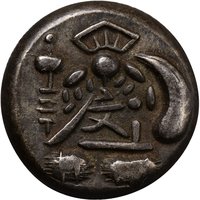
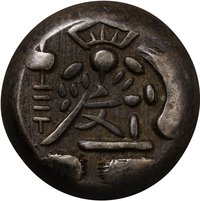
Reverse
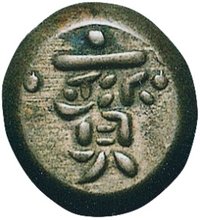
Description:
Unfinished
Edge
Mintings
| Year | Mint Mark | Mintage | Quality | Collection |
|---|---|---|---|---|
| — | — | — |
Historical background
In 1820, Japan operated under a complex and strained multi-metallic currency system administered by the Tokugawa shogunate. The official system was based on three coinages: gold ryō (and their fractional bu and shu coins) for large transactions and the samurai elite; silver chōgin and mameita-gin (ingots and bean-shaped pieces), which were traded by weight in the commercial hub of Osaka; and copper mon and zeni for everyday use. This system was complicated by the existence of numerous local clan notes (hansatsu) issued by feudal domains to address local shortages, creating a fragmented monetary landscape.
The period was marked by severe debasement and chronic currency instability. Facing persistent fiscal deficits, the shogunate repeatedly ordered coinage debasements, reducing the precious metal content in gold and silver coins while maintaining their face value to generate seigniorage revenue. The Tenpō Reforms were still two decades away, but the precedents set by earlier debasements under the Kyōhō (1736) and Bunsei (1818-1829) eras had severely eroded public trust in the currency. This led to widespread currency speculation, hoarding of older, purer coins (Gresham's Law in action), and price inflation that disproportionately impacted the fixed-stipend samurai and peasantry.
Economically, this monetary turmoil occurred against a backdrop of a commercial economy that had outgrown its rigid feudal structure. The growing merchant class in cities like Osaka and Edo (Tokyo) increasingly relied on sophisticated credit instruments and rice brokerage, while the official coinage system struggled to facilitate nationwide trade. The disconnect between a debased central currency, hundreds of local paper issues, and a vibrant market economy created significant friction, highlighting the growing inability of the Tokugawa financial policies to manage the nation's economic activity, foreshadowing the deeper crises of the mid-19th century.
The period was marked by severe debasement and chronic currency instability. Facing persistent fiscal deficits, the shogunate repeatedly ordered coinage debasements, reducing the precious metal content in gold and silver coins while maintaining their face value to generate seigniorage revenue. The Tenpō Reforms were still two decades away, but the precedents set by earlier debasements under the Kyōhō (1736) and Bunsei (1818-1829) eras had severely eroded public trust in the currency. This led to widespread currency speculation, hoarding of older, purer coins (Gresham's Law in action), and price inflation that disproportionately impacted the fixed-stipend samurai and peasantry.
Economically, this monetary turmoil occurred against a backdrop of a commercial economy that had outgrown its rigid feudal structure. The growing merchant class in cities like Osaka and Edo (Tokyo) increasingly relied on sophisticated credit instruments and rice brokerage, while the official coinage system struggled to facilitate nationwide trade. The disconnect between a debased central currency, hundreds of local paper issues, and a vibrant market economy created significant friction, highlighting the growing inability of the Tokugawa financial policies to manage the nation's economic activity, foreshadowing the deeper crises of the mid-19th century.
Series: 1820 Japan circulation coins
✨ Legendary