

8 Momme – Morioka Domain
Japan
Context
Year: 1868
Country: Japan 
Issuer: Morioka Domain
Currency:
(since 1868)
Subdivision: 8 Momme = 1 Ryō
Demonetized: Yes
Material
References
KM: #Click to copy to clipboard52
Numista: #27239
Value
Bullion value: $55.35
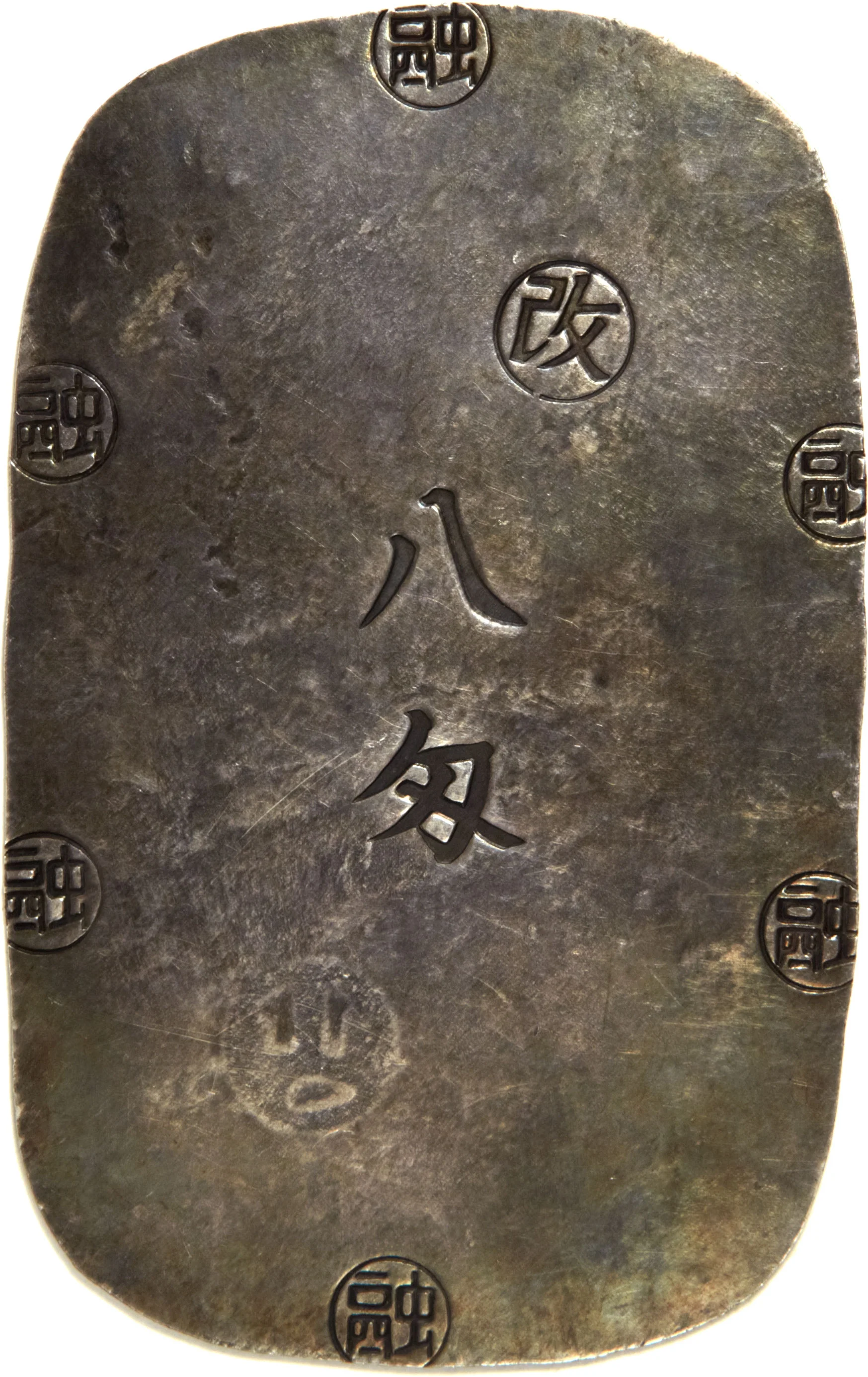
Obverse
Description:
Vertical stamp with six around the edge.
Inscription:
融
改
融 八 融
匁
融 融
融
改
融 八 融
匁
融 融
融
Translation:
Ryu
Kai
Ryu Hachi Ryu
Monme
Ryu Ryu
Ryu
Kai
Ryu Hachi Ryu
Monme
Ryu Ryu
Ryu
Language: Japanese
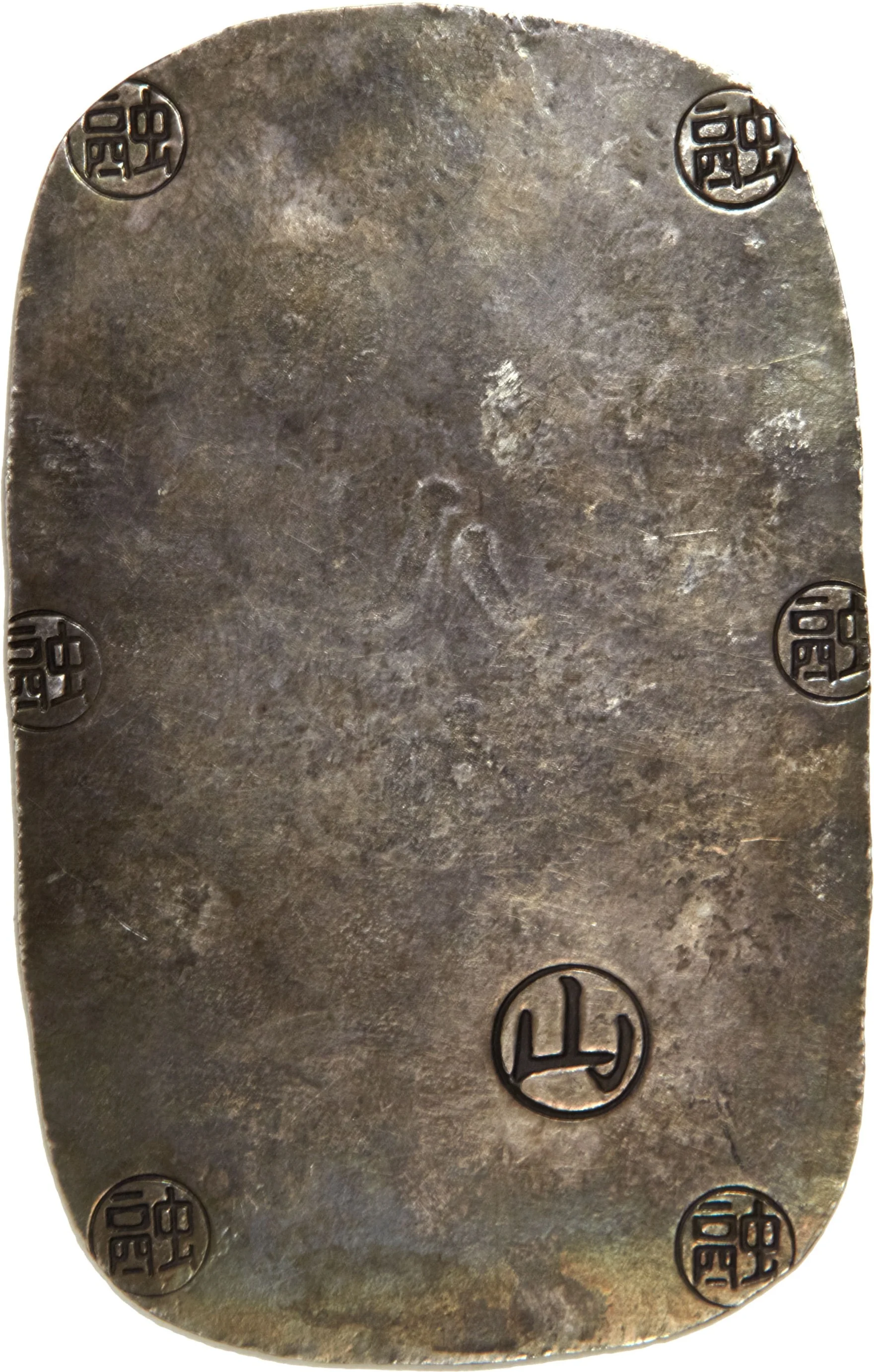
Reverse
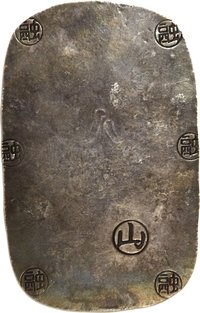
Description:
Stamped circle on base, six stamped circles around rim.
Inscription:
融
融 融
融 融
山
融
融 融
融 融
山
融
Translation:
Rong
Rong Rong
Rong Rong
Shan
Rong
Rong Rong
Rong Rong
Shan
Rong
Language: Chinese
Edge
Mintings
| Year | Mint Mark | Mintage | Quality | Collection |
|---|---|---|---|---|
| 1868 | — | — |
Historical background
In 1868, the Morioka Domain (also known as the Nanbu Domain) in northern Japan faced a severe and complex currency crisis, deeply intertwined with the political upheaval of the Meiji Restoration. The domain's economy, long reliant on its own hansatsu (domainal paper notes), was destabilized by the new imperial government's push for a unified, national currency and the financial demands of the Boshin War. Morioka, as a key member of the pro-Tokugawa Ōuetsu Reppan Dōmei (Northern Alliance), was compelled to levy heavy war taxes and issue vast quantities of new hansatsu to fund its military mobilization against the imperial forces. This rapid expansion of the money supply, without sufficient metallic reserves, led to drastic inflation and a collapse in public trust in the domain's notes.
The crisis was exacerbated by the domain's inherent economic weaknesses. Morioka was not a wealthy region, with a primarily agricultural base and limited gold and silver production from its mines. Historically, its hansatsu had already experienced periods of devaluation. The sudden, war-driven issuance pushed the system beyond its limits. Furthermore, the new Meiji government, as it consolidated control, declared its intent to abolish the hansatsu system altogether, rendering Morioka's notes politically as well as economically precarious. This created a chaotic multi-currency environment where imperial government notes, various domain notes, and old coinage circulated with wildly fluctuating values.
By the end of 1868, following the domain's surrender in December, the currency situation was one of profound disorder. The victorious imperial government mandated the redemption and cancellation of Morioka's hansatsu, a process that would take years and ultimately impose significant losses on holders, especially common citizens and merchants. This financial collapse mirrored the political fall of the domain itself, stripping it of its fiscal autonomy and accelerating its integration into the modern Japanese monetary system, a painful but necessary step in the centralization of state power under the Meiji regime.
The crisis was exacerbated by the domain's inherent economic weaknesses. Morioka was not a wealthy region, with a primarily agricultural base and limited gold and silver production from its mines. Historically, its hansatsu had already experienced periods of devaluation. The sudden, war-driven issuance pushed the system beyond its limits. Furthermore, the new Meiji government, as it consolidated control, declared its intent to abolish the hansatsu system altogether, rendering Morioka's notes politically as well as economically precarious. This created a chaotic multi-currency environment where imperial government notes, various domain notes, and old coinage circulated with wildly fluctuating values.
By the end of 1868, following the domain's surrender in December, the currency situation was one of profound disorder. The victorious imperial government mandated the redemption and cancellation of Morioka's hansatsu, a process that would take years and ultimately impose significant losses on holders, especially common citizens and merchants. This financial collapse mirrored the political fall of the domain itself, stripping it of its fiscal autonomy and accelerating its integration into the modern Japanese monetary system, a painful but necessary step in the centralization of state power under the Meiji regime.
✨ Legendary