

100 mon – Morioka Domain
Add to wishlist
Japan
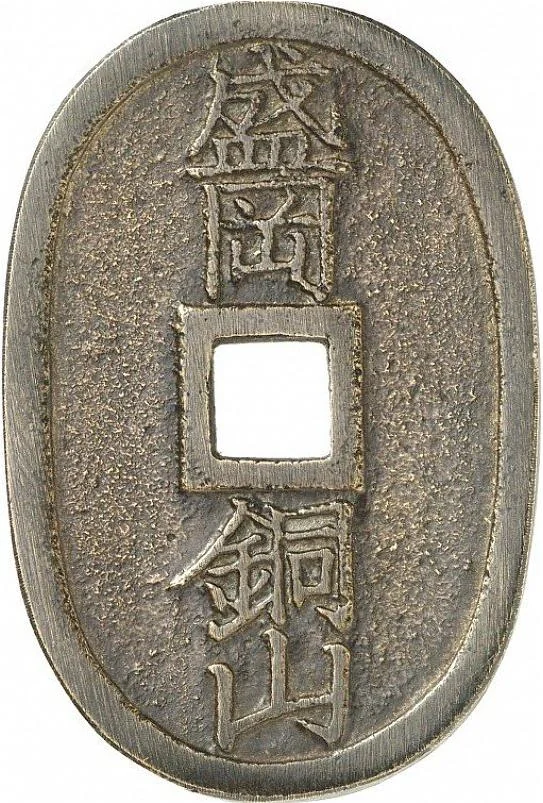
Obverse
Description:
Mint name around hole.
Inscription:
盛
岡
銅
山
岡
銅
山
Translation:
Morioka Copper Mine
Language: Japanese
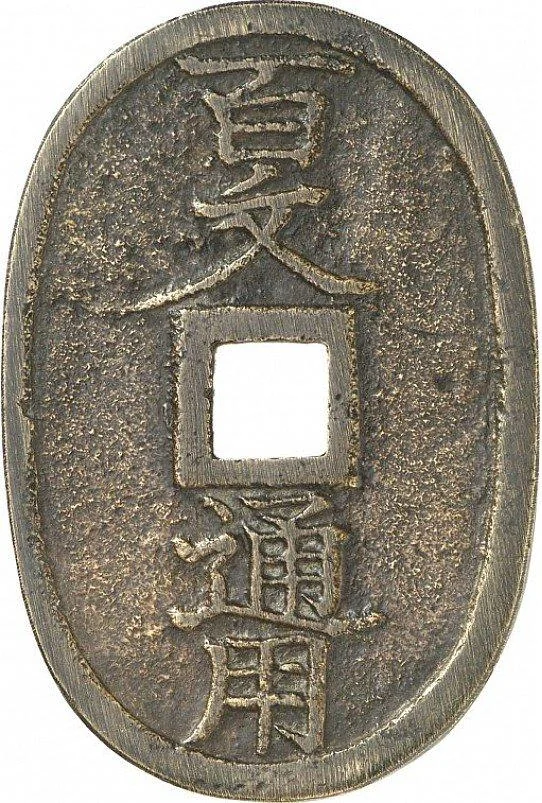
Reverse
Description:
Value over hole
Inscription:
百
文
通
用
文
通
用
Translation:
One hundred coins for universal use.
Language: Chinese
Edge
Mintings
| Year | Mint Mark | Mintage | Quality | Collection |
|---|---|---|---|---|
| 1866 | — | — |
Historical background
In 1866, the Morioka Domain, part of the larger Nanbu clan holdings in northern Japan, faced a severe and multifaceted currency crisis typical of many late Edo-period domains. The domain's finances were chronically strained by the sankin-kōtai system, which required the daimyō to maintain a costly residence in Edo and travel there periodically, and by poor agricultural yields in its often harsh climate. To cover deficits, the domain had long resorted to issuing its own paper scrip, known as hansatsu. However, by the 1860s, an over-issuance of this scrip had led to drastic depreciation and a loss of public trust, causing rampant inflation within its borders and crippling the local economy.
The situation was critically exacerbated by the domain's political alignment during the Chōshū Expedition. In 1866, the Tokugawa shogunate launched a second punitive campaign against the rebellious Chōshū Domain, and Morioka, as a loyal supporter of the shogunate, was obligated to contribute troops and funds. This military mobilization placed an unbearable immediate financial burden on the domain, forcing it to extract more taxes from an already suffering peasantry and to issue even more devalued currency to pay for supplies and soldiers' wages. This effectively weaponized the existing monetary instability, pushing the domain's economic system toward collapse.
Consequently, by the end of 1866, the Morioka Domain was in a state of profound distress. The currency was nearly worthless, leading to severe hardship for samurai on fixed stipends and commoners alike. This economic disintegration directly fueled social unrest and set the stage for the widespread peasant uprisings and samurai discontent that would erupt in the following years, weakening the domain's authority just as the entire Tokugawa system entered its final, tumultuous phase. The monetary crisis of 1866 was therefore both a symptom of the domain's structural weaknesses and a direct catalyst for its impending political and social turmoil.
The situation was critically exacerbated by the domain's political alignment during the Chōshū Expedition. In 1866, the Tokugawa shogunate launched a second punitive campaign against the rebellious Chōshū Domain, and Morioka, as a loyal supporter of the shogunate, was obligated to contribute troops and funds. This military mobilization placed an unbearable immediate financial burden on the domain, forcing it to extract more taxes from an already suffering peasantry and to issue even more devalued currency to pay for supplies and soldiers' wages. This effectively weaponized the existing monetary instability, pushing the domain's economic system toward collapse.
Consequently, by the end of 1866, the Morioka Domain was in a state of profound distress. The currency was nearly worthless, leading to severe hardship for samurai on fixed stipends and commoners alike. This economic disintegration directly fueled social unrest and set the stage for the widespread peasant uprisings and samurai discontent that would erupt in the following years, weakening the domain's authority just as the entire Tokugawa system entered its final, tumultuous phase. The monetary crisis of 1866 was therefore both a symptom of the domain's structural weaknesses and a direct catalyst for its impending political and social turmoil.
💎 Extremely Rare