

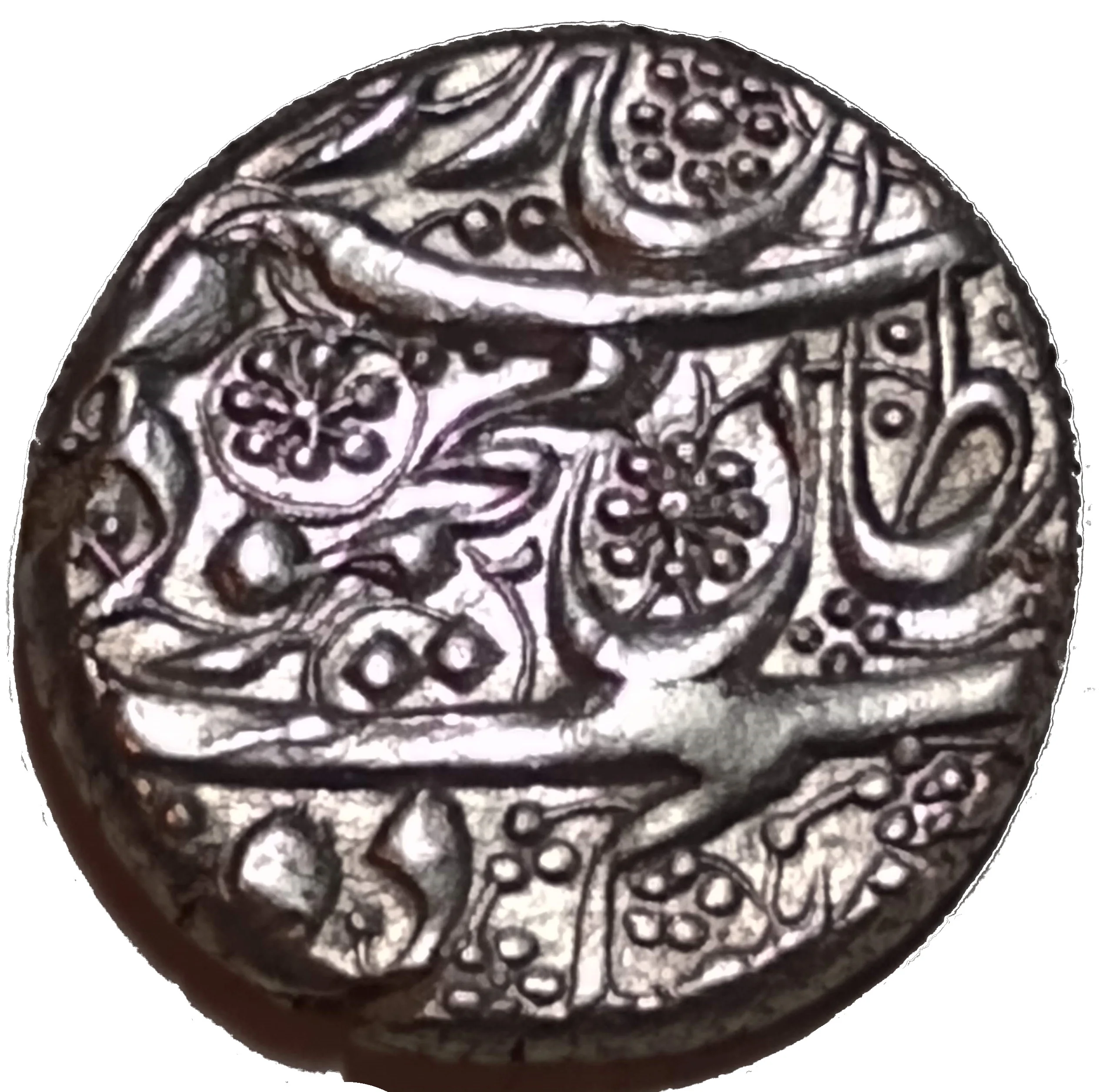
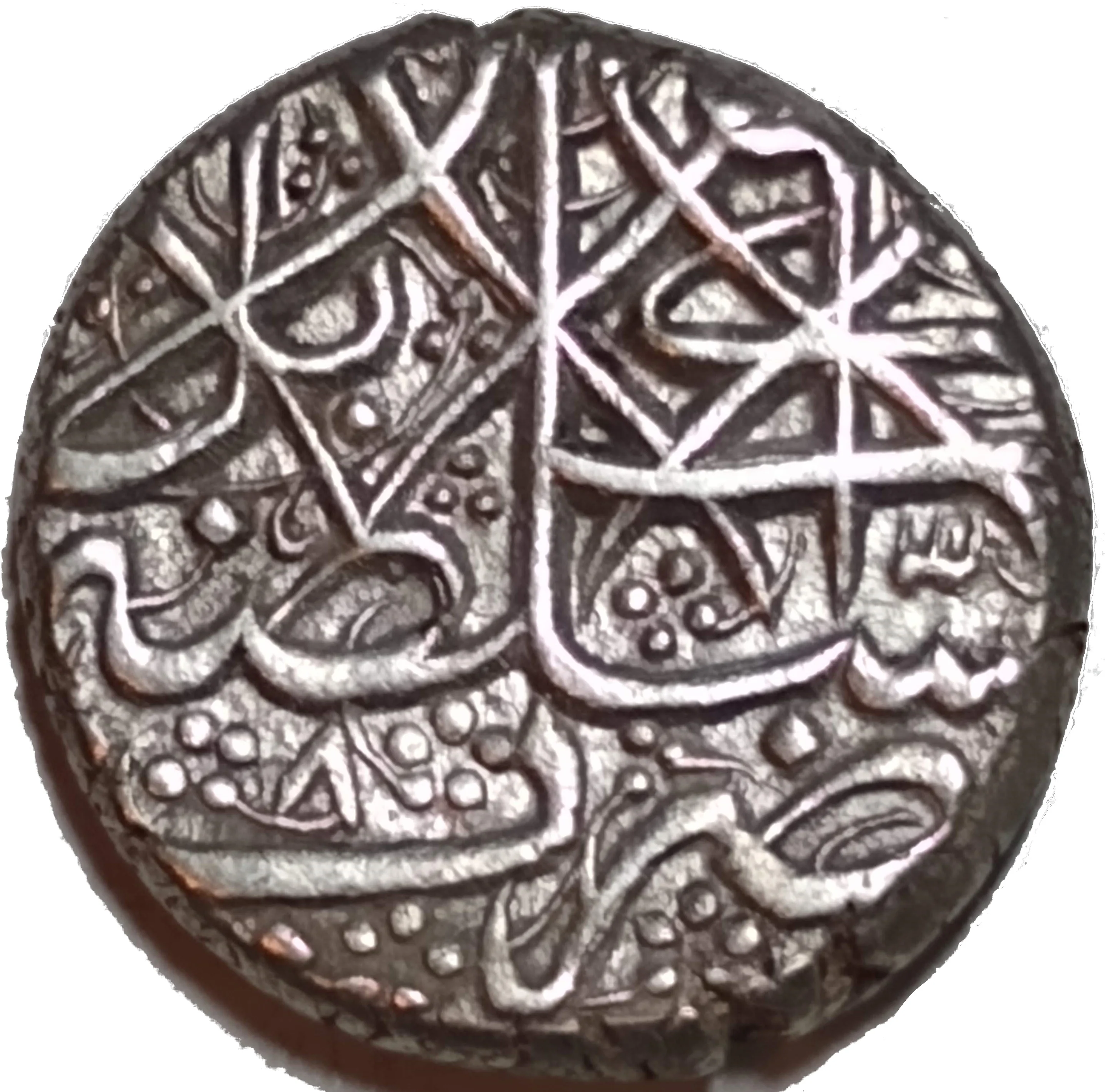
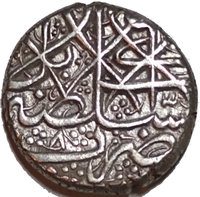
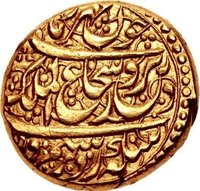
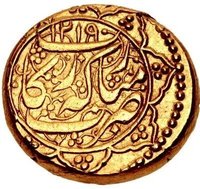
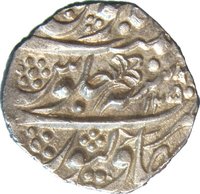
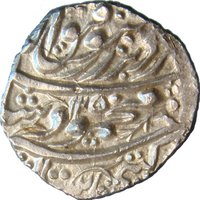
1 Rupee – Afghanistan
Afghanistan
Context
Material
Diameter: 20.5 mm
Weight: 10.8 g
Silver weight: 10.80 g
Thickness: 3.5 mm
Shape: Irregular round
Composition: Silver
Magnetic: No
Alignment: Medal alignment
flip
References
KM: #Click to copy to clipboard463
Numista: #271109
Value
Bullion value: $30.67
Mintings
| Year | Mint Mark | Mintage | Quality | Collection |
|---|---|---|---|---|
| 1807 | — | — | ||
| 1813 | — | — | ||
| 1815 | — | — | ||
| 1816 | — | — | ||
| 1817 | — | — | ||
| 1818 | — | — |
Historical background
In 1807, Afghanistan was not a unified nation-state with a single currency, but a fragmented realm of competing principalities and tribal confederacies. The Durrani Empire, founded by Ahmad Shah Durrani in 1747, was in a state of severe decline and fragmentation following a protracted civil war among his descendants. Effective power was divided primarily between two rival rulers: Shah Mahmud Durrani, who held the capital of Kabul and the western regions, and his half-brother Shah Shuja Durrani, who controlled Peshawar and the eastern territories. This political division directly fractured any coherent monetary system.
The currency landscape was consequently complex and localized. The primary unit was the silver rupee, but its weight, purity, and design varied between the mints of different ruling authorities. Coins were struck in the names of the competing Sadozai kings in mints at Kabul, Peshawar, Kandahar, and Herat, leading to a proliferation of issues that traded at varying values. Alongside these, older Mughal and Persian coins remained in circulation, as did a multitude of local tribal and feudal issues. The economy was fundamentally agrarian and pastoral, with long-distance trade (and the larger silver coins that facilitated it) dominated by the powerful Hindu and Sikh merchant networks, particularly from Shikarpur and Multan.
This monetary fragmentation mirrored the geopolitical instability of the era. External pressures compounded the internal chaos: to the east, the Sikh Empire of Ranjit Singh was aggressively expanding, capturing Afghan territories and their associated revenues and mints. To the west, the Qajar dynasty of Persia posed a constant threat. The lack of a uniform, trusted currency hindered trade and centralized taxation, further weakening the ruling elites. Therefore, in 1807, Afghanistan's currency situation was one of disarray, reflecting a kingdom in the midst of disintegration, where coinage served less as a symbol of unified sovereignty and more as a testament to contested authority and regional power.
The currency landscape was consequently complex and localized. The primary unit was the silver rupee, but its weight, purity, and design varied between the mints of different ruling authorities. Coins were struck in the names of the competing Sadozai kings in mints at Kabul, Peshawar, Kandahar, and Herat, leading to a proliferation of issues that traded at varying values. Alongside these, older Mughal and Persian coins remained in circulation, as did a multitude of local tribal and feudal issues. The economy was fundamentally agrarian and pastoral, with long-distance trade (and the larger silver coins that facilitated it) dominated by the powerful Hindu and Sikh merchant networks, particularly from Shikarpur and Multan.
This monetary fragmentation mirrored the geopolitical instability of the era. External pressures compounded the internal chaos: to the east, the Sikh Empire of Ranjit Singh was aggressively expanding, capturing Afghan territories and their associated revenues and mints. To the west, the Qajar dynasty of Persia posed a constant threat. The lack of a uniform, trusted currency hindered trade and centralized taxation, further weakening the ruling elites. Therefore, in 1807, Afghanistan's currency situation was one of disarray, reflecting a kingdom in the midst of disintegration, where coinage served less as a symbol of unified sovereignty and more as a testament to contested authority and regional power.
✨ Legendary