

2 shu – Japan
Add to wishlist
Japan
Context
Material
Weight: 13.62 g
Silver Weight:: 11.51 g
Shape: Irregular rectangular
Composition: 84.5% Silver
Magnetic: No
Techniques: Hammered, Countermarked
References
Numista: #27001
Value
Bullion value: $28.72
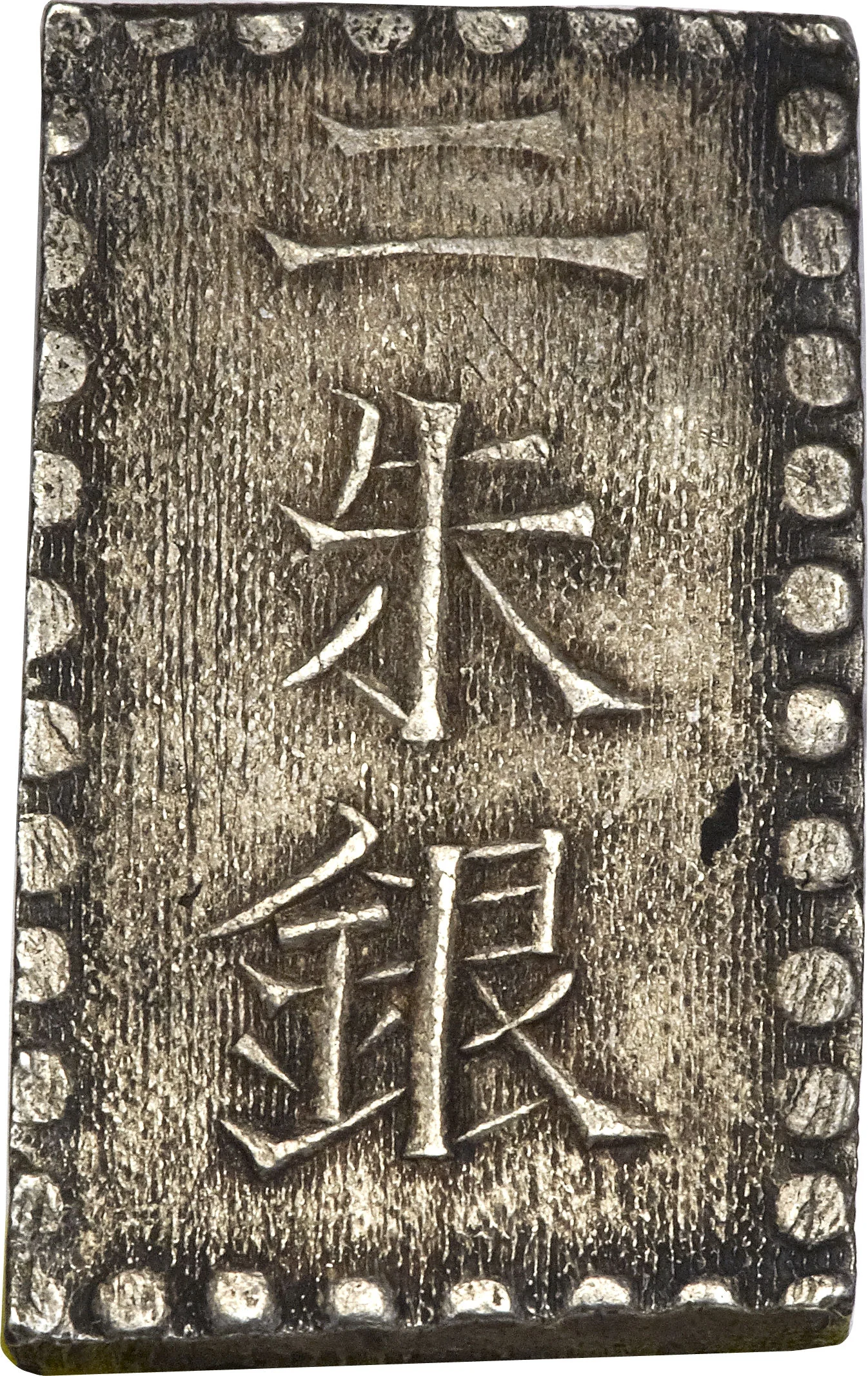
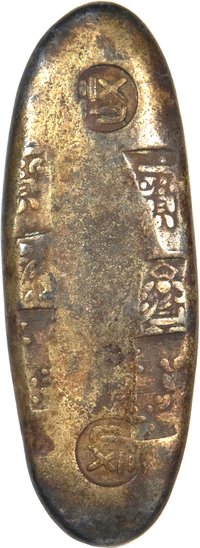
Obverse
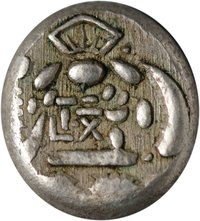
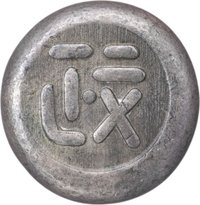
Description:
Pearl-bordered vertical characters.
Inscription:
二
朱
銀
朱
銀
Translation:
Two Zhu Silver
Scripts: Chinese (traditional, regular script)
Language: Chinese
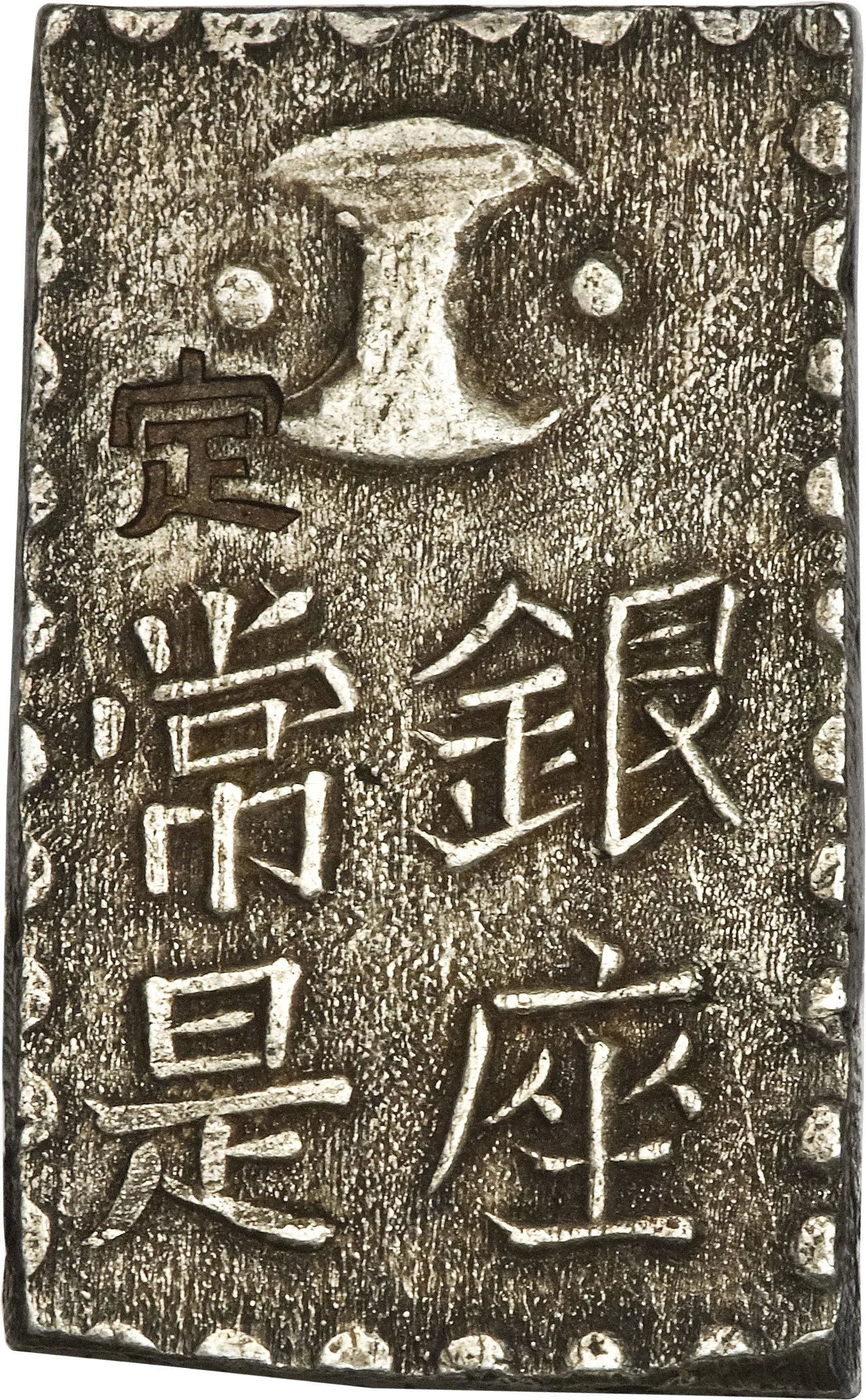
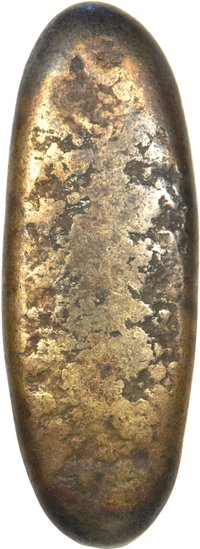
Reverse
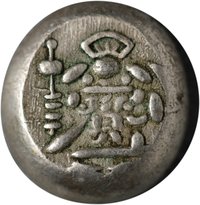
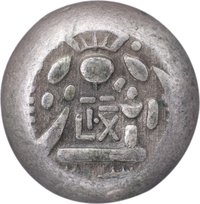
Description:
Official weight stamp "Jo" over four kanji within a pearl border.
Inscription:
定
常銀
是座
常銀
是座
Translation:
Fixed Standard Silver;
This is the seat.
This is the seat.
Scripts: Chinese (traditional, regular script)
Language: Classical Chinese
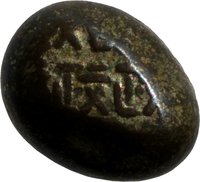
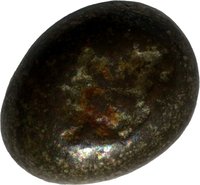
Edge
Mintings
| Year | Mint Mark | Mintage | Quality | Collection |
|---|---|---|---|---|
| 1859 | — | 706,400 |
Historical background
In 1859, Japan's currency situation was in a state of profound crisis and transition, directly triggered by the forced opening of the country under the Ansei Commercial Treaties. For over two centuries, the Tokugawa shogunate had maintained a closed, multi-metallic system with gold, silver, and copper coins, each circulating within separate, complex exchange ratios. The arrival of foreign merchants, however, exposed a critical vulnerability: Japan's official gold-to-silver exchange rate was approximately 1:5, while the global market rate was around 1:15. This discrepancy created an immediate and devastating arbitrage opportunity.
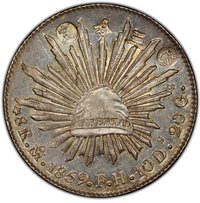
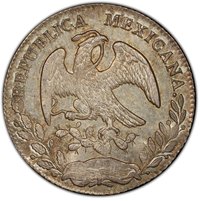
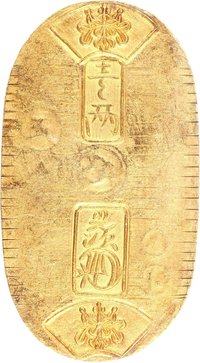
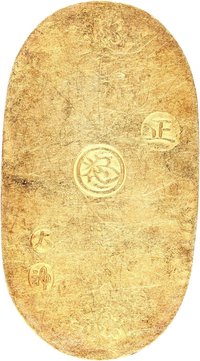
Foreign traders, primarily using Mexican silver dollars, could convert their silver into Japanese gold koban at the favourable official rate, then export the gold for massive profits on the international market. This led to a rapid and severe drain of gold from Japan, depleting the shogunate's reserves and causing domestic economic chaos. Simultaneously, a flood of cheap imported manufactured goods, paid for with silver, began to undermine local industries. The shogunate's response was haphazard and ineffective, including debasing coinage by reducing the gold content, which only fueled inflation and further eroded public confidence in the currency.
Consequently, by the end of 1859, Japan was experiencing severe inflation, specie outflow, and monetary instability. This financial turmoil critically weakened the economic authority of the Tokugawa shogunate, contributing to the social unrest and political dissatisfaction that would culminate in the Meiji Restoration less than a decade later. The currency crisis of 1859 thus stands as a pivotal moment, forcibly integrating Japan into the global monetary system and highlighting the urgent need for a centralized, modern financial system to replace the feudal-era policies.
Foreign traders, primarily using Mexican silver dollars, could convert their silver into Japanese gold koban at the favourable official rate, then export the gold for massive profits on the international market. This led to a rapid and severe drain of gold from Japan, depleting the shogunate's reserves and causing domestic economic chaos. Simultaneously, a flood of cheap imported manufactured goods, paid for with silver, began to undermine local industries. The shogunate's response was haphazard and ineffective, including debasing coinage by reducing the gold content, which only fueled inflation and further eroded public confidence in the currency.
Consequently, by the end of 1859, Japan was experiencing severe inflation, specie outflow, and monetary instability. This financial turmoil critically weakened the economic authority of the Tokugawa shogunate, contributing to the social unrest and political dissatisfaction that would culminate in the Meiji Restoration less than a decade later. The currency crisis of 1859 thus stands as a pivotal moment, forcibly integrating Japan into the global monetary system and highlighting the urgent need for a centralized, modern financial system to replace the feudal-era policies.
Series: 1859 Japan circulation coins
💎 Extremely Rare