

4 Momme 6 Fun – Kubota Domain
Japan
Context
Years: 1863–1864
Country: Japan 
Issuer: Kubota Domain
Currency:
(1863—1864)
Subdivision: 4 Momme 6 Fun = 2 Bu
Demonetized: Yes
Material
References
KM: #Click to copy to clipboard10
Numista: #26997
Value
Bullion value: $46.13
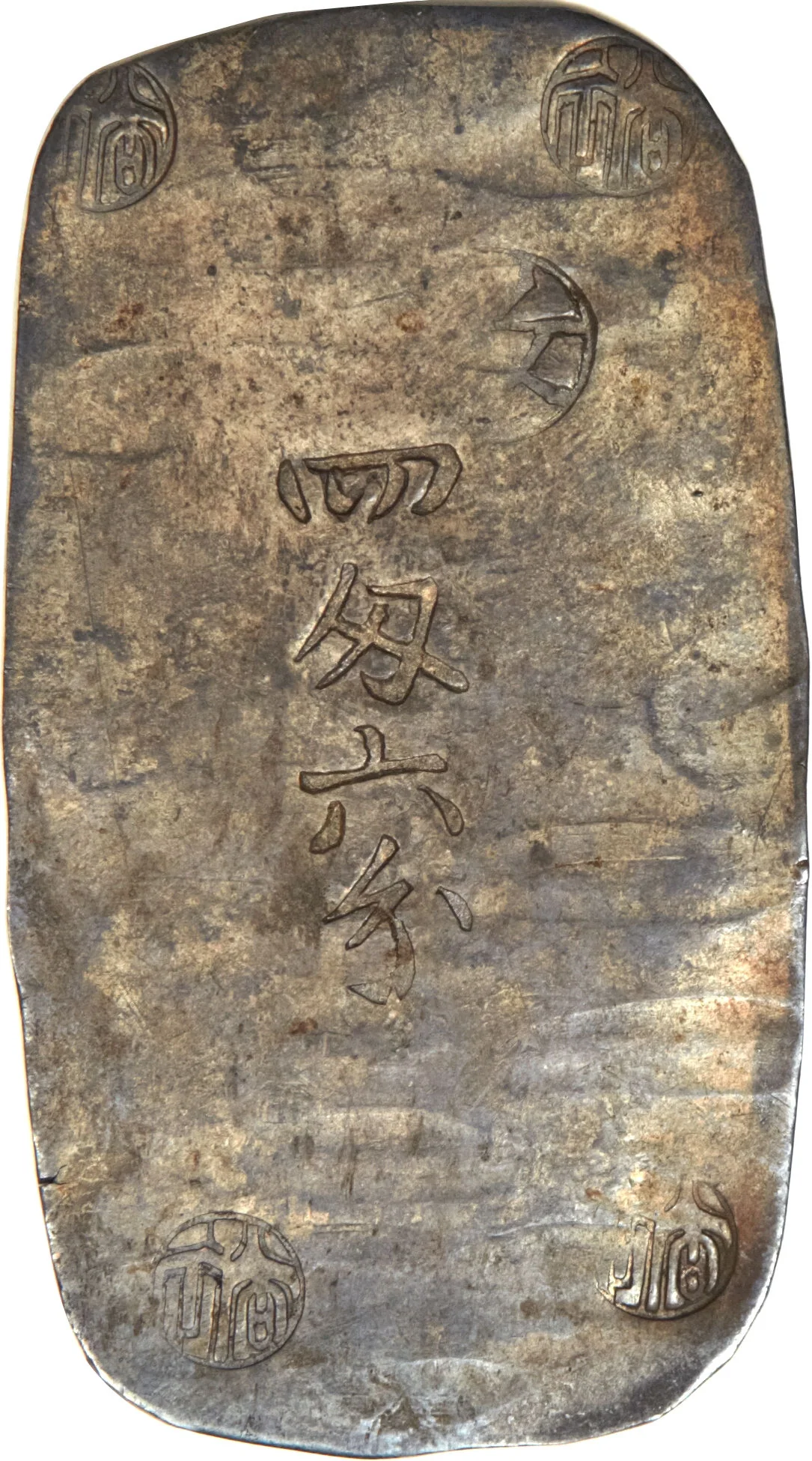
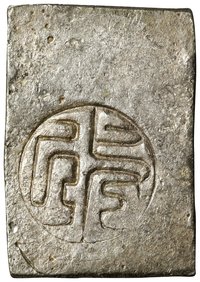
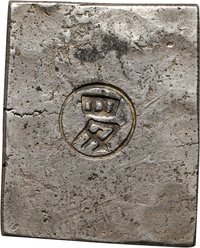
Obverse
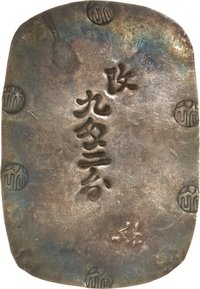
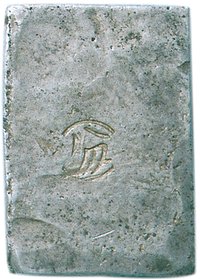
Description:
Vertical center text with four seal script stamps around the edge.
Inscription:
裕 裕
改
四
匁
六
分
裕 裕
改
四
匁
六
分
裕 裕
Translation:
Yū
Yū
Aratame (recast)
Four
Monme
Six
Bu
Yū
Yū
Yū
Aratame (recast)
Four
Monme
Six
Bu
Yū
Yū
Language: Japanese
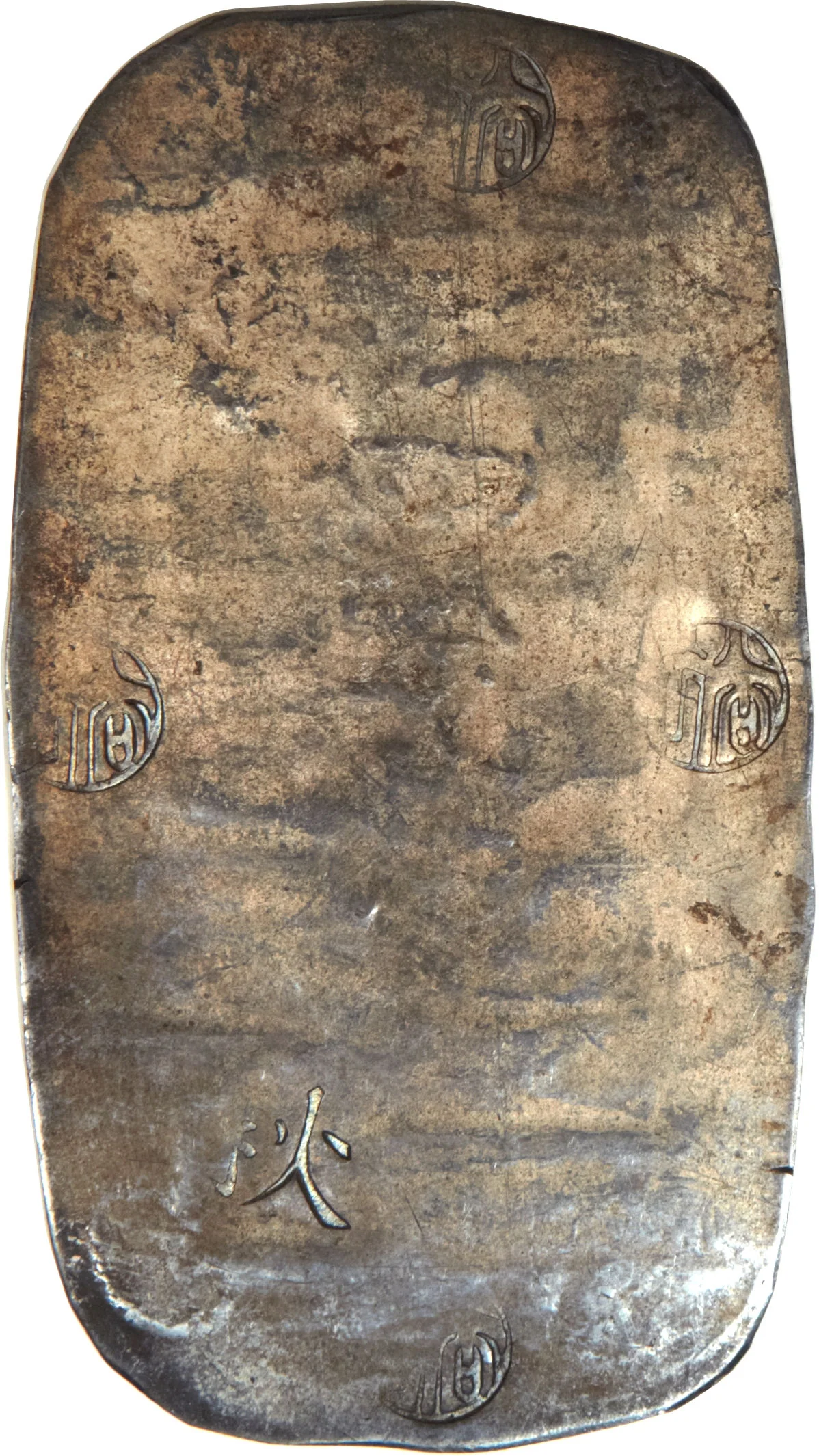
Reverse
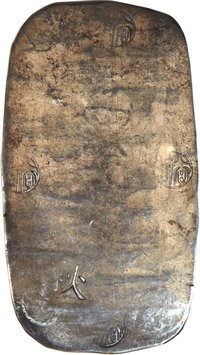
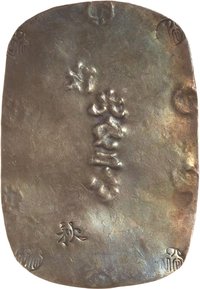
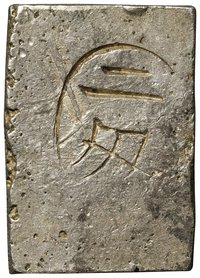
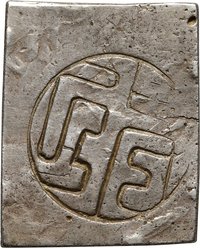
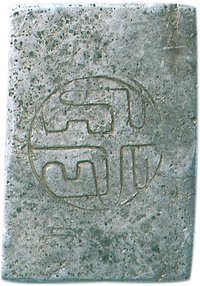
Description:
秋 (Aki) character stamp for Akita, with four seal script stamps encircling it.
Inscription:
裕
裕 裕
秋
裕
裕 裕
秋
裕
Translation:
Abundance
Abundance
Abundance
Autumn
Abundance
Abundance
Abundance
Autumn
Abundance
Language: Chinese
Edge
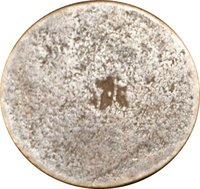
Plain
Mints
| Name | Mark |
|---|---|
| Akita | — |
Mintings
| Year | Mint Mark | Mintage | Quality | Collection |
|---|---|---|---|---|
| — | — | — |
Historical background
In 1863, the Kubota Domain (also known as the Akita Domain), ruled by the Satake clan, operated within Japan's complex and deteriorating multi-currency system on the eve of the Meiji Restoration. Like all domains, it was subject to the Tokugawa shogunate's official currency of gold ryō, silver momme, and copper mon. However, the domain's economy was primarily driven by its own feudal scrip, known as hansatsu (domainal paper notes). These notes, issued to facilitate local trade and solve liquidity problems, were nominally convertible to the shogunate's silver currency but were essentially fiat money, their value underpinned by the domain's authority and economic output, which included lucrative copper mining and rice production.
The domain's currency situation in 1863 was one of significant strain and inflation. The shogunate's own finances were in crisis due to foreign indemnities from the Unequal Treaties and internal strife, leading to repeated debasements of central coinage. This national instability devalued the metallic currencies against which hansatsu was pegged. Furthermore, the Kubota Domain, facing its own fiscal pressures from military mobilization and sankin-kōtai obligations, was likely compelled to overissue its paper notes to cover expenses. This oversupply, combined with declining public confidence in the face of political uncertainty, led to a depreciation of Kubota's hansatsu, causing price inflation and hardship for samurai on fixed stipends and the common populace.
This local monetary turmoil reflected the broader collapse of the Tokugawa political order. The inability of the shogunate to control a unified currency system and the proliferation of over 1,500 types of hansatsu across Japan, including Kubota's, highlighted the decentralization and economic fragmentation of the country. The currency chaos in Kubota in 1863 was thus a microcosm of the systemic failures that would lead to the Boshin War and the Meiji Restoration, after which the new government would aggressively centralize and modernize the monetary system, abolishing all hansatsu by 1871.
The domain's currency situation in 1863 was one of significant strain and inflation. The shogunate's own finances were in crisis due to foreign indemnities from the Unequal Treaties and internal strife, leading to repeated debasements of central coinage. This national instability devalued the metallic currencies against which hansatsu was pegged. Furthermore, the Kubota Domain, facing its own fiscal pressures from military mobilization and sankin-kōtai obligations, was likely compelled to overissue its paper notes to cover expenses. This oversupply, combined with declining public confidence in the face of political uncertainty, led to a depreciation of Kubota's hansatsu, causing price inflation and hardship for samurai on fixed stipends and the common populace.
This local monetary turmoil reflected the broader collapse of the Tokugawa political order. The inability of the shogunate to control a unified currency system and the proliferation of over 1,500 types of hansatsu across Japan, including Kubota's, highlighted the decentralization and economic fragmentation of the country. The currency chaos in Kubota in 1863 was thus a microcosm of the systemic failures that would lead to the Boshin War and the Meiji Restoration, after which the new government would aggressively centralize and modernize the monetary system, abolishing all hansatsu by 1871.

💎 Extremely Rare