

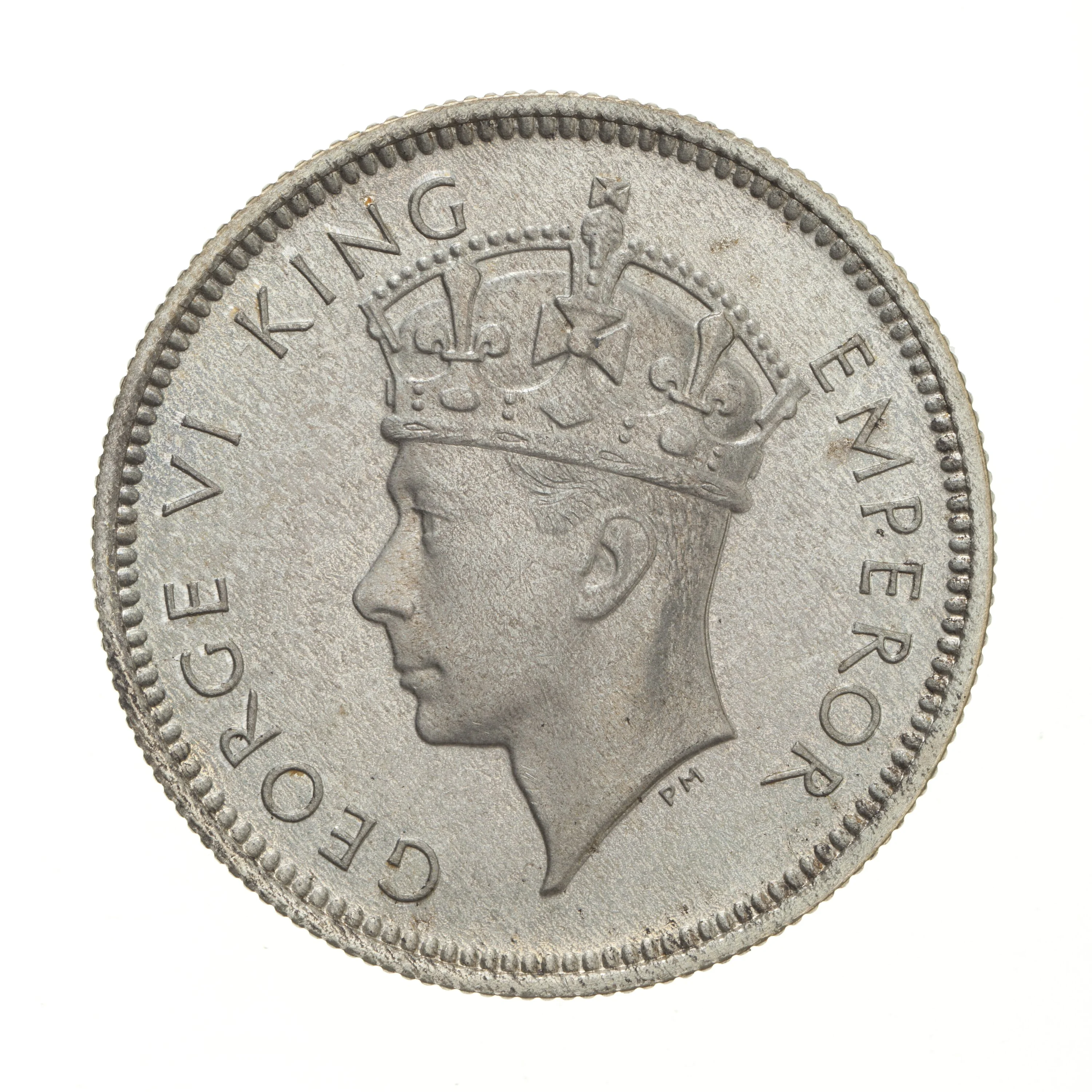
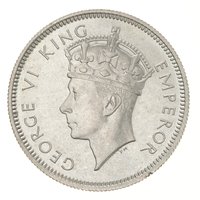
Obverse
Description:
King George VI died.
Inscription:
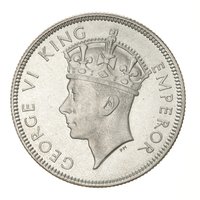
GEORGE VI KING EMPEROR
Translation:
GEORGE VI KING EMPEROR
Script: Latin
Language: English
Engraver: Percy Metcalfe
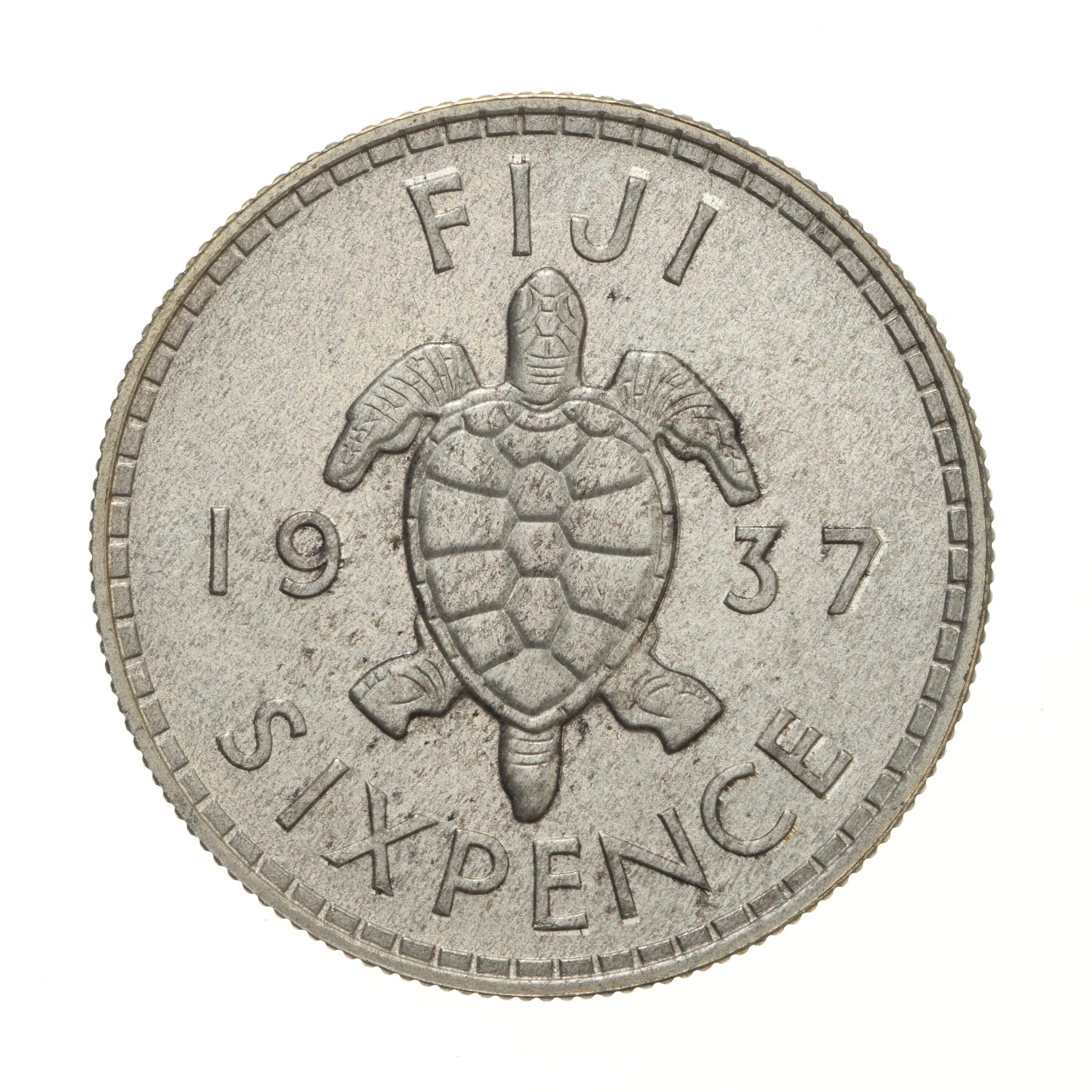
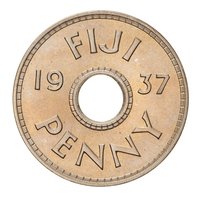
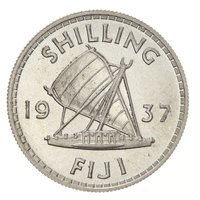
Reverse
Edge
Reeded
Categories
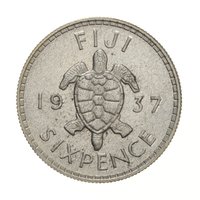
| Animal> Turtle or tortoise |
| Person> Monarch |
Mints
| Name | Mark |
|---|---|
| Royal Mint (Tower Hill) | — |
Mintings
| Year | Mint Mark | Mintage | Quality | Collection |
|---|---|---|---|---|
| 1937 | — | 40,000 | ||
| 1937 | — | — | Proof |
Historical background
In 1937, Fiji operated under a currency system directly tied to the British pound sterling, reflecting its status as a British Crown Colony. The official currency was the Fijian pound (£F), which was subdivided into 20 shillings and 240 pence, maintaining strict parity with the UK pound. This meant that Fiji's money supply and monetary policy were effectively determined by the Bank of England and the economic conditions in London, not by local Fijian needs. The physical currency in circulation consisted of British and Australian coins, alongside banknotes issued by Australian commercial banks, demonstrating a reliance on external financial institutions.
The economy underpinning this currency was dominated by the sugar industry, controlled by the Colonial Sugar Refining Company (CSR) of Australia, and copra production. These export commodities generated the sterling credits that supported the currency's value. However, this system presented significant challenges. The fixed parity and lack of a central bank meant Fiji had no mechanism to independently manage economic shocks or devalue its currency to aid exporters during price fluctuations. Furthermore, the use of foreign coinage and notes was often inconvenient for the local population, particularly in rural areas and for the Indo-Fijian community, which made up a significant portion of the sugar cane workforce.
Consequently, 1937 fell within a period of growing scrutiny over this colonial monetary arrangement. Discussions were already underway regarding the establishment of a local currency board, a common British colonial model that would issue a distinct Fijian currency still pegged to sterling but backed by dedicated reserves. This move, which would culminate in the establishment of the Fiji Currency Board in 1939, was driven by a desire for greater administrative order, symbolic identity, and a more formalized system to insulate the local economy slightly from direct external fluctuations, while maintaining the crucial sterling link for international trade.
The economy underpinning this currency was dominated by the sugar industry, controlled by the Colonial Sugar Refining Company (CSR) of Australia, and copra production. These export commodities generated the sterling credits that supported the currency's value. However, this system presented significant challenges. The fixed parity and lack of a central bank meant Fiji had no mechanism to independently manage economic shocks or devalue its currency to aid exporters during price fluctuations. Furthermore, the use of foreign coinage and notes was often inconvenient for the local population, particularly in rural areas and for the Indo-Fijian community, which made up a significant portion of the sugar cane workforce.
Consequently, 1937 fell within a period of growing scrutiny over this colonial monetary arrangement. Discussions were already underway regarding the establishment of a local currency board, a common British colonial model that would issue a distinct Fijian currency still pegged to sterling but backed by dedicated reserves. This move, which would culminate in the establishment of the Fiji Currency Board in 1939, was driven by a desire for greater administrative order, symbolic identity, and a more formalized system to insulate the local economy slightly from direct external fluctuations, while maintaining the crucial sterling link for international trade.
⭐ Somewhat Rare