

1 pound – Syria
Add to wishlist
Syria
Context
Year: 1991
Islamic (Hijri) Year:: 1412
Issuer: Syria
Period:
(since 1961)
Currency:
(since 1919)
Demonetized: Yes
Material
Diameter: 25 mm
Weight: 5.11 g
Shape: Round
Composition: Stainless steel
Technique: Milled
Alignment: Medal alignment
flip
References
KM: #
Numista: #2678
Value
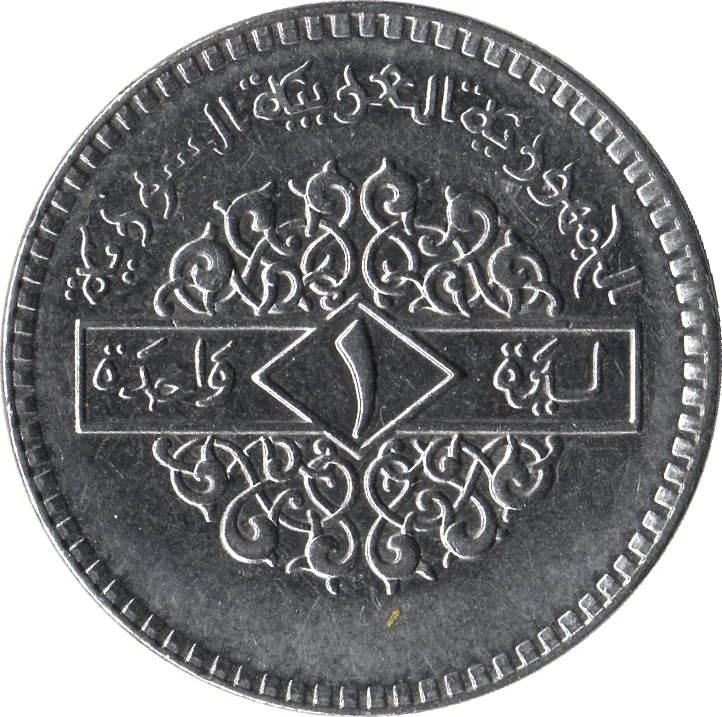
Exchange value: 1 SYP
Obverse
Description:
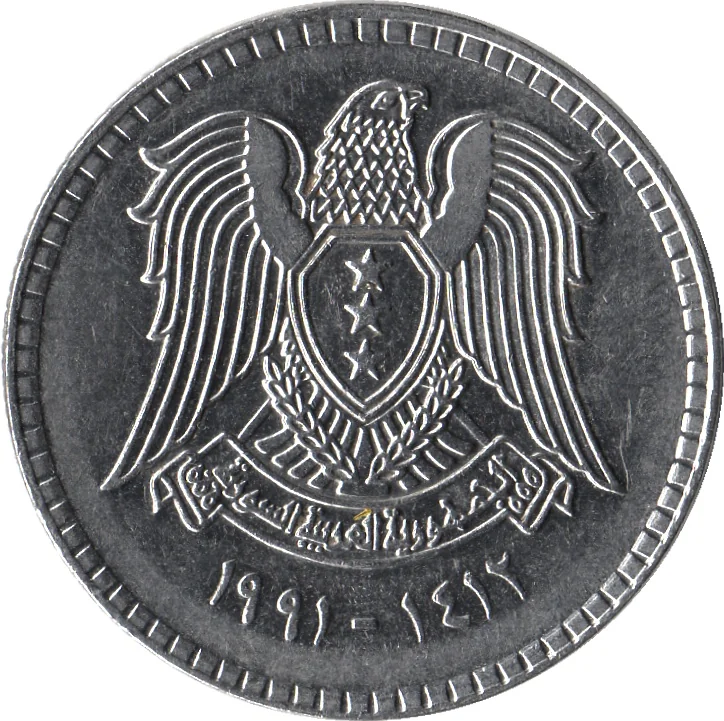
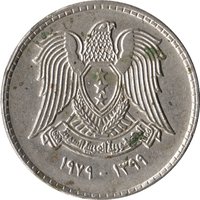
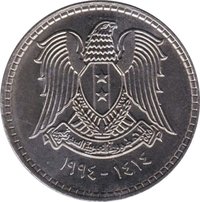
Coat of arms of Syria: The Quraish hawk holding a shield with three stars, a scroll reading "Syrian Arab Republic" in Arabic, and Arabic numerals for the Gregorian and Hijri dates below.
Inscription:
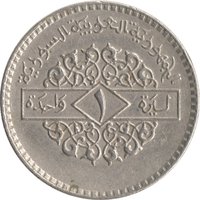
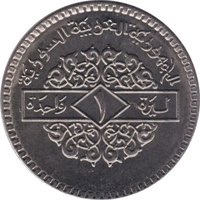
الجمهورية العربية السورية
١٤١٢ - ١٩٩١
١٤١٢ - ١٩٩١
Translation:
Syrian Arab Republic
1412 - 1991
1412 - 1991
Script: Arabic
Language: Arabic
Reverse
Edge
Reeded
Categories
| Animal> Bird |
| Symbols> Coat of Arms |
Mintings
| Year | Mint Mark | Mintage | Quality | Collection |
|---|---|---|---|---|
| 1991 | — | — |
Historical background
In 1991, Syria's currency, the Syrian pound (SYP), operated under a complex and tightly controlled multi-exchange rate system, a legacy of the economic policies of President Hafez al-Assad. The official exchange rate was fixed by the state at an artificially strong level, approximately 11.2 pounds to the US dollar, used for transactions involving essential government imports like oil, medicine, and wheat. However, this rate did not reflect economic reality, leading to the proliferation of a much weaker parallel market rate, which was tolerated by authorities and used for most other transactions, including remittances and private sector imports.
The country's economic position in 1991 was uniquely influenced by its participation in the US-led coalition against Iraq during the Gulf War. This political alignment brought significant financial rewards, most notably substantial monetary aid from Gulf Arab states, particularly Saudi Arabia and Kuwait, which were grateful for Syria's stance. This influx of foreign capital, estimated in the billions of dollars, provided a crucial lifeline. It boosted the country's foreign reserves and helped stabilize the pound on the parallel market, temporarily averting a more severe currency crisis despite underlying structural economic weaknesses.
Nevertheless, the fundamental distortions of Syria's state-dominated, import-substitution economy remained unresolved. Chronic budget deficits, inefficient public sector industries, and declining oil production prospects posed long-term threats to currency stability. The multi-rate system created opportunities for corruption and arbitrage, while discouraging foreign investment and transparent trade. Thus, while the 1991 windfall provided a temporary buffer, it postponed rather than prevented the economic pressures that would later contribute to the pound's significant depreciation in the following decades.
The country's economic position in 1991 was uniquely influenced by its participation in the US-led coalition against Iraq during the Gulf War. This political alignment brought significant financial rewards, most notably substantial monetary aid from Gulf Arab states, particularly Saudi Arabia and Kuwait, which were grateful for Syria's stance. This influx of foreign capital, estimated in the billions of dollars, provided a crucial lifeline. It boosted the country's foreign reserves and helped stabilize the pound on the parallel market, temporarily averting a more severe currency crisis despite underlying structural economic weaknesses.
Nevertheless, the fundamental distortions of Syria's state-dominated, import-substitution economy remained unresolved. Chronic budget deficits, inefficient public sector industries, and declining oil production prospects posed long-term threats to currency stability. The multi-rate system created opportunities for corruption and arbitrage, while discouraging foreign investment and transparent trade. Thus, while the 1991 windfall provided a temporary buffer, it postponed rather than prevented the economic pressures that would later contribute to the pound's significant depreciation in the following decades.
🌱 Common