

1 pound – Syria
Add to wishlist
Syria
Context
Year: 1994
Islamic (Hijri) Year:: 1414
Issuer: Syria
Period:
(since 1961)
Currency:
(since 1919)
Demonetized: Yes
Material
Diameter: 25 mm
Weight: 5 g
Shape: Round
Composition: Stainless steel
Technique: Milled
Alignment: Medal alignment
flip
References
KM: #
Numista: #9983
Value
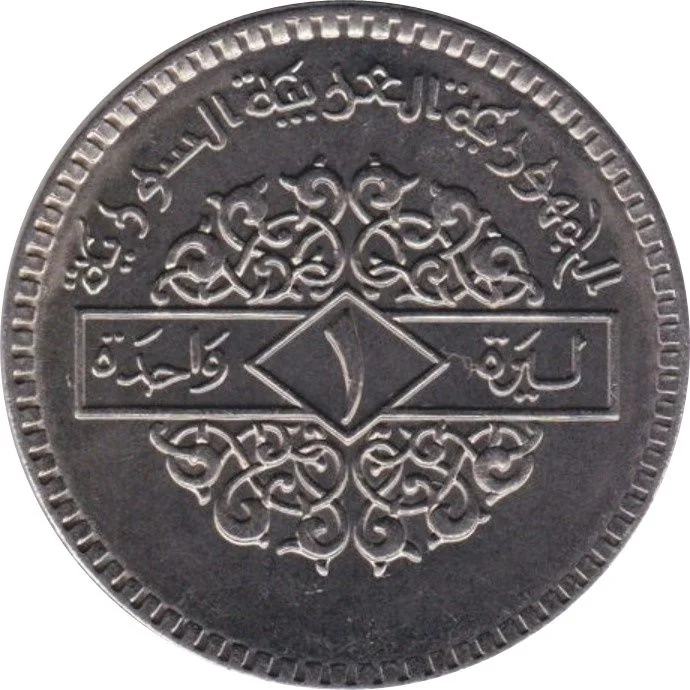
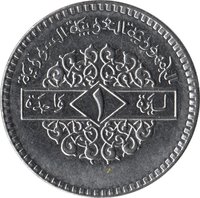
Exchange value: 1 SYP
Obverse
Description:
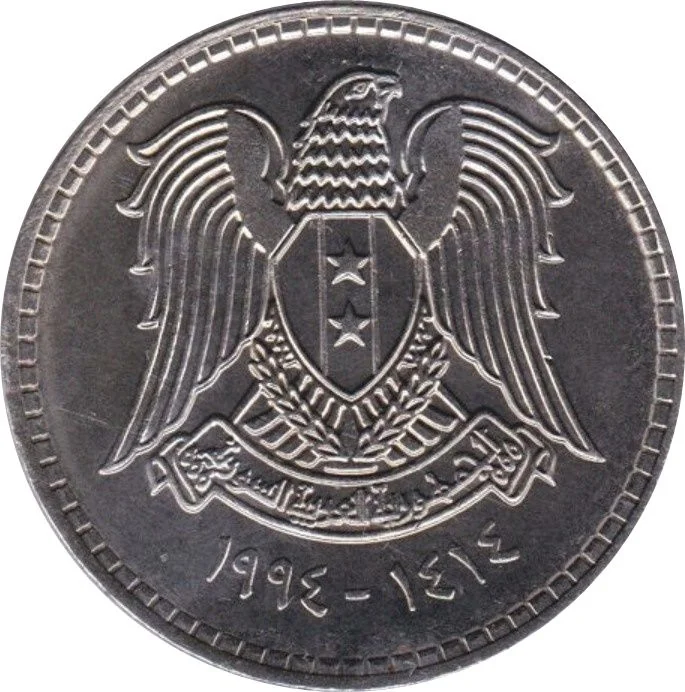
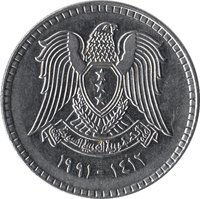
Syria's coat of arms: the Quraish hawk holding a shield with two stars and a scroll inscribed "Syrian Arab Republic" in Arabic. Arabic numerals for the Gregorian and Hijri dates appear below.
Inscription:
الجمهورية العربية اسورية
١٤١٤ - ١٩٩٤
١٤١٤ - ١٩٩٤
Translation:
The Syrian Arab Republic
1414 - 1994
1414 - 1994
Script: Arabic
Language: Arabic
Reverse
Edge
Categories
| Animal> Bird |
| Symbols> Coat of Arms |
Mintings
| Year | Mint Mark | Mintage | Quality | Collection |
|---|---|---|---|---|
| 1994 | — | — |
Historical background
In 1994, Syria's currency situation was characterized by a rigid, state-controlled system centered on the Syrian Pound (SYP), which had been officially pegged to the U.S. Dollar at a fixed rate of £S 11.225 since 1976. This official exchange rate, however, was largely reserved for government transactions, imports of essential goods, and strategic sectors. The economy operated under a complex web of exchange controls and import restrictions designed to conserve scarce foreign currency reserves, which were under pressure from a large public sector, significant military expenditure, and declining oil production that had not yet seen its mid-1990s boost.
Alongside the official rate, a vibrant black market for foreign currency thrived, driven by the needs of the private sector and ordinary citizens for transactions not sanctioned by the state. The black-market rate, while illegal, was a more realistic indicator of the pound's value and typically traded at a significant discount to the official peg, often by 50% or more. This dual-system created distortions, encouraged corruption, and hampered legitimate business, as access to cheap dollars at the official rate became a prized privilege granted by the state.
Economically, 1994 fell within a period of stagnation following the post-Gulf War downturn, with Syria facing international isolation and the loss of remittances and aid from former Gulf patrons. While the government maintained the façade of currency stability through the fixed peg, underlying pressures were building. The situation was manageable in the short term due to strict capital controls, but it stored up significant imbalances. The rigidity of this system would later contribute to severe economic challenges, with the black market becoming increasingly dominant in the decades to follow, especially after the civil war that began in 2011.
Alongside the official rate, a vibrant black market for foreign currency thrived, driven by the needs of the private sector and ordinary citizens for transactions not sanctioned by the state. The black-market rate, while illegal, was a more realistic indicator of the pound's value and typically traded at a significant discount to the official peg, often by 50% or more. This dual-system created distortions, encouraged corruption, and hampered legitimate business, as access to cheap dollars at the official rate became a prized privilege granted by the state.
Economically, 1994 fell within a period of stagnation following the post-Gulf War downturn, with Syria facing international isolation and the loss of remittances and aid from former Gulf patrons. While the government maintained the façade of currency stability through the fixed peg, underlying pressures were building. The situation was manageable in the short term due to strict capital controls, but it stored up significant imbalances. The rigidity of this system would later contribute to severe economic challenges, with the black market becoming increasingly dominant in the decades to follow, especially after the civil war that began in 2011.
🌱 Common