

1 sol – Peru
Add to wishlist
Circulating commemorative coins
Commemoration: Heroínas Toledo
Peru
Context
Year: 2020
Issuer: Peru
Issuing organization: Central Reserve Bank of Peru
Period:
(since 1822)
Total mintage: 10,000,000
Material
Diameter: 25.5 mm
Weight: 7.32 g
Thickness: 1.9 mm
Shape: Round
Composition: Bronze-nickel
Technique: Milled
Alignment: Coin alignment
flip
References
KM: #
Numista: #266476
Value
Exchange value: 1 PEN
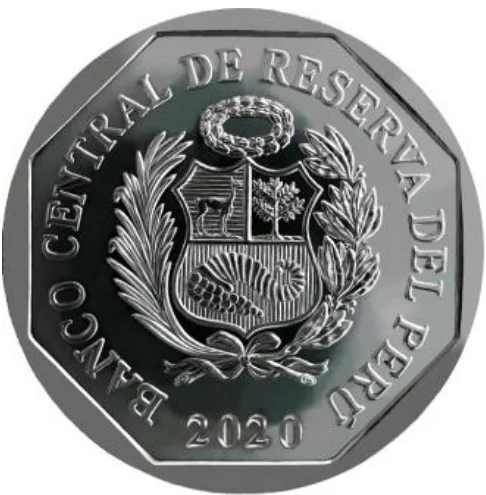
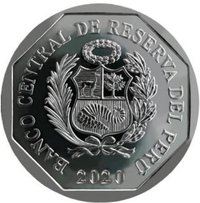
Obverse
Description:
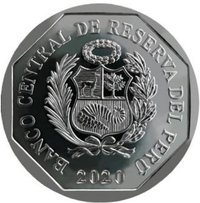
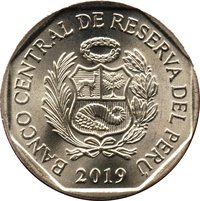
Coat of arms over date.
Inscription:
BANCO CENTRAL DE RESERVA DEL PERÚ
2020
2020
Translation:
Central Reserve Bank of Peru
2020
2020
Script: Latin
Language: Spanish
Engraver: Eduardo Paredes Medina
Designer: Felipe Escalante Chuñocca
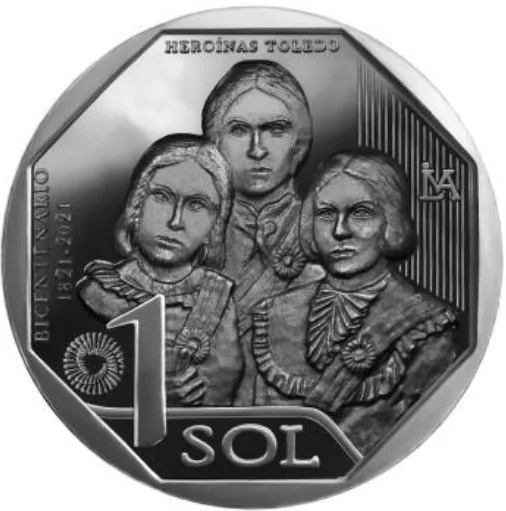
Reverse
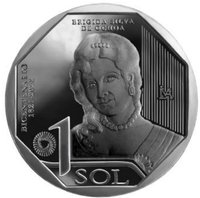
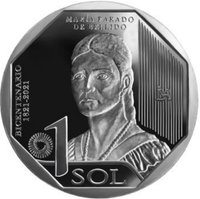
Description:
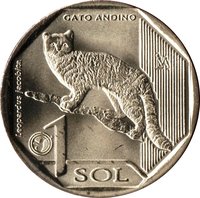
Heroínas Toledo, undervalued.
Inscription:
Heroínas Toledo
Bicentenario 1821-2021
1 SOL
Bicentenario 1821-2021
1 SOL
Translation:
Heroines of Toledo
Bicentennial 1821-2021
1 Sol
Bicentennial 1821-2021
1 Sol
Script: Latin
Language: Spanish
Engraver: Eduardo Medina Paredes
Designer: Felipe Escalante Chuñocca
Edge
Reeded
Categories
| Event> Independence |
Mints
| Name | Mark |
|---|---|
| Lima | Lima |
Mintings
| Year | Mint Mark | Mintage | Quality | Collection |
|---|---|---|---|---|
| 2020 | Lima | 10,000,000 |
Historical background
In 2020, Peru's currency, the sol (PEN), faced significant volatility and depreciation pressure, primarily driven by the profound economic shock of the COVID-19 pandemic. The government implemented one of the world's strictest and earliest lockdowns in mid-March, bringing the economy to a near standstill. This, combined with a collapse in global demand and commodity prices, triggered a sharp economic contraction. Investor flight to safety and a reduced inflow of US dollars from exports and tourism caused the sol to weaken from approximately 3.33 to the US dollar at the start of the year to a historic low near 3.65 by the end of May, representing a depreciation of nearly 10%.
In response, Peru's Central Reserve Bank (BCRP) intervened aggressively to stabilize the currency and provide liquidity. It utilized its substantial foreign reserves—a legacy of prudent macroeconomic management—to sell billions of dollars in the foreign exchange market. Simultaneously, the BCRP slashed its benchmark interest rate from 2.25% in January to a record low of 0.25% by August to stimulate the contracting economy. These measures, alongside a global recovery in mineral prices (Peru is a major copper exporter), helped the sol partially recover, ending the year around 3.61 to the dollar. However, the currency remained weaker than pre-pandemic levels.
The year's currency instability occurred amidst intense political turbulence, including the impeachment of President Martín Vizcarra in November and rapid succession in leadership, which added layers of uncertainty. Despite these challenges, Peru entered the crisis with strong macroeconomic buffers, which prevented a more severe currency collapse. The 2020 experience highlighted the sol's sensitivity to external commodity shocks and domestic political stability, setting the stage for ongoing inflationary pressures and economic policy challenges in the subsequent years of recovery.
In response, Peru's Central Reserve Bank (BCRP) intervened aggressively to stabilize the currency and provide liquidity. It utilized its substantial foreign reserves—a legacy of prudent macroeconomic management—to sell billions of dollars in the foreign exchange market. Simultaneously, the BCRP slashed its benchmark interest rate from 2.25% in January to a record low of 0.25% by August to stimulate the contracting economy. These measures, alongside a global recovery in mineral prices (Peru is a major copper exporter), helped the sol partially recover, ending the year around 3.61 to the dollar. However, the currency remained weaker than pre-pandemic levels.
The year's currency instability occurred amidst intense political turbulence, including the impeachment of President Martín Vizcarra in November and rapid succession in leadership, which added layers of uncertainty. Despite these challenges, Peru entered the crisis with strong macroeconomic buffers, which prevented a more severe currency collapse. The 2020 experience highlighted the sol's sensitivity to external commodity shocks and domestic political stability, setting the stage for ongoing inflationary pressures and economic policy challenges in the subsequent years of recovery.
🌱 Common