

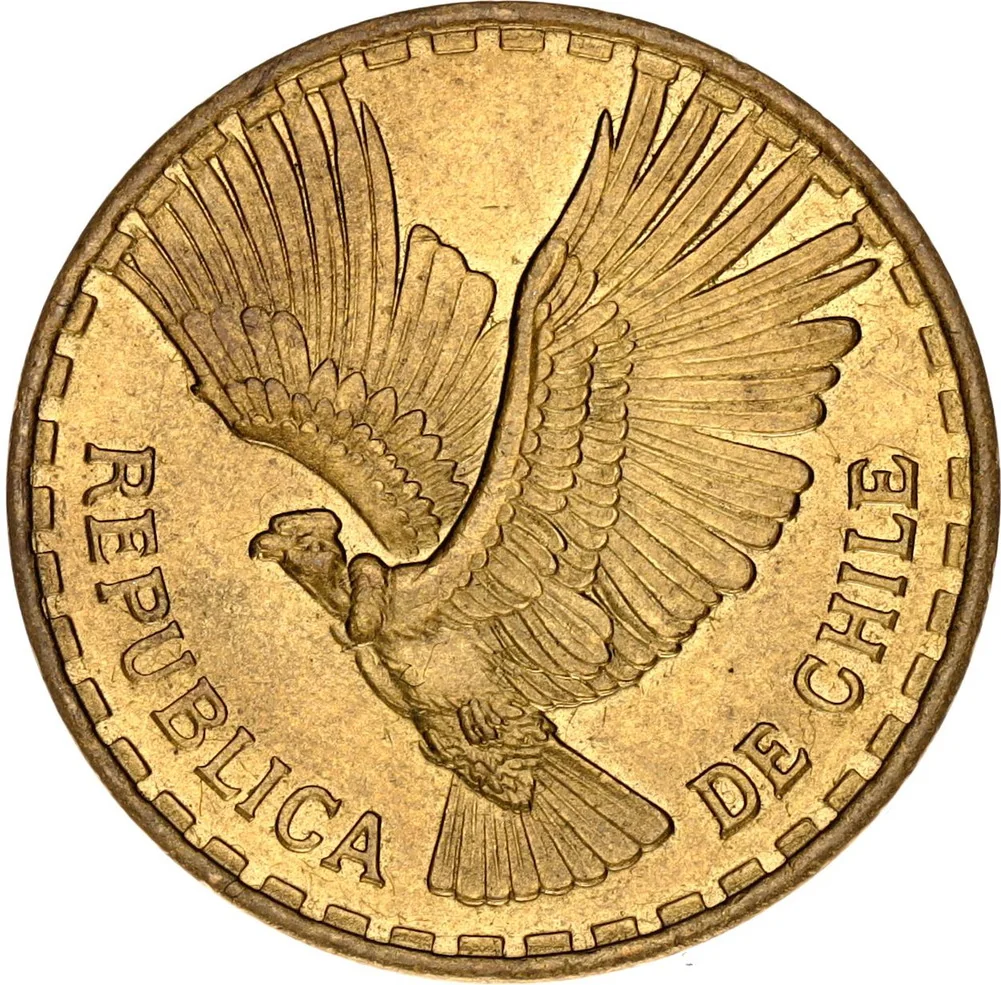
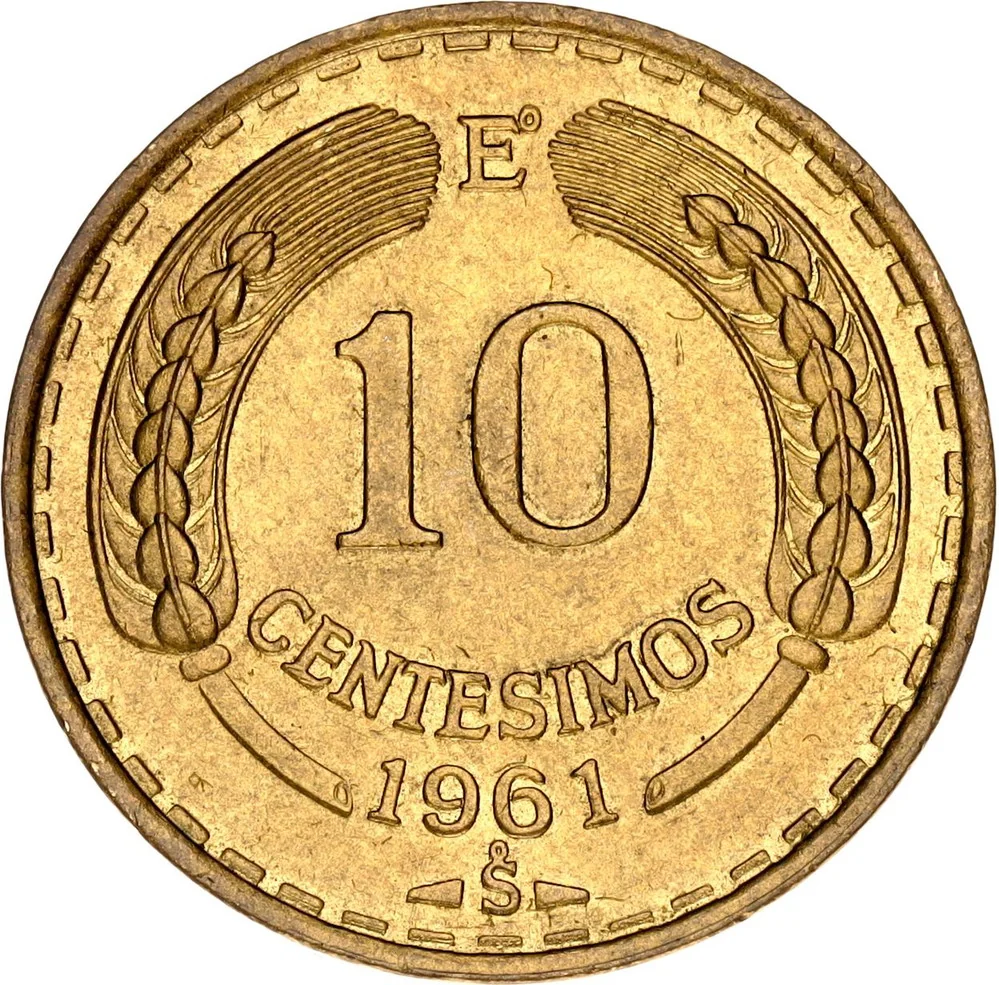
10 centésimos – Chile
Add to wishlist
Chile
Context
Material
Diameter: 27.17 mm
Weight: 8 g
Thickness: 2.08 mm
Shape: Round
Composition: Aluminium bronze
Magnetic: No
Technique: Milled
Alignment: Coin alignment
flip
References
KM: #
Numista: #2664
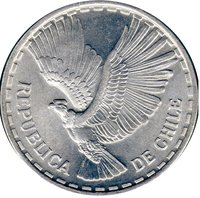
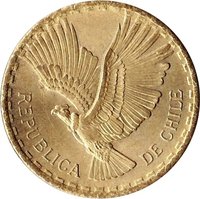
Obverse
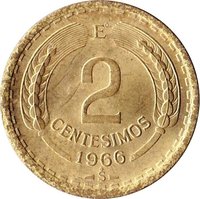
Reverse
Edge
Plain
Mints
| Name | Mark |
|---|---|
| Casa de Moneda de Chile | (So) |
Mintings
| Year | Mint Mark | Mintage | Quality | Collection |
|---|---|---|---|---|
| 1960 | So | — | ||
| 1960 | So | — | Proof | |
| 1961 | So | 1,915,000 | ||
| 1962 | So | 1,480,000 | ||
| 1963 | So | 10,980,000 | ||
| 1964 | So | 27,070,000 | ||
| 1965 | So | 49,480,000 | ||
| 1966 | So | 60,680,000 | ||
| 1967 | So | 27,520,000 | ||
| 1967 | So | — | Proof | |
| 1968 | So | 8,040,000 | ||
| 1969 | So | 15,660,000 | ||
| 1970 | So | 42,080,000 |
Historical background
In 1960, Chile's currency situation was defined by the escudo, which had replaced the old peso in January of that year at a rate of 1 escudo = 1000 pesos. This monetary reform was largely an administrative re-denomination, a response to the severe inflation and loss of purchasing power that had eroded the old peso over the preceding decades. The change aimed to simplify accounting and restore some psychological confidence in the national currency, but it did not in itself address the underlying structural economic problems driving inflation.
The broader financial context was one of persistent instability. Chile's economy was heavily dependent on copper exports, making it vulnerable to volatile global prices. Chronic fiscal deficits, often financed by the central bank, continued to generate inflationary pressure. While the new escudo was initially pegged to the US dollar, the country maintained a complex system of multiple exchange rates, with different rates for various types of transactions (e.g., traditional exports, copper, and imports). This system was intended to manage balance of payments but often created distortions and opportunities for arbitrage.
Thus, the currency "reform" of 1960 proved to be a superficial fix. The escudo inherited the inflationary tendencies of its predecessor, and within a few years, it too began a rapid decline in value. The period set the stage for the severe economic challenges of the late 1960s and early 1970s, where hyperinflation would ultimately lead to another currency replacement—the return of the peso in 1975. The 1960 escudo therefore represents a transitional moment, highlighting the difficulty of achieving monetary stability without concomitant fiscal and structural reforms.
The broader financial context was one of persistent instability. Chile's economy was heavily dependent on copper exports, making it vulnerable to volatile global prices. Chronic fiscal deficits, often financed by the central bank, continued to generate inflationary pressure. While the new escudo was initially pegged to the US dollar, the country maintained a complex system of multiple exchange rates, with different rates for various types of transactions (e.g., traditional exports, copper, and imports). This system was intended to manage balance of payments but often created distortions and opportunities for arbitrage.
Thus, the currency "reform" of 1960 proved to be a superficial fix. The escudo inherited the inflationary tendencies of its predecessor, and within a few years, it too began a rapid decline in value. The period set the stage for the severe economic challenges of the late 1960s and early 1970s, where hyperinflation would ultimately lead to another currency replacement—the return of the peso in 1975. The 1960 escudo therefore represents a transitional moment, highlighting the difficulty of achieving monetary stability without concomitant fiscal and structural reforms.
Series: 1960 Chile circulation coins
🌱 Very Common