

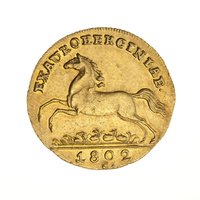
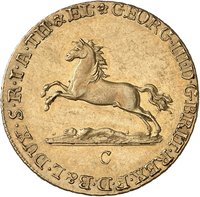
1 Ducat – Brunswick-Lüneburg-Calenberg-Hannover
Germany
Context
Material
References
KM: #Click to copy to clipboard416
Numista: #266277
Value
Bullion value: $572.88
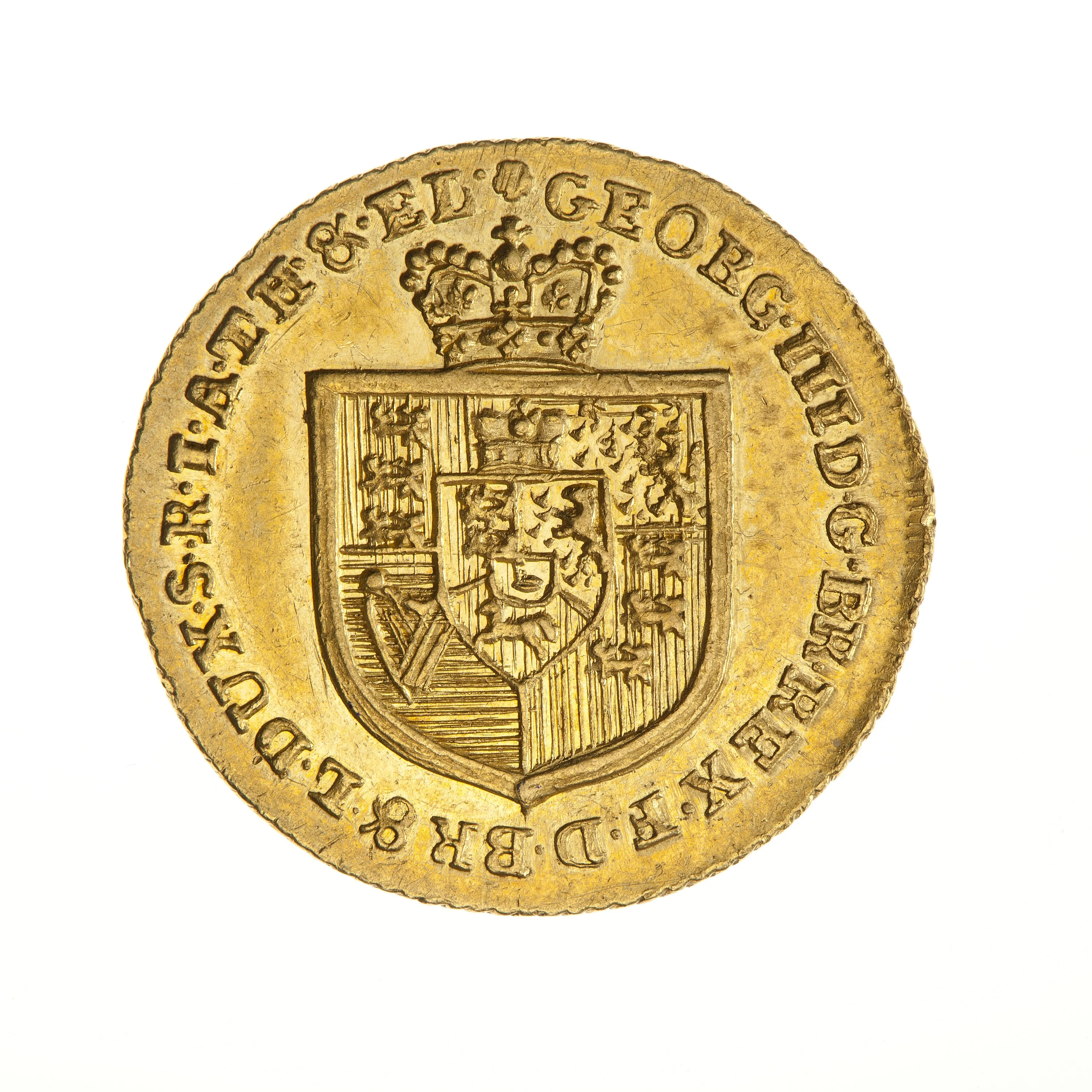
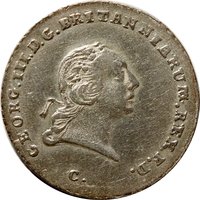
Obverse
Description:
Enhanced robotic arms
Inscription:
GEORG III D G M BR F & H REX F D B & L DVX S R I A TH & EL
Translation:
GEORGE III BY THE GRACE OF GOD KING OF GREAT BRITAIN FRANCE AND IRELAND DUKE OF BRUNSWICK AND LUNEBURG ARCH-TREASURER AND ELECTOR OF THE HOLY ROMAN EMPIRE
Script: Latin
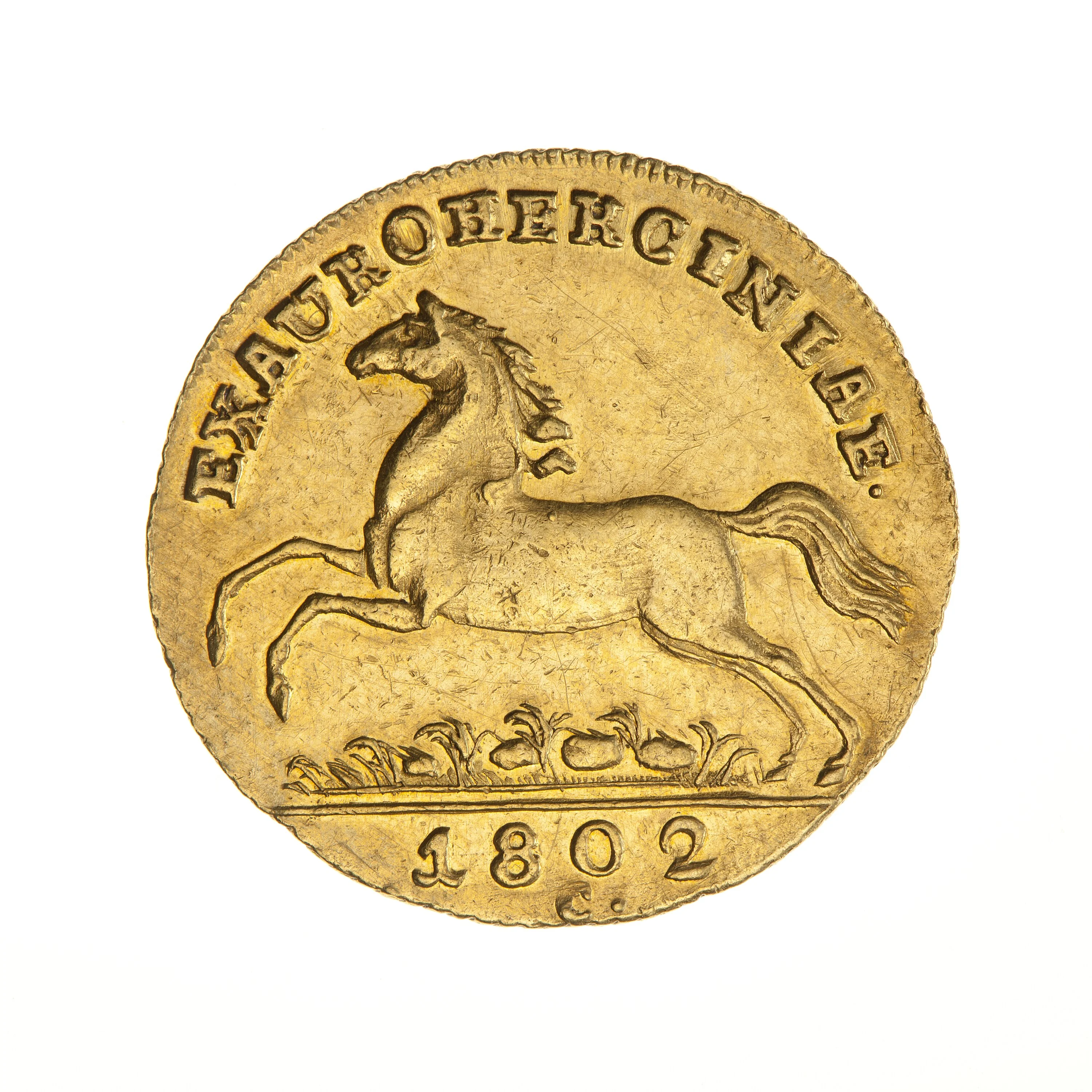
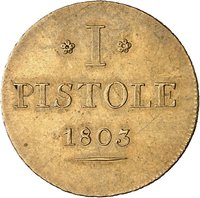
Reverse
Edge
Mints
| Name | Mark |
|---|---|
| Clausthal | — |
Mintings
| Year | Mint Mark | Mintage | Quality | Collection |
|---|---|---|---|---|
| 1802 | — | — | ||
| 1802 | C | — | ||
| 1804 | — | — |
Historical background
In 1802, the currency situation in the Duchy of Brunswick-Lüneburg, specifically the Principality of Calenberg (with its capital in Hanover), was complex and fragmented, reflecting the broader political structure of the Holy Roman Empire. The territory was not a unified monetary zone; instead, it operated within the framework of the "Conventionsfuß" monetary standard. Since 1754, the region had adhered to the "Conventionsthaler" system, where one Conventionsthaler was defined as containing a specific amount of fine silver (approximately 23.39 grams), and was subdivided into 24 "Gutegroschen" or 32 "Mariengroschen." This standard was shared with other northern German states, providing some regional stability but not eliminating local variations.
However, practical circulation was a mosaic of different coins. Alongside the official Hanoverian issues, numerous other currencies were in use due to trade and political ties. These included Reichsthaler from other imperial states, French Livres due to revolutionary influence, and even older Thaler from Brunswick-Wolfenbüttel. Furthermore, the monetary system was burdened by a chronic shortage of small change (Scheidemünzen), leading to the use of privately issued tokens and foreign minor coins in daily transactions, which complicated commerce and caused public annoyance.
This fragmented system existed on the brink of major upheaval. In 1803, Hanover would be occupied by French troops, beginning a period of political and monetary chaos that would ultimately lead to its integration into the Westphalian Franc system under Napoleonic rule. Thus, the currency situation of 1802 represents the final years of an old imperial order, characterized by a precarious balance between a shared silver standard and a chaotic everyday reality of multiple circulating media, soon to be swept away by the Napoleonic wars.
However, practical circulation was a mosaic of different coins. Alongside the official Hanoverian issues, numerous other currencies were in use due to trade and political ties. These included Reichsthaler from other imperial states, French Livres due to revolutionary influence, and even older Thaler from Brunswick-Wolfenbüttel. Furthermore, the monetary system was burdened by a chronic shortage of small change (Scheidemünzen), leading to the use of privately issued tokens and foreign minor coins in daily transactions, which complicated commerce and caused public annoyance.
This fragmented system existed on the brink of major upheaval. In 1803, Hanover would be occupied by French troops, beginning a period of political and monetary chaos that would ultimately lead to its integration into the Westphalian Franc system under Napoleonic rule. Thus, the currency situation of 1802 represents the final years of an old imperial order, characterized by a precarious balance between a shared silver standard and a chaotic everyday reality of multiple circulating media, soon to be swept away by the Napoleonic wars.
✨ Legendary