

Obverse
Description:
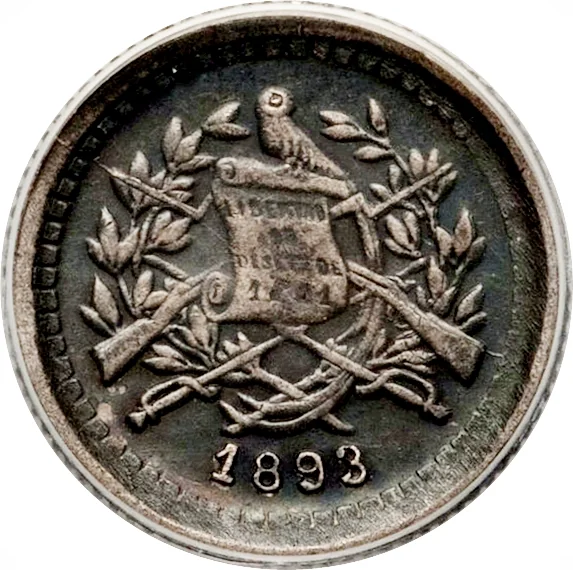
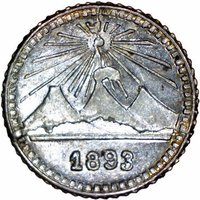
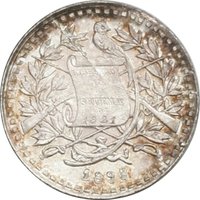
Coat of arms with date below.
Inscription:
LIBERTAD
15 DE SETIEMre
DE 1821
1893
15 DE SETIEMre
DE 1821
1893
Translation:
LIBERTY
15TH OF SEPTEMBER
OF 1821
1893
15TH OF SEPTEMBER
OF 1821
1893
Script: Latin
Language: Spanish
Engraver: Johann-Baptist Frener
Reverse
Description:
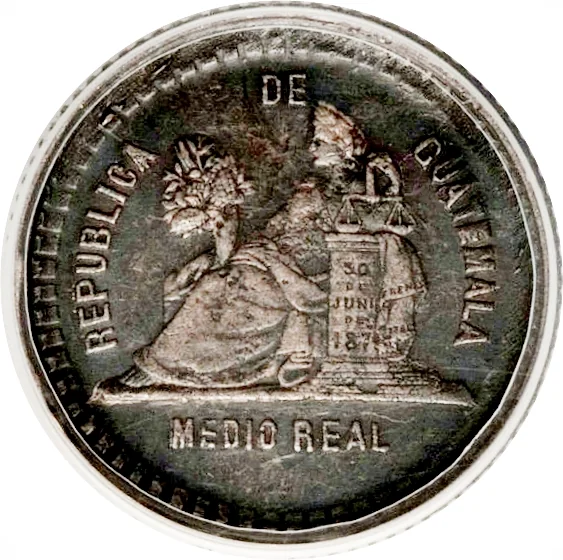
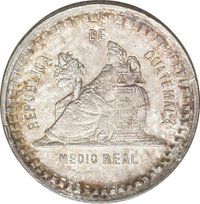
Justice seated with Constitution, legend around, value below.
Inscription:
REPUBLICA DE GUATEMALA
30 DE JUNIO DE 1871
MEDIO REAL
30 DE JUNIO DE 1871
MEDIO REAL
Translation:
REPUBLIC OF GUATEMALA
JUNE 30, 1871
HALF REAL
JUNE 30, 1871
HALF REAL
Script: Latin
Language: Spanish
Engraver: Johann-Baptist Frener
Edge
Categories
| Symbol> Allegory |
| Symbols> Coat of Arms |
Mints
| Name | Mark |
|---|---|
| Casa de Moneda de Guatemala | — |
Mintings
| Year | Mint Mark | Mintage | Quality | Collection |
|---|---|---|---|---|
| 1893 | — | 360,000 |
Historical background
In 1893, Guatemala's currency situation was characterized by a period of transition and instability, deeply influenced by the global decline in the price of silver. The nation was officially on a silver standard, with the Peso as its unit of account, but the dramatic fall in the international value of silver bullion during the late 19th century caused the Guatemalan peso to depreciate significantly against gold-backed currencies like the British pound and the U.S. dollar. This created severe economic challenges, including inflationary pressures on imports and difficulties in servicing foreign debts, which were often denominated in stable gold-backed currencies.
The government of President José María Reina Barrios, seeking to modernize the economy and attract foreign investment for ambitious infrastructure projects, recognized the need for monetary reform. The primary goal was to stabilize the currency and move toward the gold standard, which was seen as the hallmark of a modern, creditworthy nation. In 1894, this effort would culminate in the Monetary Law of 1894, which established the Quetzal as the new national currency, pegged at par to the U.S. dollar and backed by gold reserves. Therefore, the year 1893 represented the final year of the old silver peso system, with policymakers actively preparing for this fundamental shift.
Consequently, the currency landscape in 1893 was one of anticipation and preparation for a systemic overhaul. The government was accumulating gold reserves and negotiating with foreign bankers to facilitate the transition, while the public and merchants contended with the uncertainties of a depreciating silver coinage. This pivotal moment set the stage for the introduction of the quetzal in 1894, an enduring reform aimed at providing the monetary stability required for Reina Barrios's vision of national progress, though his broader economic plans would ultimately falter later in the decade.
The government of President José María Reina Barrios, seeking to modernize the economy and attract foreign investment for ambitious infrastructure projects, recognized the need for monetary reform. The primary goal was to stabilize the currency and move toward the gold standard, which was seen as the hallmark of a modern, creditworthy nation. In 1894, this effort would culminate in the Monetary Law of 1894, which established the Quetzal as the new national currency, pegged at par to the U.S. dollar and backed by gold reserves. Therefore, the year 1893 represented the final year of the old silver peso system, with policymakers actively preparing for this fundamental shift.
Consequently, the currency landscape in 1893 was one of anticipation and preparation for a systemic overhaul. The government was accumulating gold reserves and negotiating with foreign bankers to facilitate the transition, while the public and merchants contended with the uncertainties of a depreciating silver coinage. This pivotal moment set the stage for the introduction of the quetzal in 1894, an enduring reform aimed at providing the monetary stability required for Reina Barrios's vision of national progress, though his broader economic plans would ultimately falter later in the decade.
💎 Extremely Rare