

1 cent – Straits Settlements
Add to wishlist
Malaysia
Context
Years: 1887–1901
Country: Malaysia
Issuer: Straits Settlements
Ruler: Victoria
Currency:
(1845—1939)
Demonetized: Yes
Total mintage: 93,778,315
Material
References
KM: #
Numista: #10203
Obverse
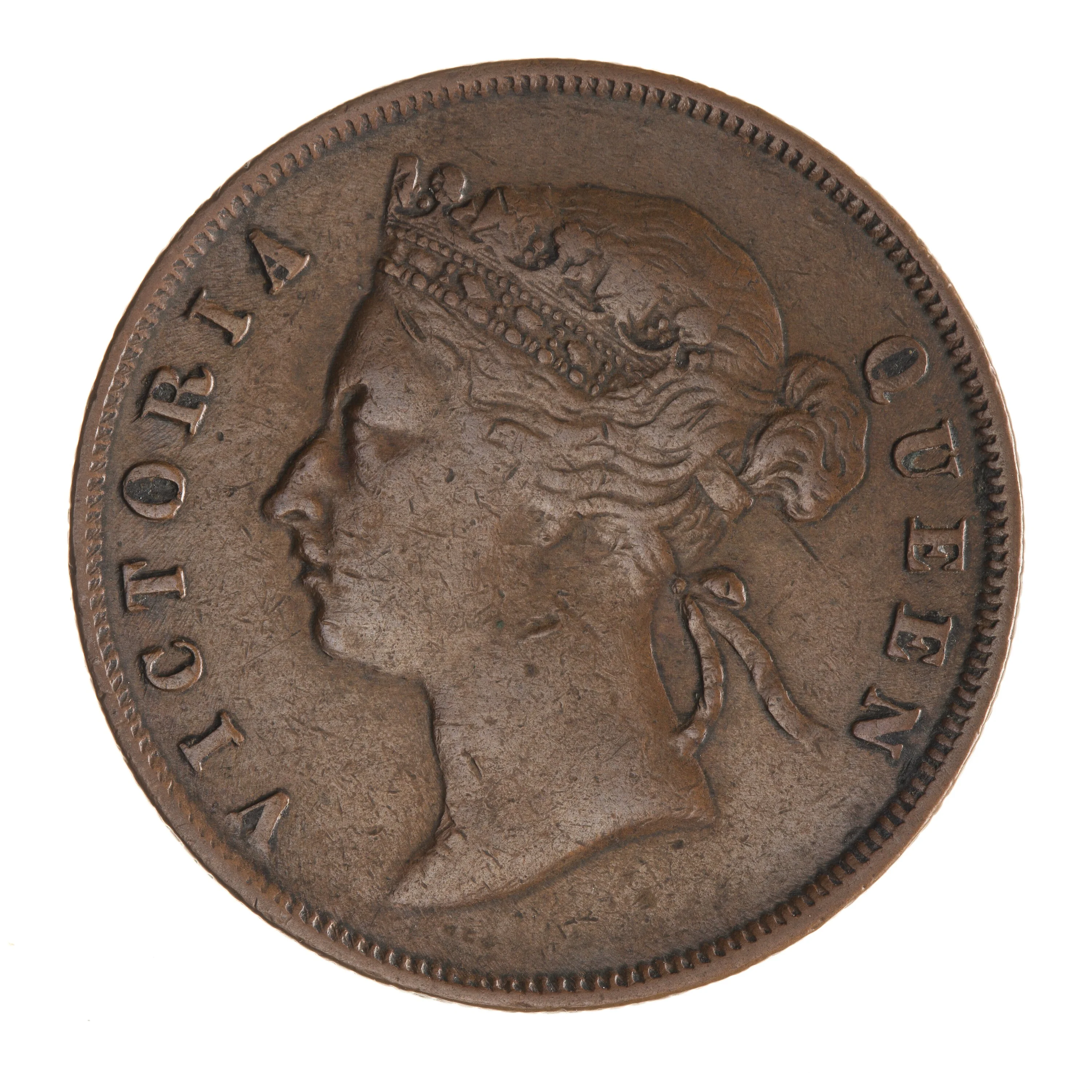
Description:
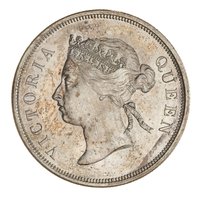
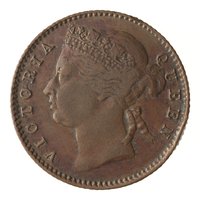
Crowned left-facing bust.
Inscription:
VICTORIA QUEEN
Script: Latin
Engraver: Leonard Charles Wyon
Reverse
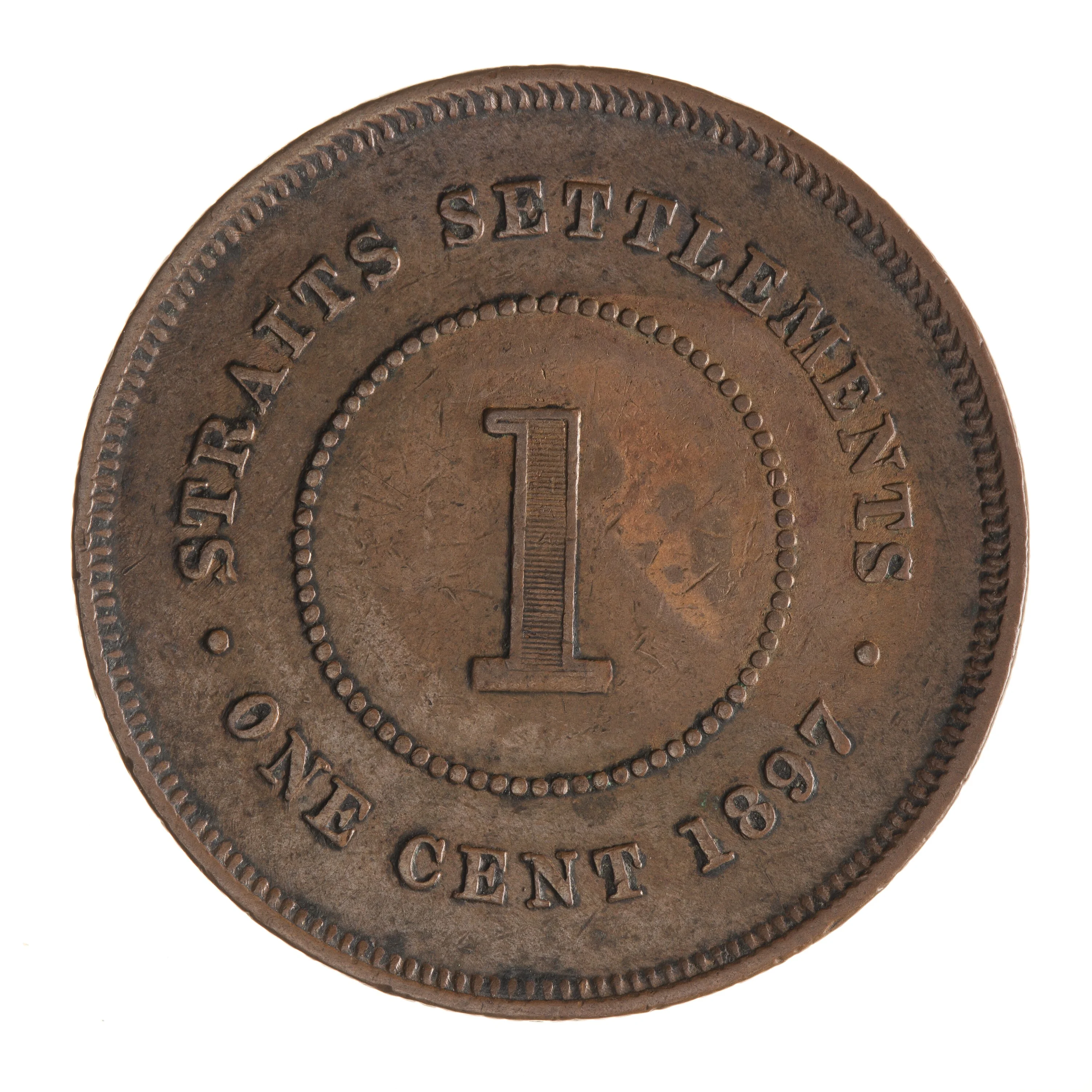
Description:
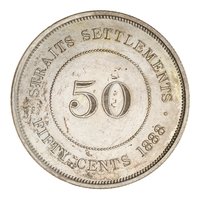
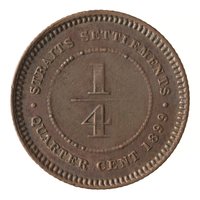
Denomination in beaded circle, date at lower right.
Inscription:
STRAITS SETTLEMENTS
1
· ONE CENT 1901 ·
1
· ONE CENT 1901 ·
Script: Latin
Edge
Reeded
Mints
| Name | Mark |
|---|---|
| Royal Mint (Tower Hill) | — |
Mintings
| Year | Mint Mark | Mintage | Quality | Collection |
|---|---|---|---|---|
| 1887 | — | 8,988,400 | ||
| 1888 | — | 10,000,000 | ||
| 1889 | — | 6,010,415 | ||
| 1890 | — | — | Proof | |
| 1890 | — | 11,006,000 | ||
| 1891 | — | 6,004,000 | ||
| 1894 | — | 9,034,000 | ||
| 1895 | — | 4,466,000 | ||
| 1897 | — | 18,040,000 | ||
| 1898 | — | — | Proof | |
| 1898 | — | 2,086,000 | ||
| 1900 | — | 2,914,000 | ||
| 1901 | — | 15,229,500 |
Historical background
In 1887, the currency situation in the Straits Settlements (comprising Singapore, Penang, and Malacca) was one of transition and complexity, dominated by the practical use of the silver Spanish dollar and its local variants. Officially, the British sterling system was the standard, but the reality of trade in Southeast Asia meant that the silver dollar remained the preferred medium of exchange. The colony's accounts were kept in sterling, yet everyday commerce was conducted in dollars and cents, leading to constant calculations and exchange rate fluctuations tied to the volatile global price of silver.
This duality created significant administrative and commercial headaches. The Straits Settlements government had been authorised to issue its own silver coinage in 1847, but these "Straits dollars" competed with a plethora of other silver coins in circulation, including Mexican, Peruvian, and Hong Kong dollars. The value of these silver coins fluctuated against the gold-based sterling pound, complicating trade with London and creating exchange risks for merchants. A key development was the establishment of a Board of Commissioners of Currency in 1897, but in 1887, the push for a unified, stable currency was still a pressing issue being debated by merchants and officials.
Consequently, 1887 fell within a period of mounting pressure for monetary reform. The falling price of silver throughout the 1870s and 1880s had eroded the value of the silver-based currency, exacerbating the colony's financial instability. Leading merchants, particularly from the Singapore Chamber of Commerce, were vocally advocating for a gold-exchange standard to stabilise the currency and facilitate smoother trade within the British Empire and with the East. Thus, the situation in 1887 was one of a silver-based commercial reality straining against the imperative for a modern, gold-pegged currency system, setting the stage for the major reforms that would follow in the next decade.
This duality created significant administrative and commercial headaches. The Straits Settlements government had been authorised to issue its own silver coinage in 1847, but these "Straits dollars" competed with a plethora of other silver coins in circulation, including Mexican, Peruvian, and Hong Kong dollars. The value of these silver coins fluctuated against the gold-based sterling pound, complicating trade with London and creating exchange risks for merchants. A key development was the establishment of a Board of Commissioners of Currency in 1897, but in 1887, the push for a unified, stable currency was still a pressing issue being debated by merchants and officials.
Consequently, 1887 fell within a period of mounting pressure for monetary reform. The falling price of silver throughout the 1870s and 1880s had eroded the value of the silver-based currency, exacerbating the colony's financial instability. Leading merchants, particularly from the Singapore Chamber of Commerce, were vocally advocating for a gold-exchange standard to stabilise the currency and facilitate smoother trade within the British Empire and with the East. Thus, the situation in 1887 was one of a silver-based commercial reality straining against the imperative for a modern, gold-pegged currency system, setting the stage for the major reforms that would follow in the next decade.
🌱 Very Common