

1 Farthing – Jamaica
Jamaica
Context
Material
Diameter: 20.25 mm
Weight: 2.75 g
Thickness: 1.25 mm
Shape: Round
Composition: Nickel brass
Magnetic: No
Technique: Milled
Alignment: Medal alignment
flip
References
KM: #Click to copy to clipboard30
Numista: #9992
Obverse
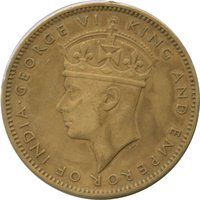
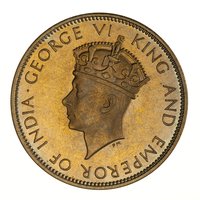
Description:
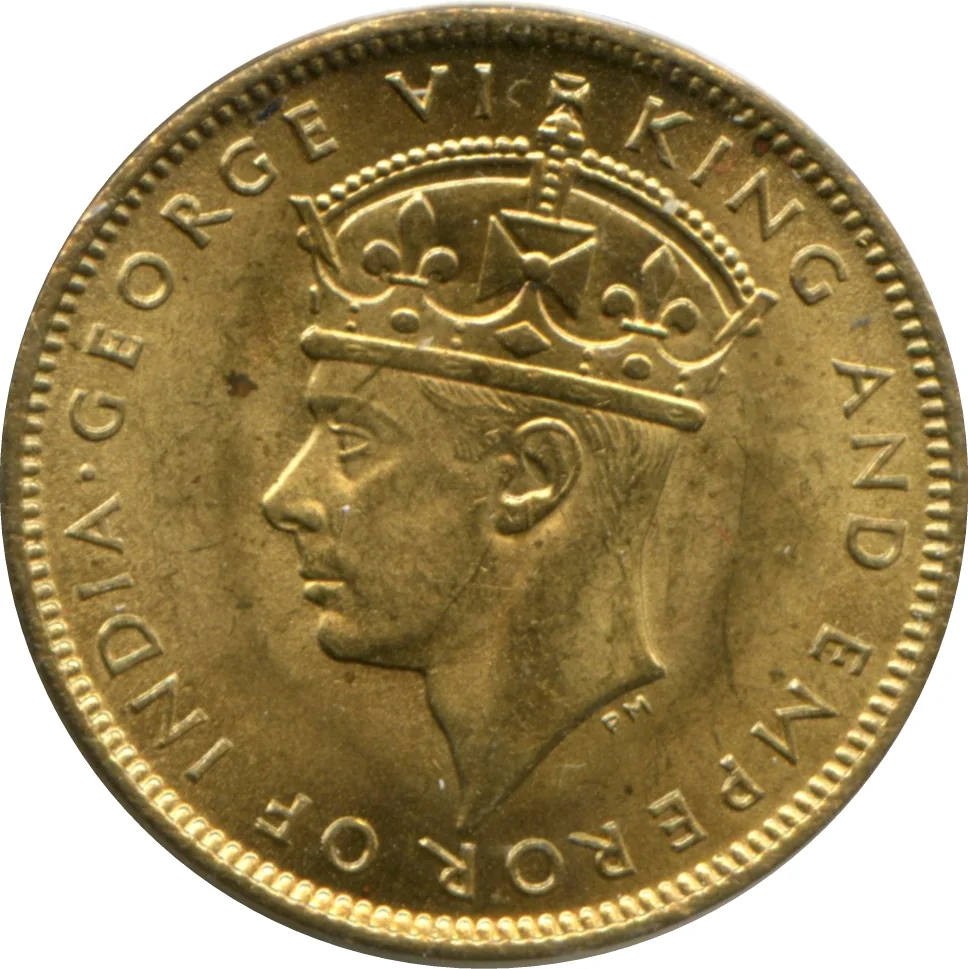
King George VI facing left.
Inscription:
· GEORGE VI KING AND EMPEROR OF INDIA
PM
PM
Translation:
GEORGE VI KING AND EMPEROR OF INDIA
Script: Latin
Language: English
Engraver: Percy Metcalfe
Reverse
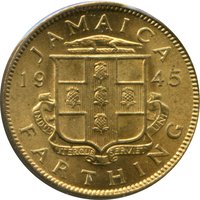
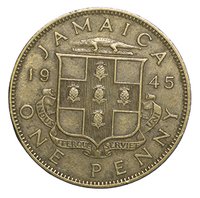
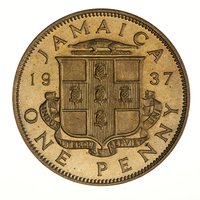
Description:
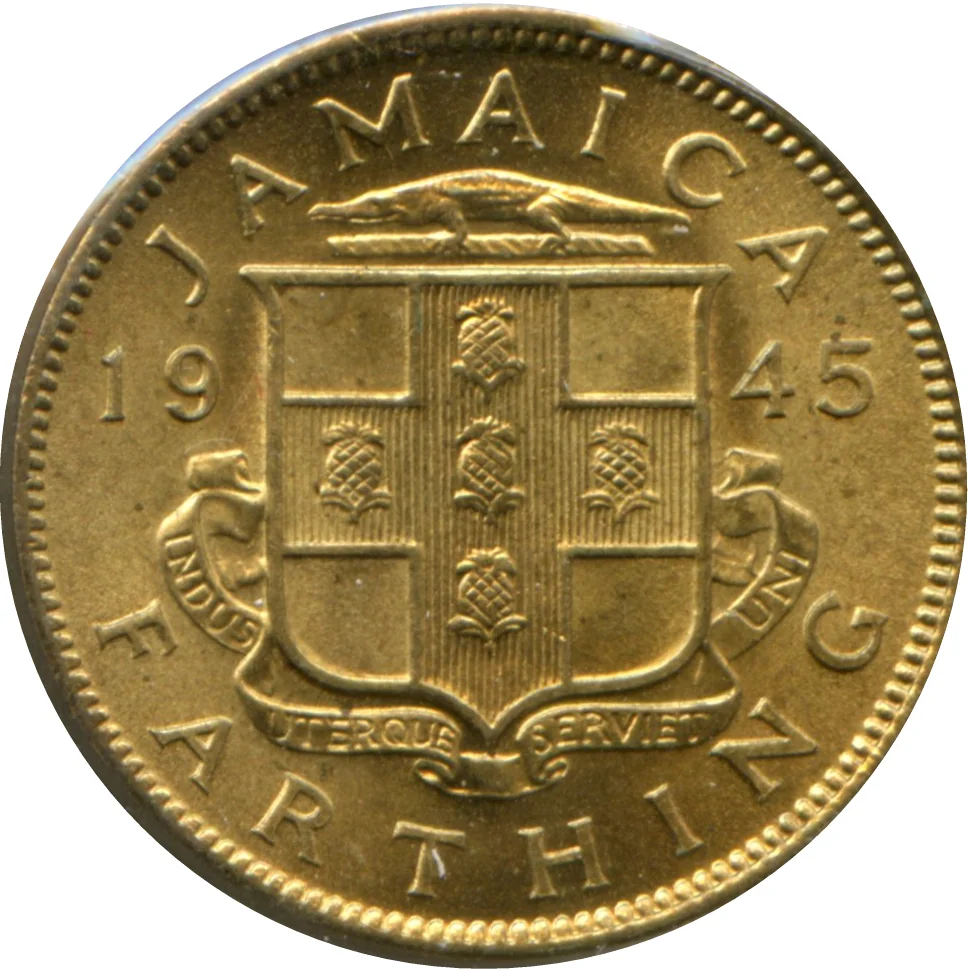
Jamaican coat of arms.
Inscription:
JAMAICA
FARTHING
1945
INDUS UTERQUE SERVIET UNI
FARTHING
1945
INDUS UTERQUE SERVIET UNI
Translation:
JAMAICA
FARTHING
1945
BOTH EASTS WILL SERVE ONE
FARTHING
1945
BOTH EASTS WILL SERVE ONE
Script: Latin
Engraver: Percy Metcalfe
Edge
Plain
Mints
| Name | Mark |
|---|---|
| Royal Mint (Tower Hill) | — |
Mintings
| Year | Mint Mark | Mintage | Quality | Collection |
|---|---|---|---|---|
| 1938 | — | 480,000 | ||
| 1938 | — | — | Proof | |
| 1942 | — | 480,000 | ||
| 1945 | — | — | Proof | |
| 1945 | — | 480,000 | ||
| 1947 | — | 192,000 | ||
| 1947 | — | — | Proof |
Historical background
In 1938, Jamaica's currency was firmly embedded within the British colonial monetary system, operating under a sterling exchange standard. The island's official currency was the Jamaican pound (£J), which was fixed at parity with the British pound sterling. This meant that Jamaican currency was effectively backed by and convertible into sterling, with the local currency supply dictated by the colony's holdings of British pounds and securities in London. The system was managed by a Currency Board, which ensured strict adherence to the fixed exchange rate, prioritizing stability and facilitating trade with the United Kingdom over independent monetary policy.
This rigid currency structure, however, mirrored and exacerbated the profound socio-economic inequalities of the time. The economy was heavily dependent on sugar and banana exports, with wealth concentrated in the hands of a small planter class and foreign-owned companies. The fixed exchange rate benefited these export interests and importers but offered no tools to combat the widespread poverty, unemployment, and deflationary pressures affecting the majority Afro-Jamaican population. There was no central bank to adjust credit or devalue the currency to stimulate the local economy; monetary conditions were entirely passive, reacting to the balance of payments.
The currency situation thus formed a key part of the backdrop to the historic labor uprisings and riots of 1938. While direct protests focused on wages, working conditions, and political representation, the inflexible colonial monetary system was a core component of the economic framework that perpetuated stagnation and inequality. The disturbances of 1938, which led to the Moyne Commission and ultimately to the path toward self-government, highlighted the need for a more responsive economic system, paving the way for future financial reforms, including the establishment of a central bank and a decimalized currency after independence.
This rigid currency structure, however, mirrored and exacerbated the profound socio-economic inequalities of the time. The economy was heavily dependent on sugar and banana exports, with wealth concentrated in the hands of a small planter class and foreign-owned companies. The fixed exchange rate benefited these export interests and importers but offered no tools to combat the widespread poverty, unemployment, and deflationary pressures affecting the majority Afro-Jamaican population. There was no central bank to adjust credit or devalue the currency to stimulate the local economy; monetary conditions were entirely passive, reacting to the balance of payments.
The currency situation thus formed a key part of the backdrop to the historic labor uprisings and riots of 1938. While direct protests focused on wages, working conditions, and political representation, the inflexible colonial monetary system was a core component of the economic framework that perpetuated stagnation and inequality. The disturbances of 1938, which led to the Moyne Commission and ultimately to the path toward self-government, highlighted the need for a more responsive economic system, paving the way for future financial reforms, including the establishment of a central bank and a decimalized currency after independence.
🌱 Common