

2 Dollars – Bermuda
United Kingdom
Context
Year: 1991
Country: United Kingdom 
Issuer: Bermuda 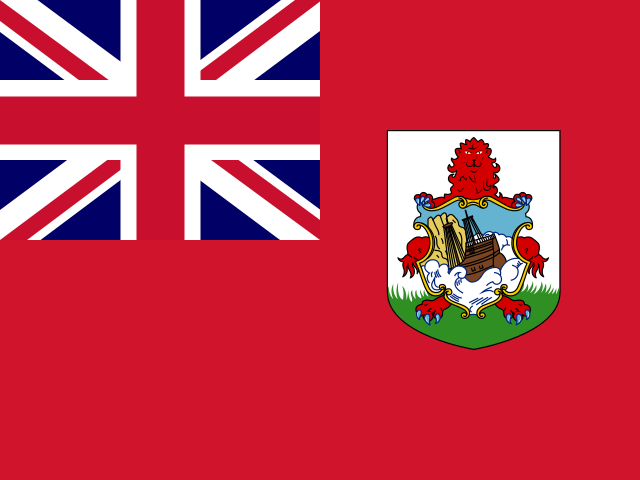
Ruler: Elizabeth II
Currency:
(since 1970)
Total mintage: 3,000
Material
References
KM: #Click to copy to clipboard68
Numista: #99819
Value
Exchange value: 2 BMD
Bullion value: $74.83
Inflation-adjusted value: 5.81 BMD
Obverse
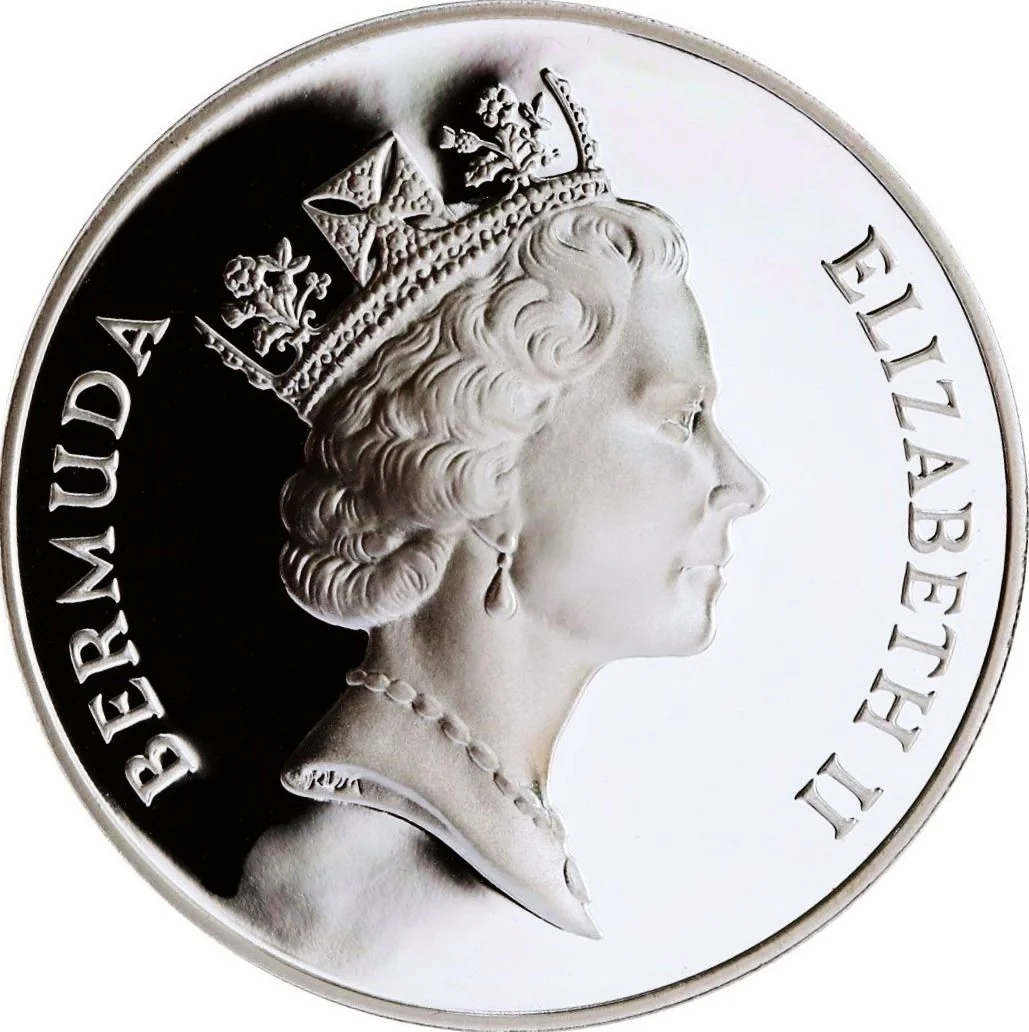
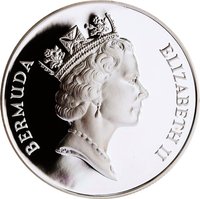
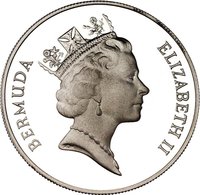
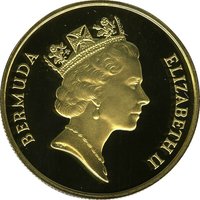
Description:
Queen Elizabeth II facing right.
Inscription:
BERMUDA ELIZABETH II
RDM
RDM
Translation:
BERMUDA ELIZABETH II
QUEEN
QUEEN
Script: Latin
Engraver: Raphael David Maklouf
Reverse
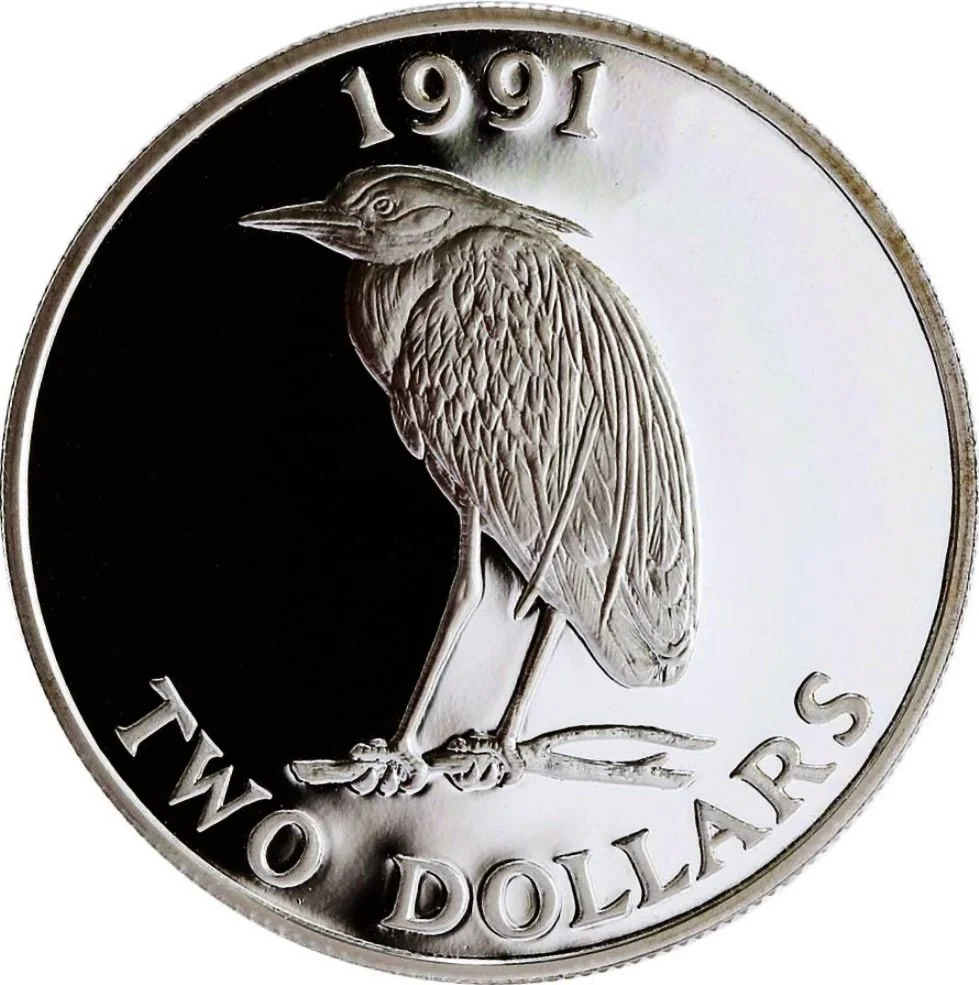
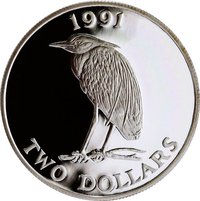
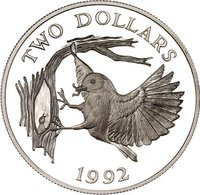
Description:
Yellow-crowned night heron perched on a branch.
Inscription:
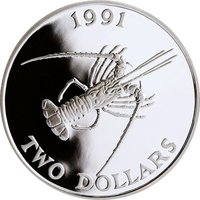
TWO DOLLARS
1991
1991
Script: Latin
Edge
Reeded
Mintings
| Year | Mint Mark | Mintage | Quality | Collection |
|---|---|---|---|---|
| 1991 | — | 3,000 | Proof |
Historical background
In 1991, Bermuda's currency situation was defined by its long-standing and stable peg to the United States dollar. This fixed exchange rate regime, established in 1972, set the Bermudian dollar at a one-to-one parity with the US dollar. Both currencies circulated interchangeably on the island, a practice that continues today, providing a predictable monetary environment crucial for its dominant international business and tourism sectors. This peg effectively outsourced Bermuda's monetary policy to the US Federal Reserve, ensuring low inflation and eliminating exchange rate risk for its key economic partners.
The system functioned smoothly due to Bermuda's strong economic fundamentals, particularly its substantial foreign exchange reserves. These reserves, bolstered by a consistent balance of payments surplus from tourism and reinsurance, provided the Bermuda Monetary Authority (BMA) with the necessary resources to confidently maintain the peg. There was no active debate or crisis regarding the currency's value in 1991; the arrangement was widely seen as a cornerstone of the territory's economic success and stability.
Consequently, the monetary landscape in 1991 was one of quiet confidence. The focus of financial authorities was not on exchange rate management but on consolidating Bermuda's position as a leading offshore financial centre. Discussions were more oriented towards regulatory frameworks for the growing insurance and reinsurance sectors, rather than on altering the foundational currency peg, which was perceived as an unqualified success and a key driver of investor confidence.
The system functioned smoothly due to Bermuda's strong economic fundamentals, particularly its substantial foreign exchange reserves. These reserves, bolstered by a consistent balance of payments surplus from tourism and reinsurance, provided the Bermuda Monetary Authority (BMA) with the necessary resources to confidently maintain the peg. There was no active debate or crisis regarding the currency's value in 1991; the arrangement was widely seen as a cornerstone of the territory's economic success and stability.
Consequently, the monetary landscape in 1991 was one of quiet confidence. The focus of financial authorities was not on exchange rate management but on consolidating Bermuda's position as a leading offshore financial centre. Discussions were more oriented towards regulatory frameworks for the growing insurance and reinsurance sectors, rather than on altering the foundational currency peg, which was perceived as an unqualified success and a key driver of investor confidence.
💎 Extremely Rare