

Obverse
Description:
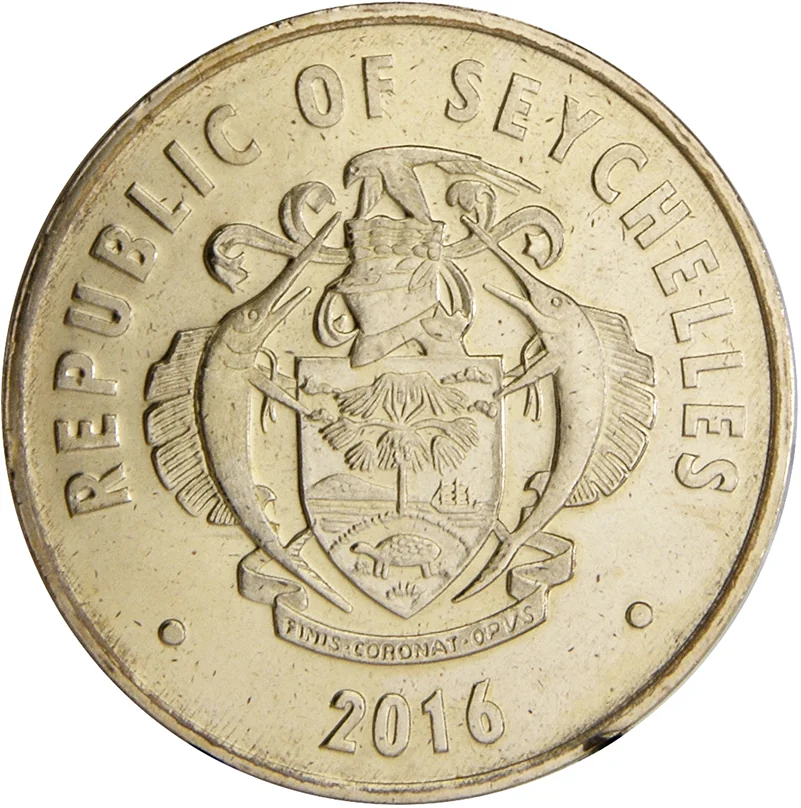
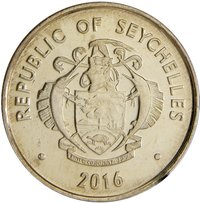
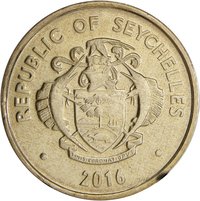
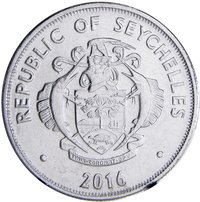
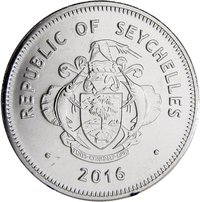
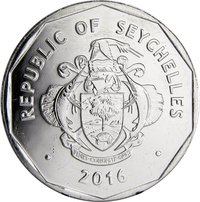
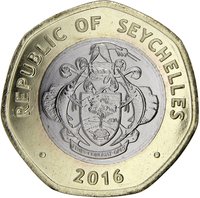
A golden shield with a coconut palm, a giant tortoise, and the sea, topped by a silver helmet and crested by a white-tailed tropicbird.
Inscription:
REPUBLIC OF SEYCHELLES
2016
2016
Script: Latin
Reverse
Description:
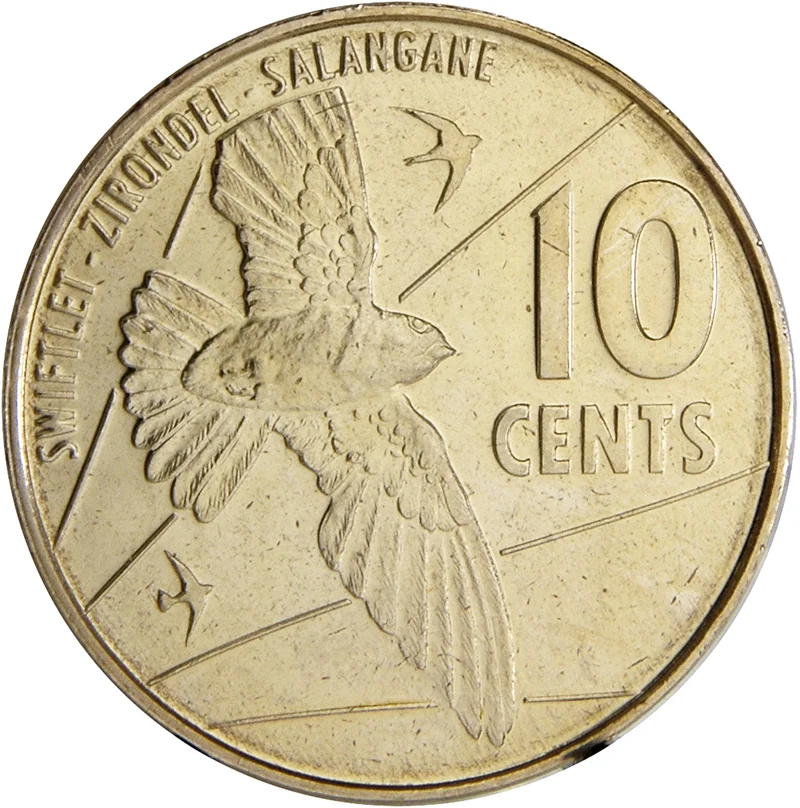
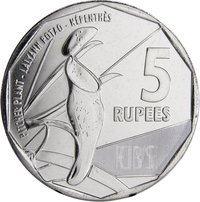
Three Seychelles Swiftlets flying before the Seychelles flag's diagonal stripes.
Inscription:
10 CENTS
Swiftlet
Zirondel
Salangane
Swiftlet
Zirondel
Salangane
Script: Latin
Edge
Plain
Mints
| Name | Mark |
|---|---|
| South African Mint | — |
Mintings
| Year | Mint Mark | Mintage | Quality | Collection |
|---|---|---|---|---|
| 2016 | — | — | ||
| 2021 | — | — | ||
| 2022 | — | — |
Historical background
In 2016, Seychelles continued to demonstrate the successful stabilization of its economy following a severe balance of payments crisis nearly a decade earlier. The country operated under a floating exchange rate regime, managed by the Central Bank of Seychelles (CBS), which had been in place since the 2008 devaluation and liberalization reforms. The primary focus for monetary authorities was on maintaining price stability and building foreign exchange reserves, which had recovered to comfortable levels, providing a buffer against external shocks. The Seychellois rupee (SCR) exhibited relative stability against major currencies, particularly the US dollar, with any fluctuations largely driven by tourism inflows and import demand.
The year was characterized by moderate inflationary pressures, with annual inflation averaging around 1.0-2.5%, a significant achievement compared to the hyperinflation of the pre-2008 period. This low inflation environment was supported by prudent fiscal policy and a cautious monetary stance from the CBS, which utilized its key policy rate to manage liquidity. The stability of the rupee was crucial for the tourism-dependent economy, as it bolstered investor confidence and helped control the cost of living. Furthermore, the country's participation in an IMF Extended Fund Facility program, which concluded successfully in mid-2014, had established a framework for continued fiscal discipline and structural reforms that underpinned the 2016 currency environment.
Looking forward, challenges remained, including the need to address persistent fiscal vulnerabilities and the economy's high exposure to volatile tourism earnings and global commodity prices. However, the currency situation in 2016 reflected a period of consolidation. The managed float system had proven effective, foreign reserves were adequate, and macroeconomic fundamentals were sound, positioning the Seychellois rupee as a symbol of the archipelago's remarkable economic recovery and resilience.
The year was characterized by moderate inflationary pressures, with annual inflation averaging around 1.0-2.5%, a significant achievement compared to the hyperinflation of the pre-2008 period. This low inflation environment was supported by prudent fiscal policy and a cautious monetary stance from the CBS, which utilized its key policy rate to manage liquidity. The stability of the rupee was crucial for the tourism-dependent economy, as it bolstered investor confidence and helped control the cost of living. Furthermore, the country's participation in an IMF Extended Fund Facility program, which concluded successfully in mid-2014, had established a framework for continued fiscal discipline and structural reforms that underpinned the 2016 currency environment.
Looking forward, challenges remained, including the need to address persistent fiscal vulnerabilities and the economy's high exposure to volatile tourism earnings and global commodity prices. However, the currency situation in 2016 reflected a period of consolidation. The managed float system had proven effective, foreign reserves were adequate, and macroeconomic fundamentals were sound, positioning the Seychellois rupee as a symbol of the archipelago's remarkable economic recovery and resilience.
🌱 Common