

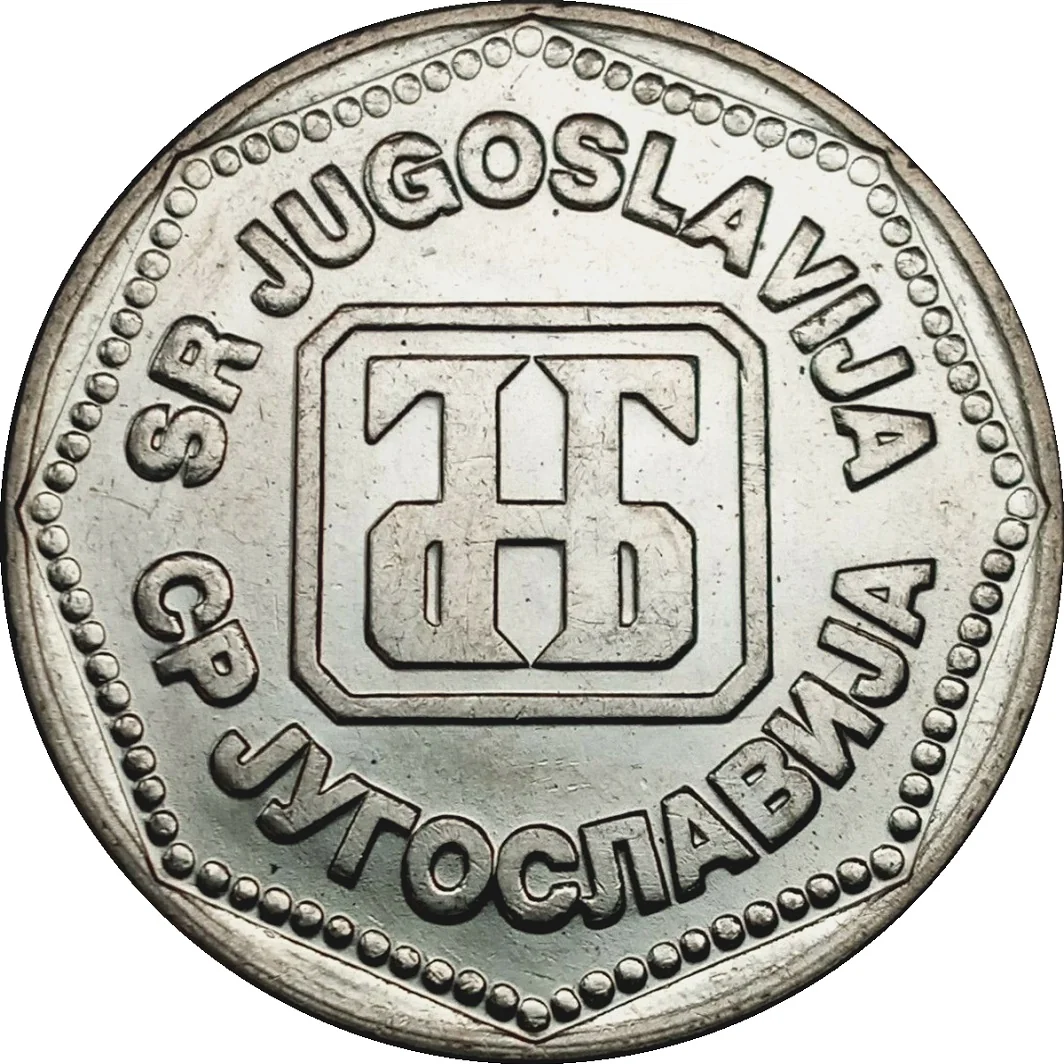
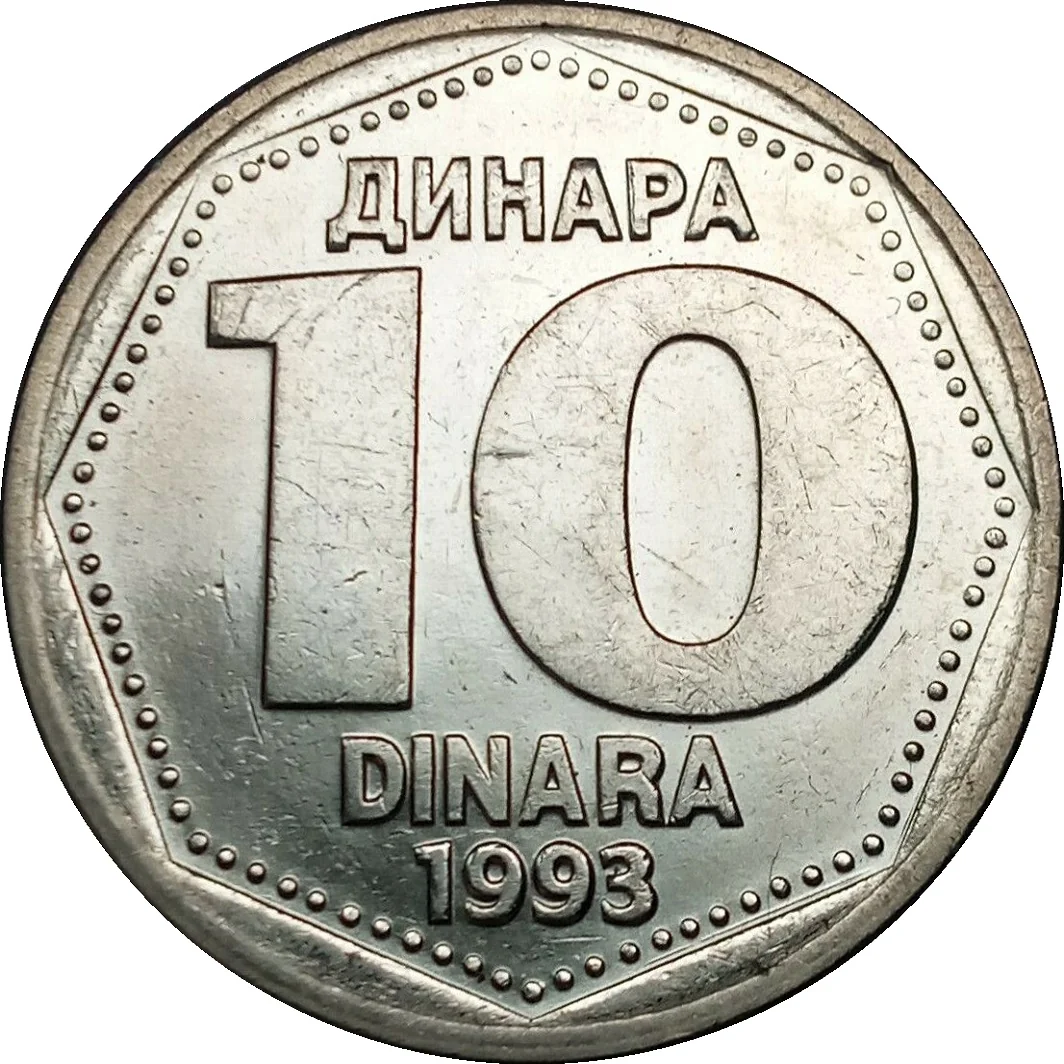
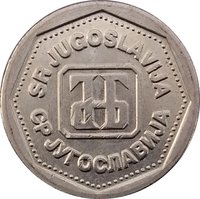
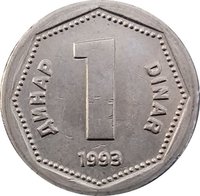
10 dinars – Yugoslavia
Add to wishlist
Context
Year: 1993
Issuer: Yugoslavia
Period:
(1992—2003)
Currency:
(since 1993)
Demonetized: Yes
Total mintage: 20,461,000
Material
Diameter: 24 mm
Weight: 5.9 g
Thickness: 1.7 mm
Shape: Round
Composition: Nickel brass
Magnetic: No
Technique: Milled
Alignment: Medal alignment
flip
References
KM: #
Numista: #9939
Value
Exchange value: 10 YUO
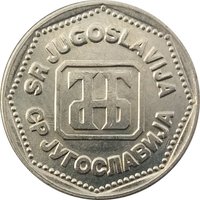
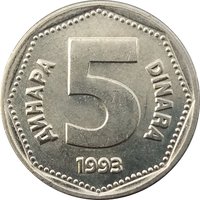
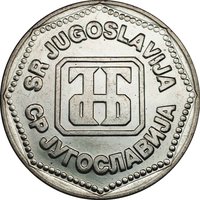
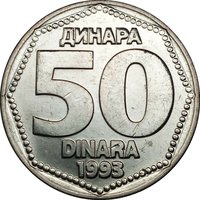
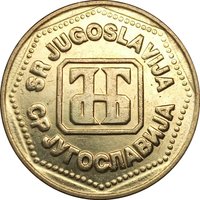
Obverse
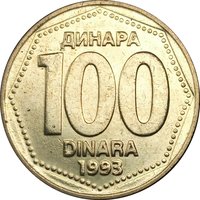
Reverse
Edge
Plain
Mintings
| Year | Mint Mark | Mintage | Quality | Collection |
|---|---|---|---|---|
| 1993 | — | 20,461,000 |
Historical background
By 1993, the Federal Republic of Yugoslavia (consisting of Serbia and Montenegro) was in the throes of one of the most severe hyperinflations in economic history. This crisis was the direct result of the violent breakup of the Socialist Federal Republic of Yugoslavia, which led to international sanctions, a catastrophic collapse in industrial production, and a devastating loss of markets. To finance its operations amid crumbling revenues, the government of Slobodan Milošević resorted to the Serbian National Bank printing money at an astronomical rate, flooding the economy with dinars to cover massive budget deficits and prop up failing state-owned enterprises.
The hyperinflation spiraled completely out of control, peaking in January 1994 with a monthly inflation rate of approximately 313 million percent. Prices doubled not monthly or weekly, but hourly, rendering the Yugoslav dinar utterly worthless. The currency went through several re-denominations, each with higher denominations—culminating in the 1993 "Super Dinar" which removed nine zeros from the previous currency. Savings were obliterated, the formal economy collapsed, and society regressed to a state of barter and use of hard foreign currencies like the German Deutsche Mark for any meaningful transaction.
This monetary catastrophe was not merely an economic failure but a profound social and political disaster. It eroded the last vestiges of public trust in state institutions, created a class of war-profiteers and black-market currency dealers, and impoverished the vast majority of the population. The episode stands as a stark textbook example of how the unrestrained printing of money to finance political and military objectives leads to the total destruction of a currency's value and the economic livelihood of a nation.
The hyperinflation spiraled completely out of control, peaking in January 1994 with a monthly inflation rate of approximately 313 million percent. Prices doubled not monthly or weekly, but hourly, rendering the Yugoslav dinar utterly worthless. The currency went through several re-denominations, each with higher denominations—culminating in the 1993 "Super Dinar" which removed nine zeros from the previous currency. Savings were obliterated, the formal economy collapsed, and society regressed to a state of barter and use of hard foreign currencies like the German Deutsche Mark for any meaningful transaction.
This monetary catastrophe was not merely an economic failure but a profound social and political disaster. It eroded the last vestiges of public trust in state institutions, created a class of war-profiteers and black-market currency dealers, and impoverished the vast majority of the population. The episode stands as a stark textbook example of how the unrestrained printing of money to finance political and military objectives leads to the total destruction of a currency's value and the economic livelihood of a nation.
🌱 Common