

12 Skilling – Norway
Norway
Context
Year: 1813
Issuer: Norway 
Ruler: Frederick VI
Currency:
(1813—1816)
Demonetized: Yes
Total mintage: 739,000
Material
References
KM: #Click to copy to clipboard283
Numista: #99248
Obverse
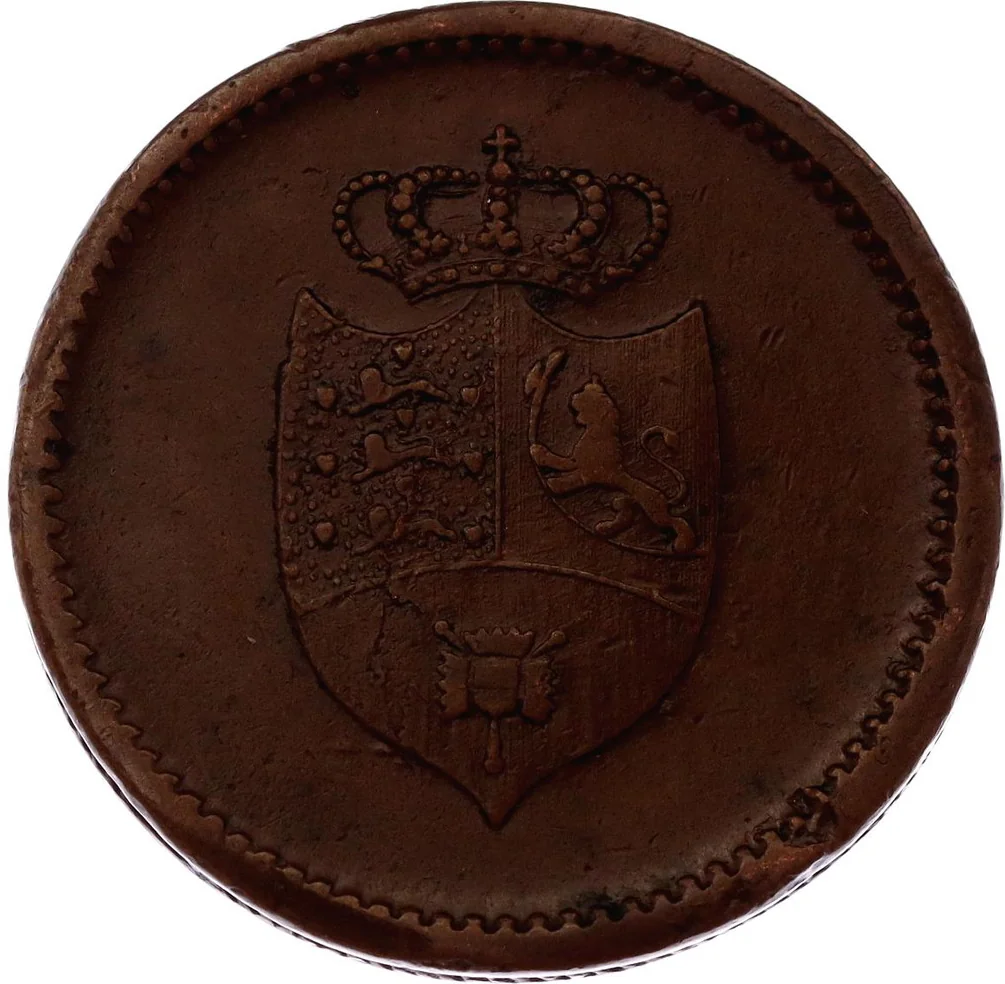
Description:
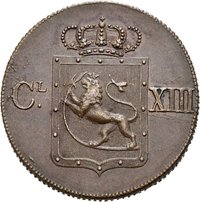
Shield with the crowned arms of Denmark, Norway, and Holstein, encircled by a beaded ring.
Reverse
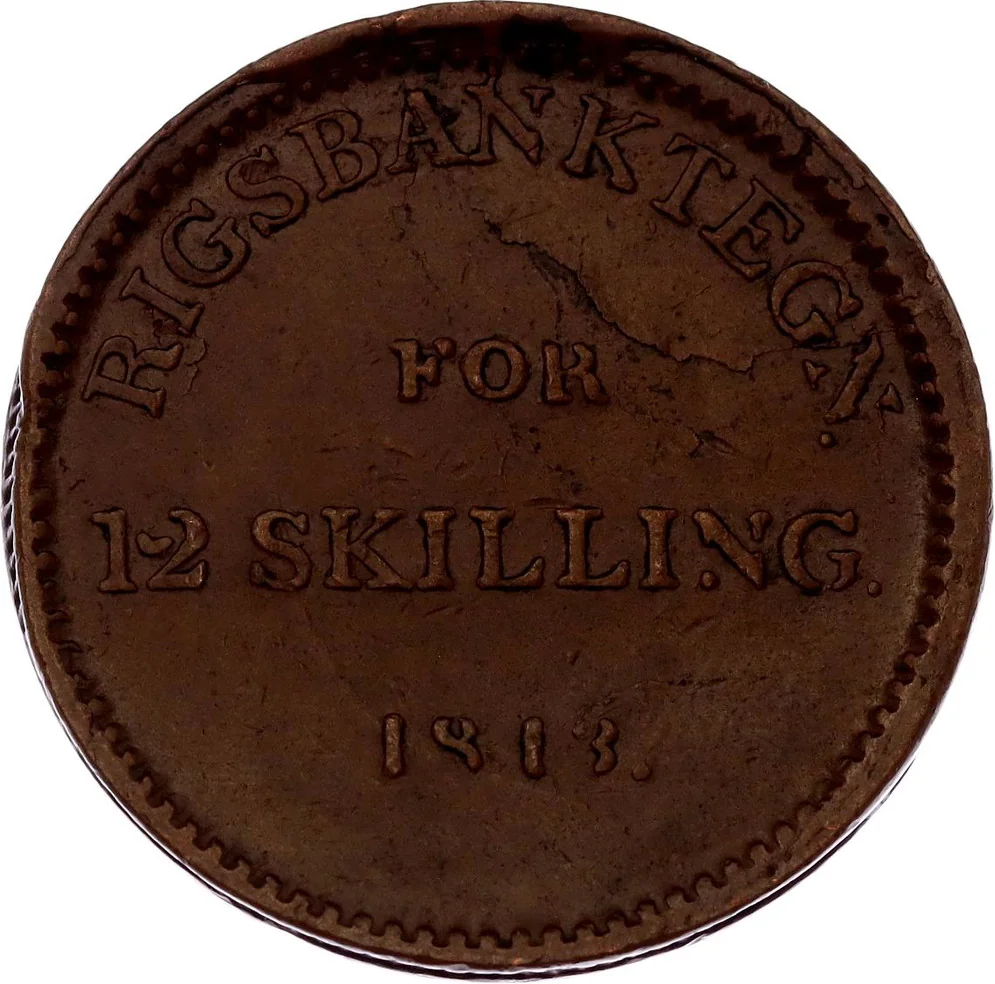
Description:
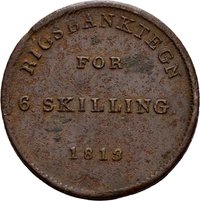
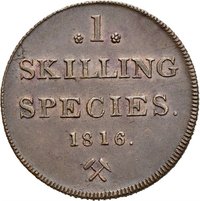
Value and date on four lines.
Mintmark below date.
Beaded rim border.
Mintmark below date.
Beaded rim border.
Inscription:
RIGSBANKTEGN.
FOR
12. SKILLING.
1813.
FOR
12. SKILLING.
1813.
Script: Latin
Edge
Categories
| Symbol> Crown |
| Symbols> Coat of Arms |
Mints
| Name | Mark |
|---|---|
| Norwegian Mint | — |
Mintings
| Year | Mint Mark | Mintage | Quality | Collection |
|---|---|---|---|---|
| 1813 | — | 739,000 |
Historical background
In 1813, Norway found itself in a dire monetary crisis, a direct consequence of the Napoleonic Wars. As a Danish dependency, Norway had been dragged into the conflict on the French side, leading to a devastating British naval blockade that severed vital grain imports and crippled its economy. To finance the war, the Danish-Norwegian state had resorted to excessive printing of paper money—the riksdaler speciedaler—without sufficient silver backing, resulting in severe inflation and a collapse of public trust in the currency.
The situation reached a breaking point following the Treaty of Kiel in January 1814, which forced Denmark to cede Norway to Sweden. However, Norway refused to accept the terms and declared independence, adopting its own constitution. This political rupture left the new, cash-strapped Norwegian state saddled with the worthless paper money of the dissolved union with Denmark. The currency was virtually unusable, threatening the nascent nation's economic stability and its ability to function.
In response, the Norwegian provisional government took radical action. On April 14, 1813, it had already established Norges Bank as a central bank, and in 1816, the Storting passed the Monetary Act that introduced a new, independent currency: the Norwegian speciedaler. Crucially, this new system was designed to be strictly convertible to silver, aiming to restore discipline and public confidence. Thus, the currency situation of 1813 was the painful prelude to the creation of Norway's modern monetary system, born from the twin crises of war and national rebirth.
The situation reached a breaking point following the Treaty of Kiel in January 1814, which forced Denmark to cede Norway to Sweden. However, Norway refused to accept the terms and declared independence, adopting its own constitution. This political rupture left the new, cash-strapped Norwegian state saddled with the worthless paper money of the dissolved union with Denmark. The currency was virtually unusable, threatening the nascent nation's economic stability and its ability to function.
In response, the Norwegian provisional government took radical action. On April 14, 1813, it had already established Norges Bank as a central bank, and in 1816, the Storting passed the Monetary Act that introduced a new, independent currency: the Norwegian speciedaler. Crucially, this new system was designed to be strictly convertible to silver, aiming to restore discipline and public confidence. Thus, the currency situation of 1813 was the painful prelude to the creation of Norway's modern monetary system, born from the twin crises of war and national rebirth.
💎 Extremely Rare