

500 Lire – San Marino
San Marino
Context
Year: 1983
Issuer: San Marino 
Period:
(since 301)
Currency:
(1864—2001)
Demonetization: 1 March 2002
Total mintage: 1,850,000
Material
References
KM: #Click to copy to clipboard153
Numista: #9911
Value
Exchange value: 500 SML
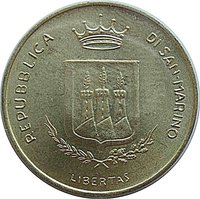
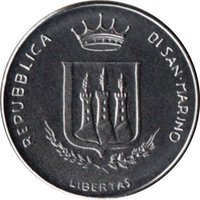
Obverse
Description:
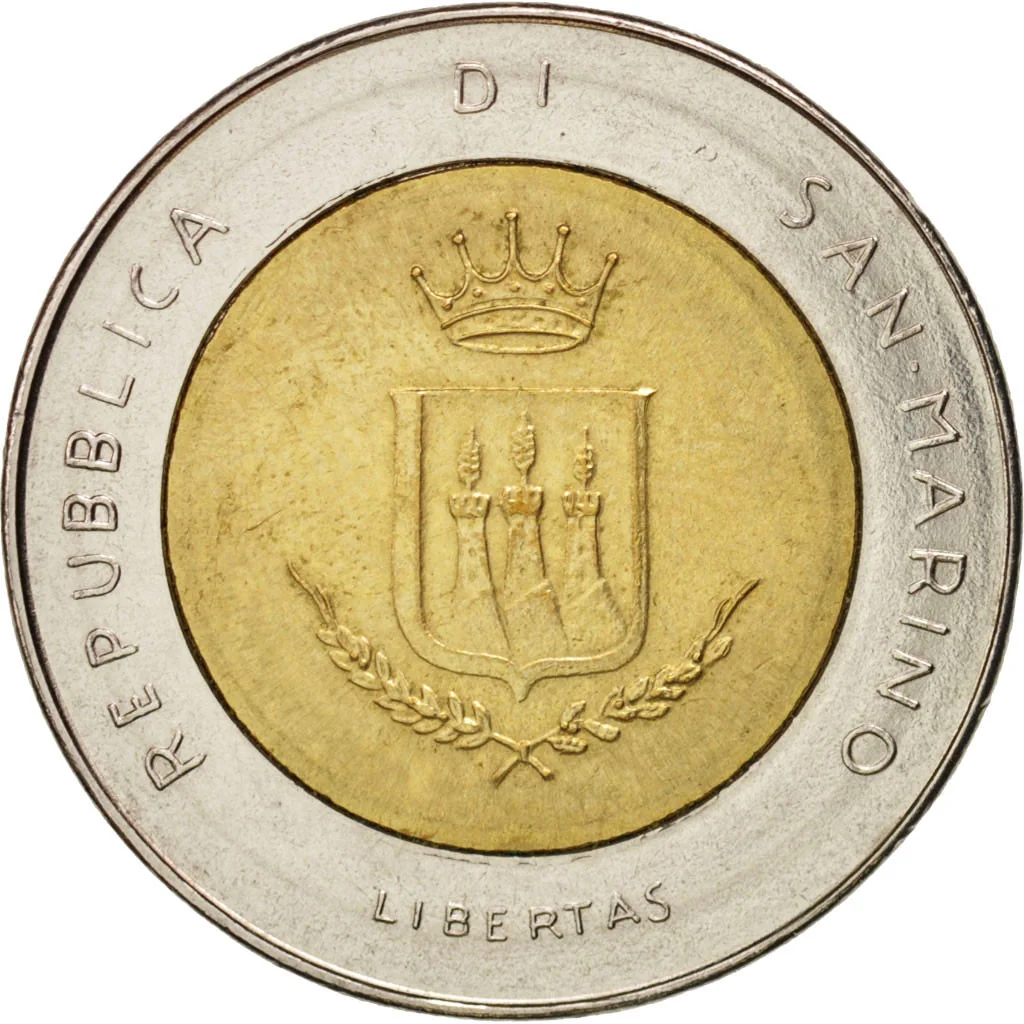
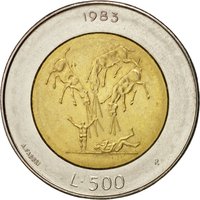
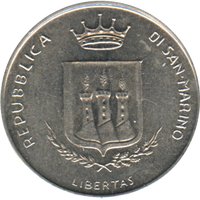
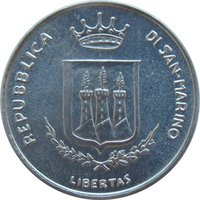
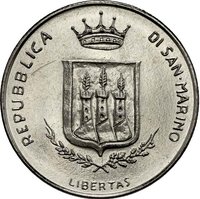
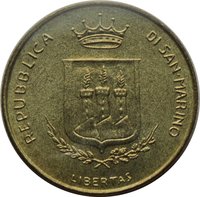
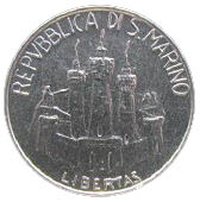
Crowned arms of San Marino with sprig and motto.
Inscription:
REPUBBLICA DI SAN·MARINO
LIBERTAS
LIBERTAS
Script: Latin
Engraver: Agenore Fabbri
Reverse
Description:
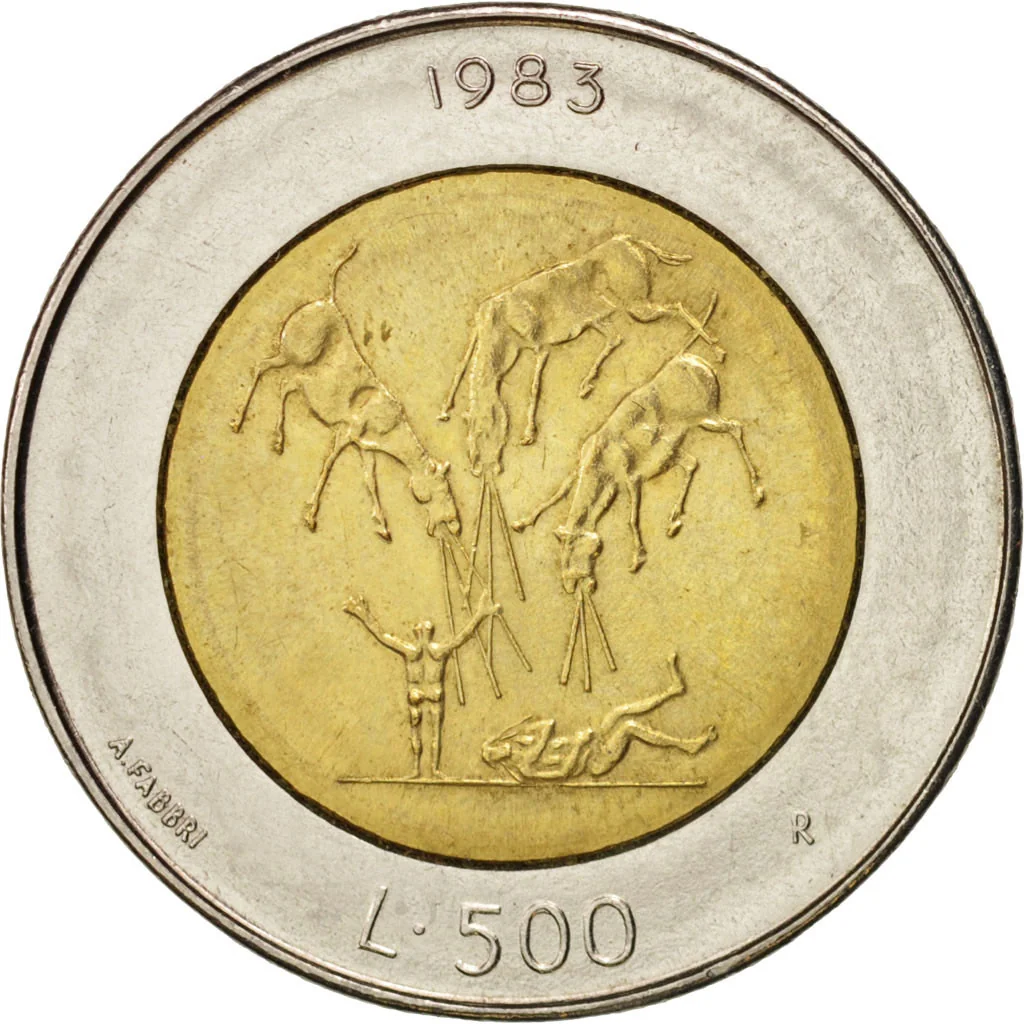
Three irradiated horses loom over two humans. Outer ring: date above, value below. Mint description: an apocalyptic, inescapable tragedy overwhelming humanity.
Inscription:
1983
A.FABBRI
R
L· 500
A.FABBRI
R
L· 500
Script: Latin
Engraver: Agenore Fabbri
Edge
Segmented reeding
Mints
| Name | Mark |
|---|---|
| Rome | R |
Mintings
| Year | Mint Mark | Mintage | Quality | Collection |
|---|---|---|---|---|
| 1983 | R | 1,850,000 |
Historical background
In 1983, San Marino's currency situation was defined by its intricate and dependent relationship with Italy, governed by a series of bilateral treaties. The Republic did not issue an independent, freely floating currency. Instead, its legal tender was the Italian Lira, and the Sammarinese government exercised limited minting rights through a convention with Italy. This agreement allowed San Marino to produce its own coinage, the Sammarinese Lira, which was minted in limited quantities for collectors and ceremonial purposes. These coins were legal tender within its borders and exchanged at a strict 1:1 parity with the Italian Lira, but they circulated alongside and were functionally subordinate to the much more abundant Italian currency in daily economic life.
The monetary dependency was a double-edged sword. It provided immense stability by tethering San Marino's small, open economy to its much larger neighbor, eliminating exchange rate risk and facilitating seamless trade and tourism, which were vital economic sectors. However, it also meant San Marino had no autonomous monetary policy; it was effectively subject to the decisions of the Banca d'Italia and the Italian government. This became particularly significant in the late 1970s and early 1980s as Italy grappled with high inflation, a weakening Lira, and strict capital controls. San Marino had no independent tools to combat the imported inflation or financial restrictions, its economy passively absorbing the conditions set in Rome.
Furthermore, 1983 fell within a period of ongoing negotiation and adjustment regarding the financial sector. San Marino had begun developing its own banking system and was seeking to establish itself as a discreet financial center. This created occasional tensions with Italy, which was concerned about capital flight and tax evasion through Sammarinese accounts. The currency union, while providing bedrock stability, thus framed a broader political and economic dynamic where San Marino navigated between asserting its sovereignty and managing the inescapable realities of its geographic and economic integration with Italy.
The monetary dependency was a double-edged sword. It provided immense stability by tethering San Marino's small, open economy to its much larger neighbor, eliminating exchange rate risk and facilitating seamless trade and tourism, which were vital economic sectors. However, it also meant San Marino had no autonomous monetary policy; it was effectively subject to the decisions of the Banca d'Italia and the Italian government. This became particularly significant in the late 1970s and early 1980s as Italy grappled with high inflation, a weakening Lira, and strict capital controls. San Marino had no independent tools to combat the imported inflation or financial restrictions, its economy passively absorbing the conditions set in Rome.
Furthermore, 1983 fell within a period of ongoing negotiation and adjustment regarding the financial sector. San Marino had begun developing its own banking system and was seeking to establish itself as a discreet financial center. This created occasional tensions with Italy, which was concerned about capital flight and tax evasion through Sammarinese accounts. The currency union, while providing bedrock stability, thus framed a broader political and economic dynamic where San Marino navigated between asserting its sovereignty and managing the inescapable realities of its geographic and economic integration with Italy.
Series: Threat of Nuclear War
🌱 Common