

5 Cents – The Bahamas
Bahamas
Context
Years: 1966–1970
Country: Bahamas 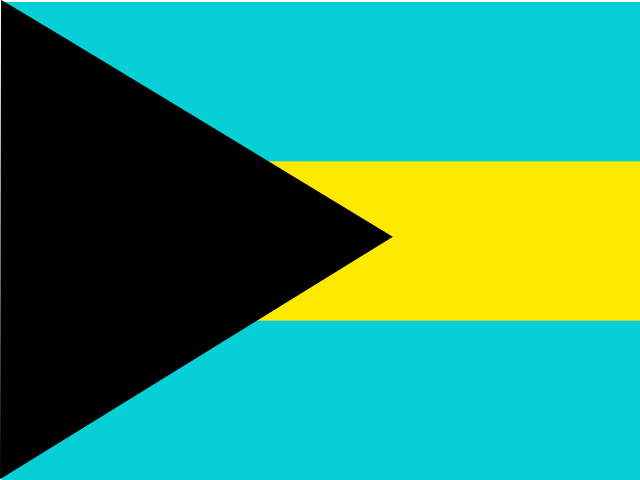
Issuer: The Bahamas
Ruler: Elizabeth II
Currency:
(since 1966)
Total mintage: 21,282,196
Material
References
KM: #Click to copy to clipboard3
Numista: #990
Value
Exchange value: 0.05 BSD
Obverse
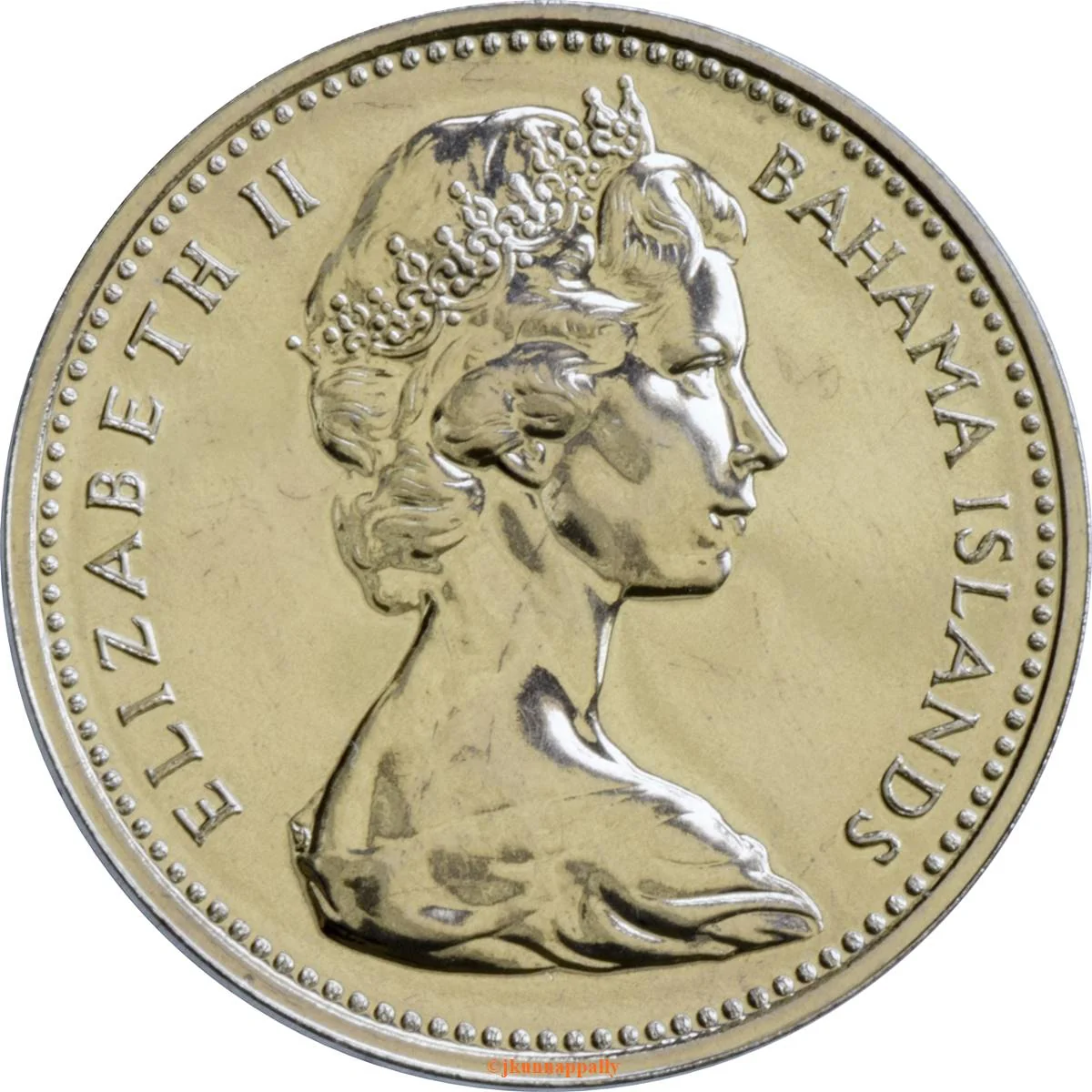
Description:
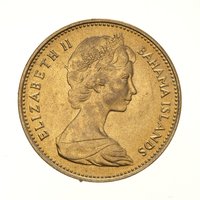
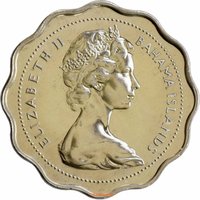
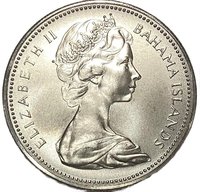
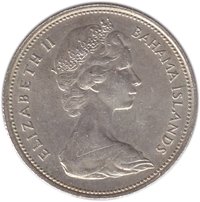
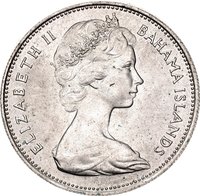
Bust of Queen Elizabeth II in right profile.
Inscription:
ELIZABETH II BAHAMA ISLANDS
Translation:
ELIZABETH II BAHAMA ISLANDS
Script: Latin
Language: English
Engraver: Arnold Machin
Reverse
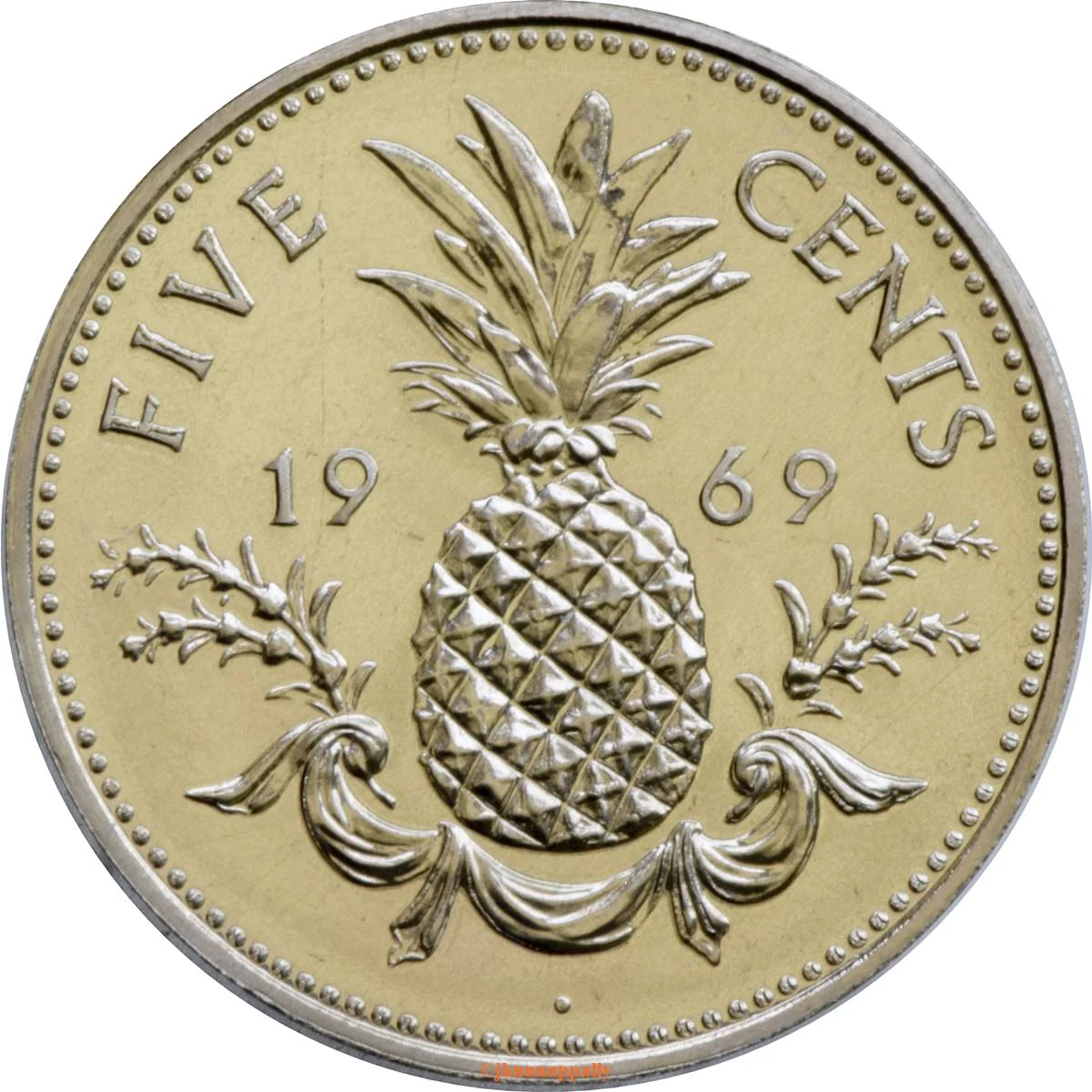
Description:
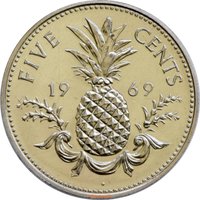
Pineapple over a garland.
Inscription:
FIVE CENTS
19 69
19 69
Script: Latin
Engraver: Arnold Machin
Edge
Plain
Mints
| Name | Mark |
|---|---|
| Franklin Mint | — |
| Royal Mint (Tower Hill) | — |
| Royal Mint | — |
Mintings
| Year | Mint Mark | Mintage | Quality | Collection |
|---|---|---|---|---|
| 1966 | Minted in 1966-1968; London Mint | 2,571,000 | ||
| 1966 | Minted in 1966-1968; London Mint | 2,571,000 | ||
| 1966 | Minted in 1966-1968; London Mint | 2,571,000 | ||
| 1966 | — | 2,571,000 | ||
| 1968 | Minted in 1969; London Mint | 600,000 | ||
| 1968 | Minted in 1969; London Mint | 600,000 | ||
| 1968 | Minted in 1969; London Mint | 600,000 | ||
| 1968 | — | 600,000 | ||
| 1969 | Minted in 1969-1970; London and Llantrisant Mints | 2,026,000 | ||
| 1969 | Minted in 1970; London Mint | 75,000 | Proof | |
| 1969 | Minted in 1969-1970; London and Llantrisant Mints | 2,026,000 | ||
| 1969 | Minted in 1970; London Mint | 75,000 | Proof | |
| 1969 | Minted in 1969-1970; London and Llantrisant Mints | 2,026,000 | ||
| 1969 | Minted in 1970; London Mint | 75,000 | Proof | |
| 1969 | — | 2,026,000 | ||
| 1969 | — | 75,000 | Proof | |
| 1970 | Franklin Mint | 25,722 | In sets | |
| 1970 | Franklin Mint | 22,827 | Proof | |
| 1970 | Franklin Mint | 25,722 | In sets | |
| 1970 | Franklin Mint | 22,827 | Proof | |
| 1970 | Franklin Mint | 25,722 | In sets | |
| 1970 | Franklin Mint | 22,827 | Proof | |
| 1970 | — | 25,722 | In sets | |
| 1970 | — | 22,827 | Proof |
Historical background
In 1966, The Bahamas stood on the cusp of a significant monetary transition, moving away from the long-standing use of sterling. Since the 18th century, the Bahamian pound, pegged at par with the British pound sterling, had been the official currency. This system reflected the islands' colonial status and deep economic ties with the United Kingdom. However, by the mid-1960s, with the growth of tourism and increasing economic influence from the United States, the sterling-based system was becoming increasingly impractical for daily commerce and the burgeoning financial sector.
The push for change was driven by both economic pragmatism and a growing sense of national identity ahead of independence in 1973. The government, led by Premier Lynden Pindling, recognized that the U.S. dollar was already widely circulated and preferred in the tourism industry, which was the bedrock of the economy. A dollar-based system would simplify transactions for the millions of American visitors and align the financial system more closely with the nation's primary source of foreign investment and revenue. This period was one of careful planning, as authorities weighed the benefits of decimalization and a new peg against the stability of the existing sterling link.
Consequently, 1966 was a year of preparation for a landmark reform. The Bahamian government passed the Currency Act that year, laying the legislative groundwork to introduce a new decimal currency, the Bahamian dollar, which was planned to replace the Bahamian pound. The new dollar was designed to be pegged at a one-to-one rate with the U.S. dollar, a decisive shift in economic alignment from Europe to North America. This set the stage for the formal introduction of the Bahamian dollar in 1966, marking a pivotal step in the nation's journey toward economic self-determination and modernizing its financial infrastructure.
The push for change was driven by both economic pragmatism and a growing sense of national identity ahead of independence in 1973. The government, led by Premier Lynden Pindling, recognized that the U.S. dollar was already widely circulated and preferred in the tourism industry, which was the bedrock of the economy. A dollar-based system would simplify transactions for the millions of American visitors and align the financial system more closely with the nation's primary source of foreign investment and revenue. This period was one of careful planning, as authorities weighed the benefits of decimalization and a new peg against the stability of the existing sterling link.
Consequently, 1966 was a year of preparation for a landmark reform. The Bahamian government passed the Currency Act that year, laying the legislative groundwork to introduce a new decimal currency, the Bahamian dollar, which was planned to replace the Bahamian pound. The new dollar was designed to be pegged at a one-to-one rate with the U.S. dollar, a decisive shift in economic alignment from Europe to North America. This set the stage for the formal introduction of the Bahamian dollar in 1966, marking a pivotal step in the nation's journey toward economic self-determination and modernizing its financial infrastructure.
🌱 Very Common