

1 euro – Portugal
Add to wishlist
Portugal
Context
Years: 2008–2025
Issuer: Portugal
Period:
(since 1974)
Currency:
(since 2002)
Total mintage: 208,402,775
Material
References
KM: #
Numista: #9894
Value
Exchange value: 1 EUR
Inflation-adjusted value: 1.32 EUR
Obverse
Description:
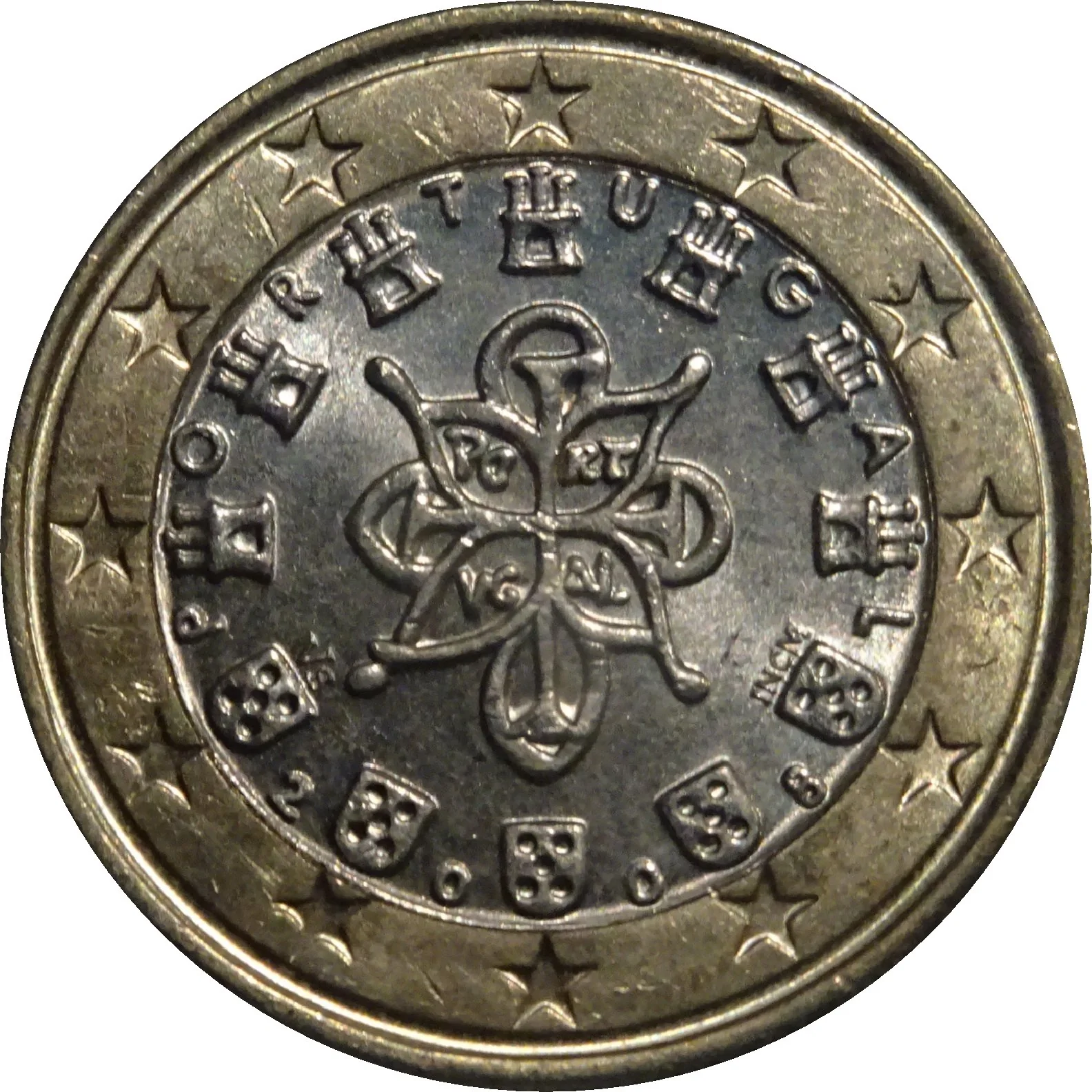
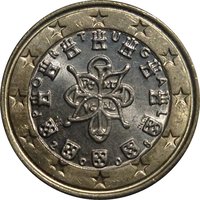
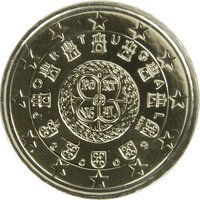
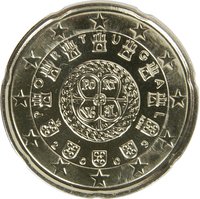
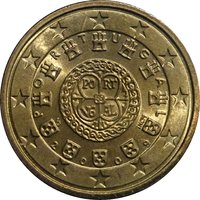
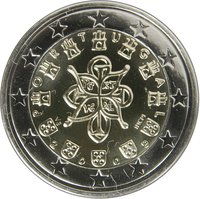
The 1144 seal of Portugal's first king, Afonso Henriques, features the castles and shields from the national flag, the letters of "PORTUGAL," and is ringed by Europe's twelve stars.
Inscription:
P O R T U G A L
PO RT
VG AL
VS INCM
2 0 0 9
PO RT
VG AL
VS INCM
2 0 0 9
Script: Latin
Engraver: V. M. Fernandes dos Santos
Reverse
Edge
Segmented reeding
Categories
| Map |
Mints
| Name | Mark |
|---|---|
| Imprensa Nacional - Casa da Moeda | INCM |
Mintings
| Year | Mint Mark | Mintage | Quality | Collection |
|---|---|---|---|---|
| 2008 | INCM | 4,901,625 | ||
| 2008 | INCM | 26,500 | BU | |
| 2008 | INCM | 3,500 | Proof | |
| 2009 | INCM | 44,000 | BU | |
| 2009 | INCM | 4,000 | Proof | |
| 2009 | INCM | 20,000,000 | ||
| 2010 | INCM | 20,000,000 | ||
| 2010 | INCM | 46,500 | BU | |
| 2010 | INCM | 4,500 | Proof | |
| 2011 | INCM | 5,000,000 | ||
| 2011 | INCM | 4,500 | Proof | |
| 2011 | INCM | 44,500 | BU | |
| 2012 | INCM | 44,500 | BU | |
| 2012 | INCM | 4,500 | Proof | |
| 2013 | INCM | 4,500 | Proof | |
| 2013 | INCM | 44,500 | BU | |
| 2014 | INCM | 9,000,000 | ||
| 2014 | INCM | 26,000 | BU | |
| 2014 | INCM | 1,500 | Proof | |
| 2015 | INCM | 34,000 | BU | |
| 2015 | INCM | 15,000,000 | ||
| 2015 | INCM | 1,500 | Proof | |
| 2016 | INCM | 1,500 | Proof | |
| 2016 | INCM | 35,000,000 | ||
| 2016 | INCM | 33,000 | BU | |
| 2017 | INCM | 1,500 | Proof | |
| 2017 | INCM | 20,000,000 | ||
| 2017 | INCM | 33,000 | BU | |
| 2018 | INCM | 1,500 | Proof | |
| 2018 | INCM | 25,000,000 | ||
| 2018 | INCM | 30,500 | BU | |
| 2019 | INCM | 4,000,000 | ||
| 2019 | INCM | 26,500 | BU | |
| 2019 | INCM | 1,500 | Proof | |
| 2020 | INCM | 30,000,000 | ||
| 2020 | INCM | — | Proof | |
| 2020 | INCM | — | BU | |
| 2021 | INCM | — | Proof | |
| 2021 | INCM | — | BU | |
| 2022 | INCM | 16,500 | BU | |
| 2022 | INCM | 1,500 | Proof | |
| 2023 | INCM | — | BU | |
| 2023 | INCM | 1,500 | Proof | |
| 2024 | INCM | 250 | BU | |
| 2024 | INCM | 20,000,000 | ||
| 2024 | INCM | 700 | Proof | |
| 2025 | INCM | 700 | Proof | |
| 2025 | INCM | — | ||
| 2025 | INCM | 12,000 | BU |
Historical background
In 2008, Portugal's currency situation was defined by its membership in the Eurozone, having adopted the euro in 1999 (with notes and coins introduced in 2002). This meant the country had fully ceded control of its monetary policy to the European Central Bank (ECB). Consequently, Portugal could not devalue its currency to regain competitiveness against its main trading partners, most of whom were also within the Eurozone. This structural reality was critical as the country entered the global financial crisis with persistent weaknesses, including low productivity growth, a large public and private debt burden, and a significant loss of export competitiveness since the late 1990s.
The global financial crisis that erupted in late 2008 sharply exposed these underlying vulnerabilities. As credit markets seized, Portugal's economy, already stagnant, plunged into a deep recession. This severely impacted government revenues, causing the budget deficit to balloon to over 9% of GDP by 2009, far exceeding Eurozone limits. Crucially, the loss of monetary sovereignty meant Portugal could not stimulate its economy by independently lowering interest rates or printing money; it was reliant on ECB policy, which was tailored for the entire Eurozone, not its specific needs.
Therefore, the currency situation in 2008 was a double-edged sword. While the euro provided stability and prevented a currency crisis in the short term, it locked Portugal into a one-size-fits-all monetary policy that offered no tailored tools to address its recession and debt dynamics. This set the stage for the subsequent sovereign debt crisis, where Portugal, unable to devalue or monetize its debt, was forced in 2011 to seek a €78 billion international bailout from the EU, ECB, and IMF, accompanied by strict austerity measures to restore fiscal sustainability within the constraints of the single currency.
The global financial crisis that erupted in late 2008 sharply exposed these underlying vulnerabilities. As credit markets seized, Portugal's economy, already stagnant, plunged into a deep recession. This severely impacted government revenues, causing the budget deficit to balloon to over 9% of GDP by 2009, far exceeding Eurozone limits. Crucially, the loss of monetary sovereignty meant Portugal could not stimulate its economy by independently lowering interest rates or printing money; it was reliant on ECB policy, which was tailored for the entire Eurozone, not its specific needs.
Therefore, the currency situation in 2008 was a double-edged sword. While the euro provided stability and prevented a currency crisis in the short term, it locked Portugal into a one-size-fits-all monetary policy that offered no tailored tools to address its recession and debt dynamics. This set the stage for the subsequent sovereign debt crisis, where Portugal, unable to devalue or monetize its debt, was forced in 2011 to seek a €78 billion international bailout from the EU, ECB, and IMF, accompanied by strict austerity measures to restore fiscal sustainability within the constraints of the single currency.
Series: 2008 Portugal circulation coins
🌱 Very Common