

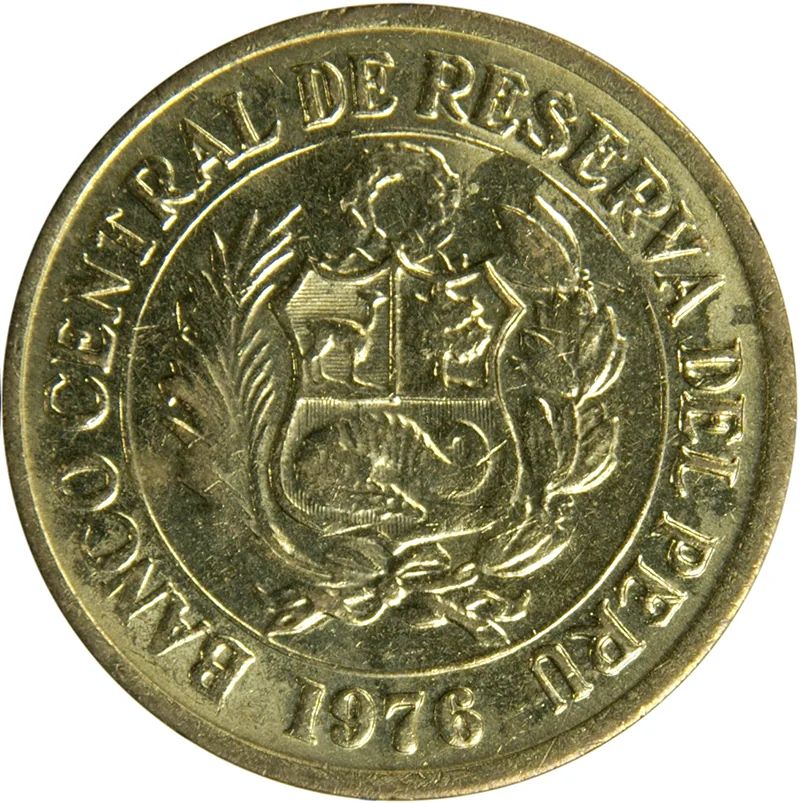
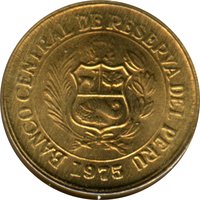
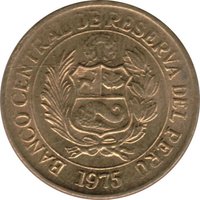
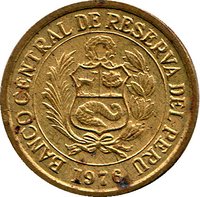
Obverse
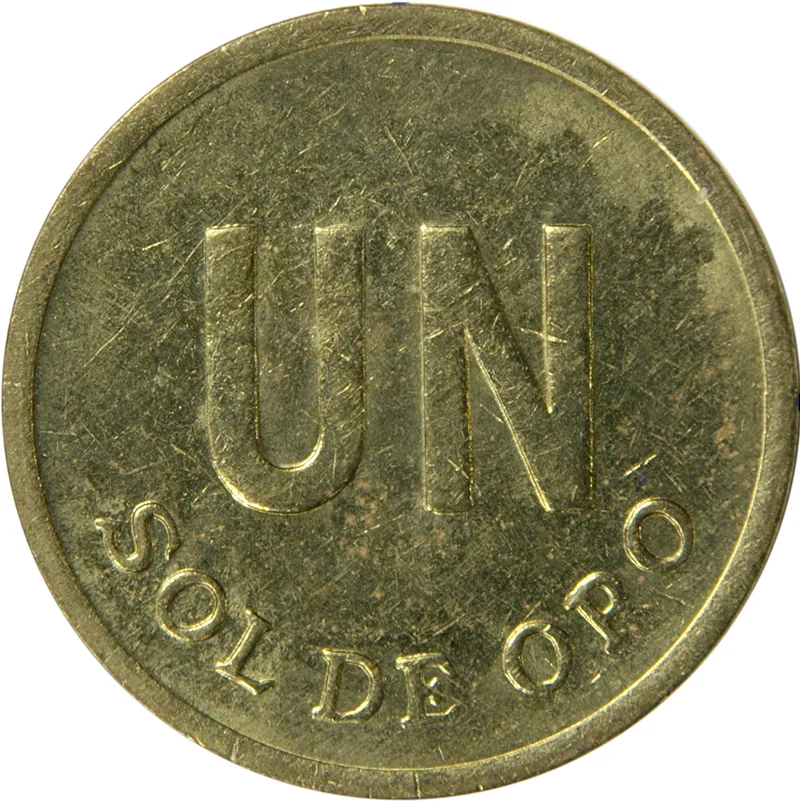
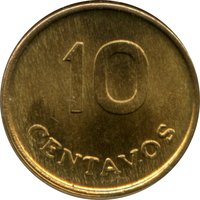
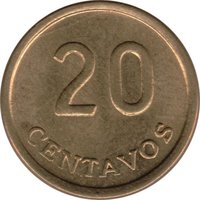
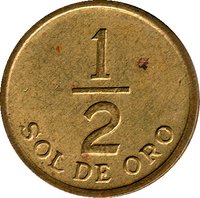
Reverse
Edge
Plain
Categories
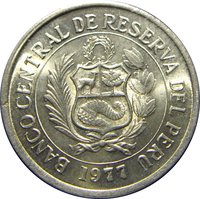
| Symbols> Coat of Arms |
| Symbol> Cornucopia |
Mints
| Name | Mark |
|---|---|
| United States Mint of Philadelphia | — |
Mintings
| Year | Mint Mark | Mintage | Quality | Collection |
|---|---|---|---|---|
| 1975 | — | 354,485,000 | ||
| 1976 | — | 114,660,000 |
Historical background
In 1975, Peru found itself in a deepening economic crisis, characterized by severe balance of payments problems, rampant inflation, and a rapidly depleting foreign reserve position. The roots of this situation lay in the ambitious statist policies of the military government of General Juan Velasco Alvarado (1968-1975), which had financed large-scale nationalizations, agrarian reform, and social programs through heavy external borrowing and deficit spending. By the mid-1970s, this model was buckling under the weight of a global recession triggered by the 1973 oil crisis, which depressed prices for Peru's key mineral exports while making imports and debt servicing more expensive.
The currency situation was dire and marked by extreme pressure on the sol. To defend an increasingly overvalued official exchange rate, the Central Reserve Bank of Peru was forced to expend its dwindling dollar reserves, leading to the emergence of a thriving black market for U.S. dollars. This overvaluation made Peruvian exports less competitive and encouraged capital flight, as those who could sought to move money abroad. Inflation soared to approximately 24% in 1975, eroding purchasing power and creating widespread economic distortions, while government attempts to control prices through subsidies further strained public finances.
Recognizing the unsustainable position, the Velasco government took a major step in September 1975 by devaluing the sol by nearly 30%, moving from 43 to 55 soles per U.S. dollar. This devaluation, however, was too little and too late to stabilize the economy. It contributed to the political erosion of Velasco, who was replaced in a bloodless coup by General Francisco Morales Bermúdez just two months later. The new administration inherited a full-blown crisis, setting the stage for the even more severe economic turmoil and austerity measures of the late 1970s.
The currency situation was dire and marked by extreme pressure on the sol. To defend an increasingly overvalued official exchange rate, the Central Reserve Bank of Peru was forced to expend its dwindling dollar reserves, leading to the emergence of a thriving black market for U.S. dollars. This overvaluation made Peruvian exports less competitive and encouraged capital flight, as those who could sought to move money abroad. Inflation soared to approximately 24% in 1975, eroding purchasing power and creating widespread economic distortions, while government attempts to control prices through subsidies further strained public finances.
Recognizing the unsustainable position, the Velasco government took a major step in September 1975 by devaluing the sol by nearly 30%, moving from 43 to 55 soles per U.S. dollar. This devaluation, however, was too little and too late to stabilize the economy. It contributed to the political erosion of Velasco, who was replaced in a bloodless coup by General Francisco Morales Bermúdez just two months later. The new administration inherited a full-blown crisis, setting the stage for the even more severe economic turmoil and austerity measures of the late 1970s.
Series: 1975 Peru circulation coins
🌱 Very Common