

4½ piastres – Cyprus
Add to wishlist
Cyprus
Obverse
Description:
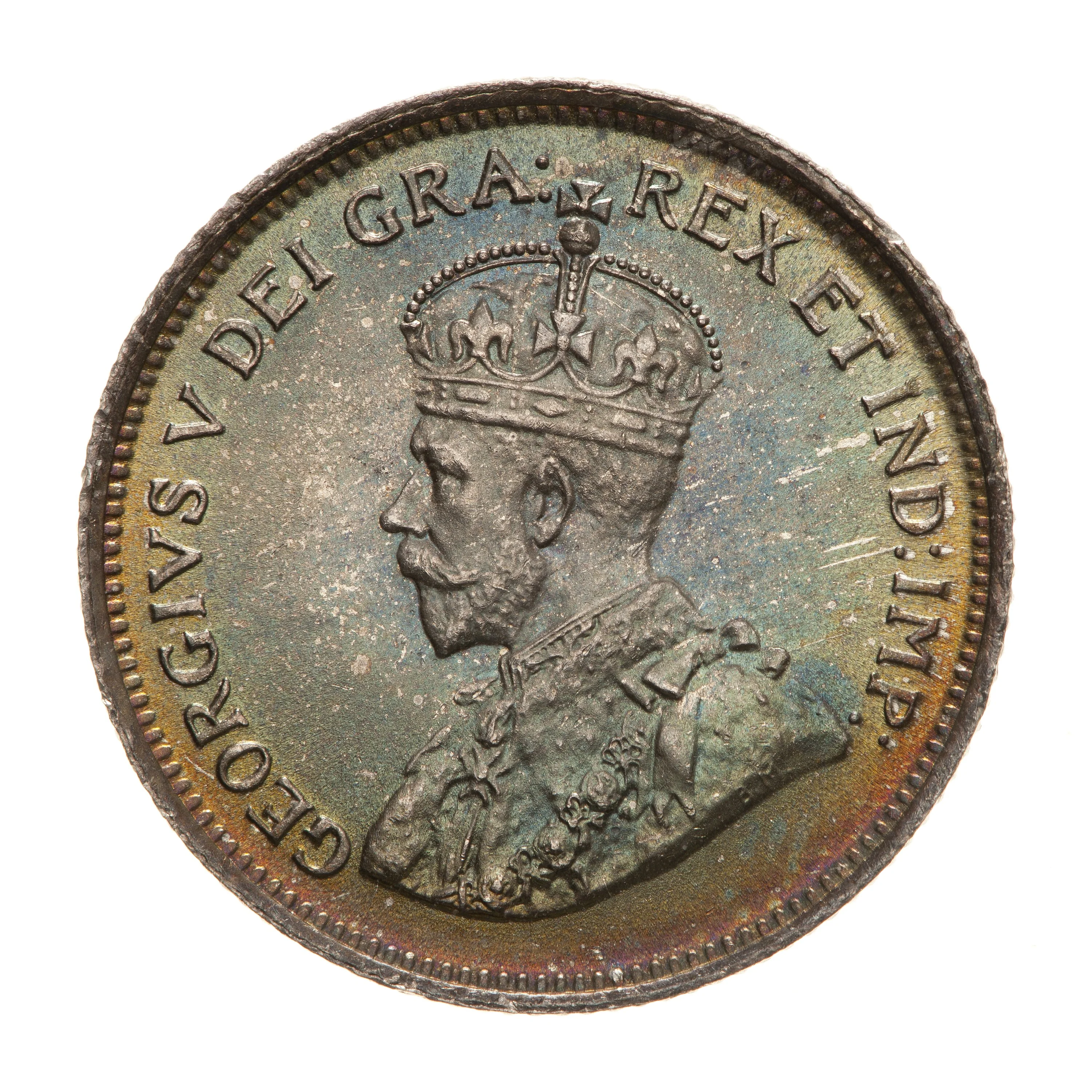
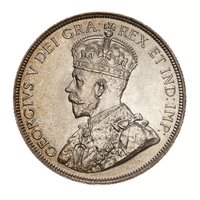
Portrait of King George V.
Inscription:
GEORGIUS V DEI GRA: REX ET IND: IMP:
B. M.
B. M.
Translation:
George V by the Grace of God: King and Emperor of India:
B. M.
B. M.
Script: Latin
Language: Latin
Engraver: Edgar Bertram MacKennal
Reverse
Edge
Reeded
Categories
| Person> Monarch |
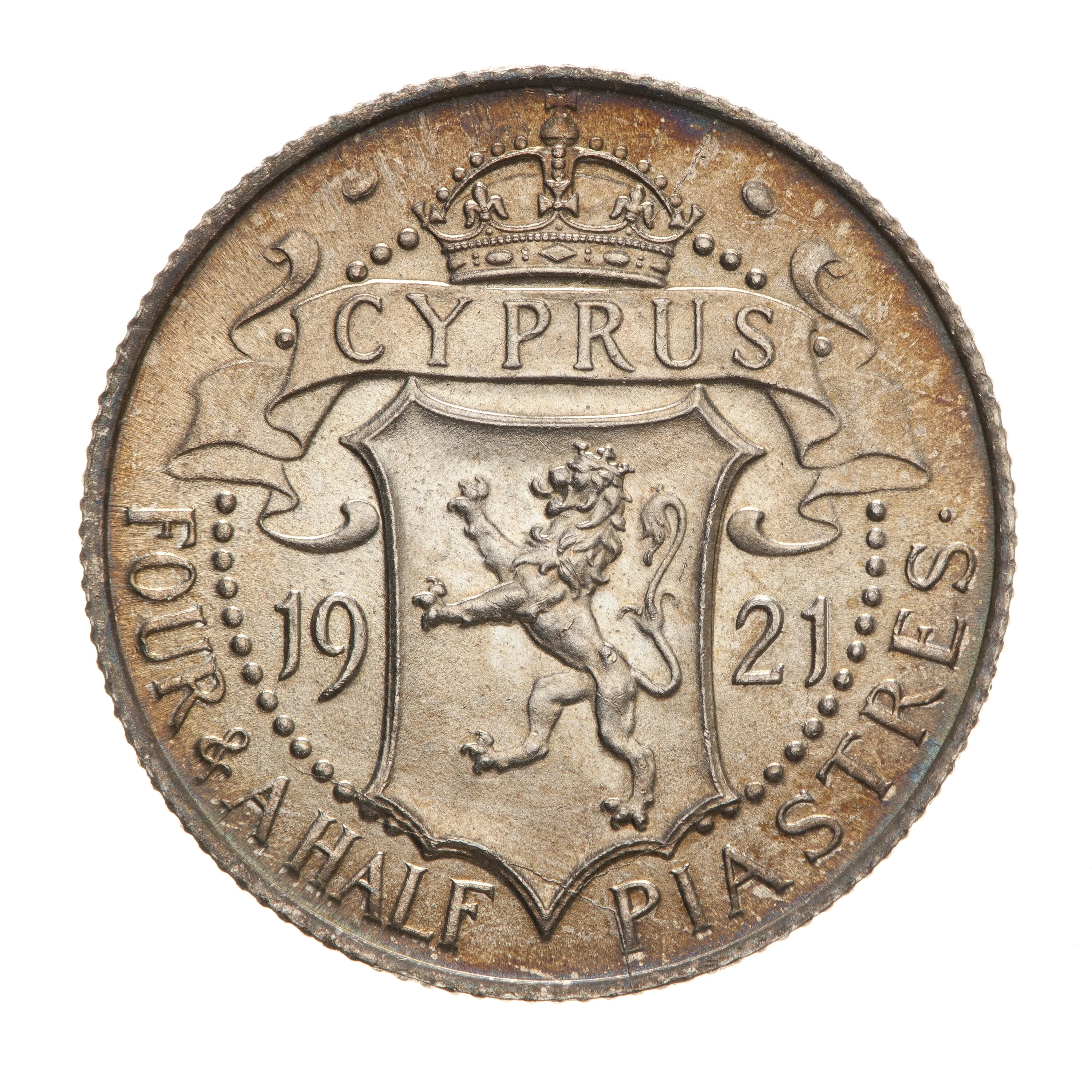
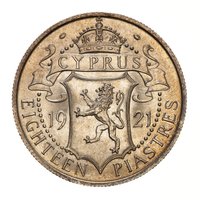
| Symbols> Coat of Arms |
Mints
| Name | Mark |
|---|---|
| Royal Mint (Tower Hill) | — |
Mintings
| Year | Mint Mark | Mintage | Quality | Collection |
|---|---|---|---|---|
| 1921 | — | 600,000 |
Historical background
In 1921, Cyprus operated under a complex and transitional currency system, a direct legacy of its recent political transfer. The island had been under British administration since 1878, but formally annexed only in 1914 following the Ottoman Empire's entry into World War I against Britain. Despite British rule, the official currency remained the Ottoman piastre, reflecting the island's deep-seated economic ties to the region. However, the collapse of the Ottoman Empire and the instability of its currency created significant practical difficulties for trade and governance.
To address this, the British administration had begun a gradual process of integrating Cyprus into the sterling zone. The Indian rupee was introduced as legal tender in 1901 to provide a more stable imperial currency, leading to a dual circulation system alongside the Ottoman piastre. By 1921, the rupee was firmly established as the primary currency for government transactions and much of commerce, but older Ottoman coins still circulated, particularly in rural areas. The exchange rates between these units were officially fixed, with 180 piastres equalling one British gold sovereign, and rupees subdivided into local cents.
This monetary landscape was therefore one of formal British control working to supplant an entrenched Ottoman system. The year 1921 fell within a period of stabilization under the sterling standard, which aimed to simplify trade within the Empire and attract investment. Nevertheless, the lingering presence of Ottoman coinage symbolized the island's ongoing socio-economic transition and the incomplete nature of its integration into the British imperial system, a situation that would persist until the full adoption of the Cyprus pound, pegged to sterling, in 1928.
To address this, the British administration had begun a gradual process of integrating Cyprus into the sterling zone. The Indian rupee was introduced as legal tender in 1901 to provide a more stable imperial currency, leading to a dual circulation system alongside the Ottoman piastre. By 1921, the rupee was firmly established as the primary currency for government transactions and much of commerce, but older Ottoman coins still circulated, particularly in rural areas. The exchange rates between these units were officially fixed, with 180 piastres equalling one British gold sovereign, and rupees subdivided into local cents.
This monetary landscape was therefore one of formal British control working to supplant an entrenched Ottoman system. The year 1921 fell within a period of stabilization under the sterling standard, which aimed to simplify trade within the Empire and attract investment. Nevertheless, the lingering presence of Ottoman coinage symbolized the island's ongoing socio-economic transition and the incomplete nature of its integration into the British imperial system, a situation that would persist until the full adoption of the Cyprus pound, pegged to sterling, in 1928.
🌱 Fairly Common