

1 franc – Rwanda
Add to wishlist
Rwanda
Context
Years: 1964–1965
Issuer: Rwanda
Issuing organization: National Bank of Rwanda
Period:
(since 1962)
Currency:
(since 1964)
Demonetized: Yes
Total mintage: 48,000,000
Material
Diameter: 21 mm
Weight: 2.9 g
Thickness: 1.25 mm
Shape: Round
Composition: Copper-nickel
Technique: Milled
Alignment: Coin alignment
flip
References
KM: #
Numista: #9837
Value
Exchange value: 1 RWF
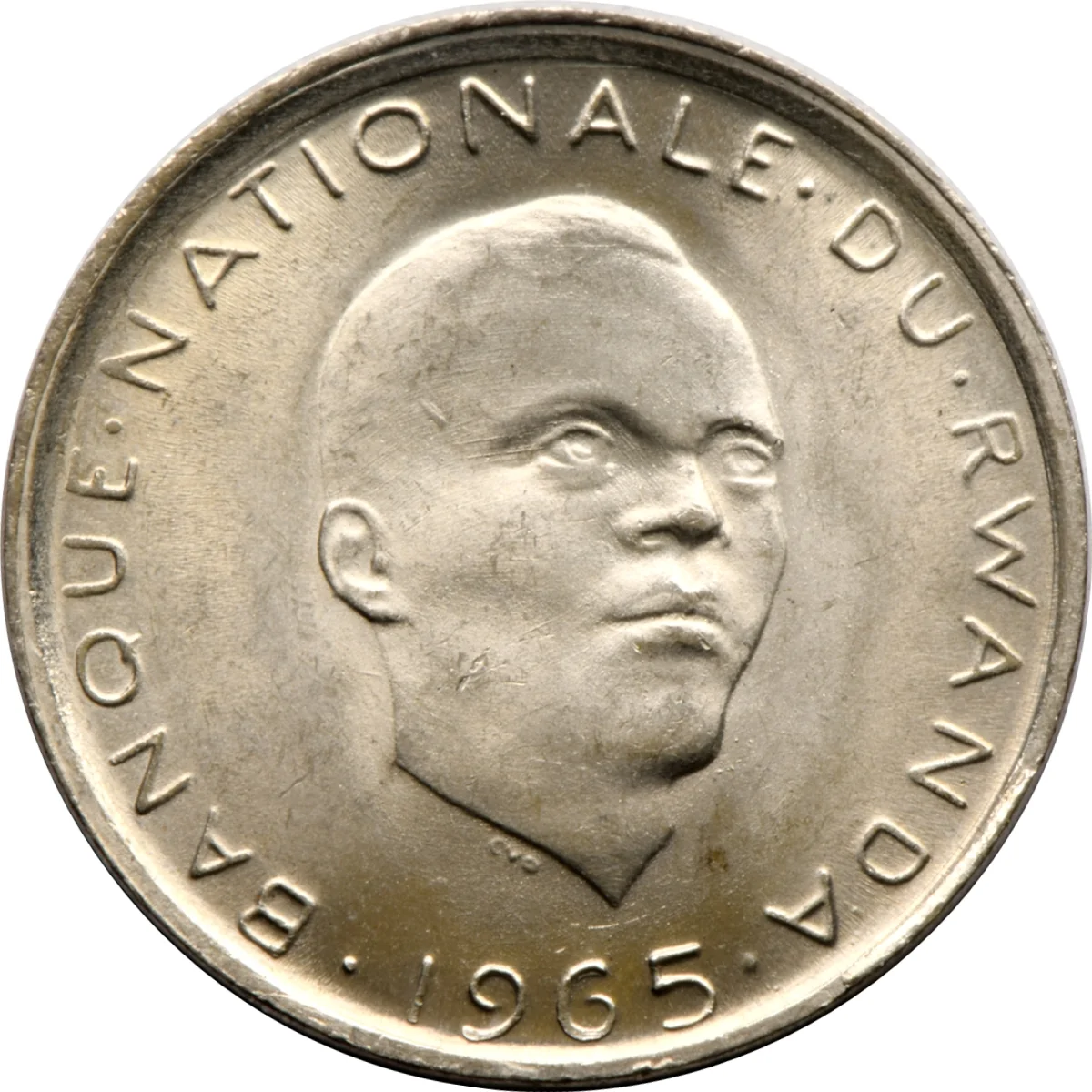
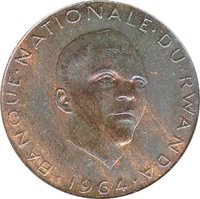
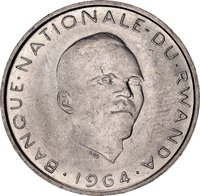
Obverse
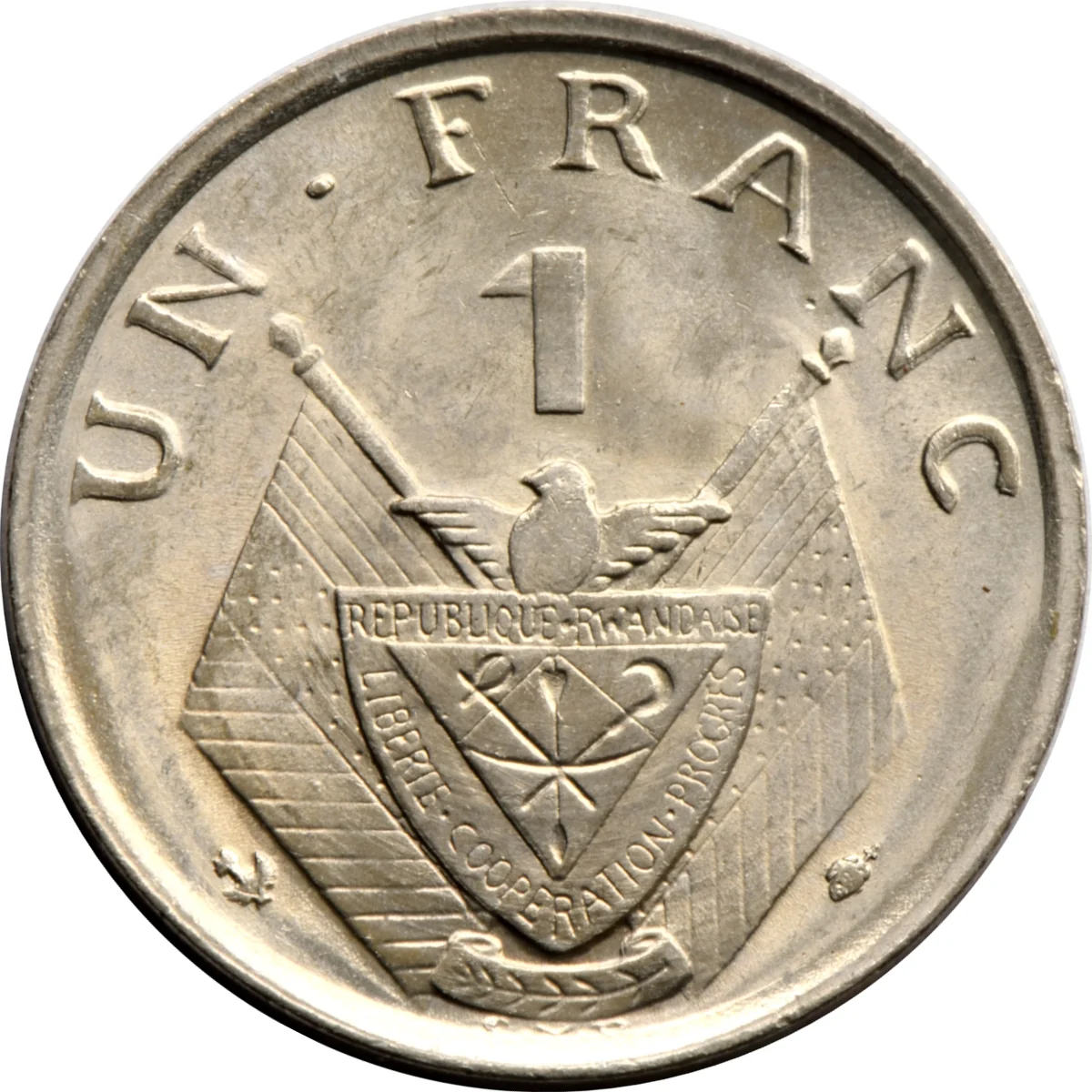
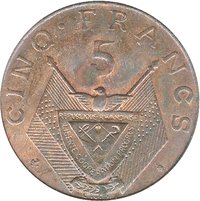
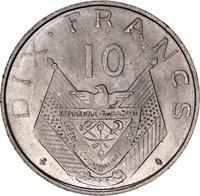
Reverse
Description:
Grégoire Kayibanda facing right.
Inscription:
BANQUE NATIONALE DU RWANDA
CVD
· 1965 ·
CVD
· 1965 ·
Translation:
NATIONAL BANK OF RWANDA
CVD
· 1965 ·
CVD
· 1965 ·
Script: Latin
Language: French
Engraver: Carlos Van Dionant
Edge
Plain
Categories
| Symbols> Coat of Arms |
| Person> Politician |
Mints
| Name | Mark |
|---|---|
| Royal Mint of Belgium | — |
Mintings
| Year | Mint Mark | Mintage | Quality | Collection |
|---|---|---|---|---|
| 1964 | — | 3,000,000 | ||
| 1965 | — | 45,000,000 |
Historical background
In 1964, Rwanda’s currency situation was fundamentally shaped by its recent independence from Belgian-administered UN trusteeship in 1962. The nation remained within the Monetary Union of Congo and Rwanda-Burundi, a legacy of the colonial era. This union meant that Rwanda did not issue its own sovereign currency; instead, it used the Congolese franc, which was issued by the Banque Centrale du Congo et du Rwanda-Burundi. This arrangement tied Rwanda’s monetary policy and economic stability directly to its much larger and more politically turbulent neighbor, the Democratic Republic of the Congo (then Congo-Léopoldville).
This dependency created significant vulnerability. In 1964, the Congo was engulfed in the Congo Crisis, featuring rebellions, political instability, and severe economic disruption. The turmoil directly threatened the value and stability of the shared currency, posing a major risk to Rwanda’s fledgling economy. Rwandan leaders, particularly under President Grégoire Kayibanda, viewed this monetary union as an unacceptable constraint on national sovereignty and a barrier to independent economic planning.
Consequently, 1964 was a pivotal year of preparation for monetary independence. The Rwandan government took decisive steps to establish its own central bank, the National Bank of Rwanda, and to introduce a national currency. This process culminated in the issuance of the Rwandan franc in April 1964, which replaced the Congolese franc at par. This move was a critical assertion of economic sovereignty, allowing Rwanda to control its monetary policy and insulate itself, to a degree, from the instability of the region as it sought to build a post-colonial state.
This dependency created significant vulnerability. In 1964, the Congo was engulfed in the Congo Crisis, featuring rebellions, political instability, and severe economic disruption. The turmoil directly threatened the value and stability of the shared currency, posing a major risk to Rwanda’s fledgling economy. Rwandan leaders, particularly under President Grégoire Kayibanda, viewed this monetary union as an unacceptable constraint on national sovereignty and a barrier to independent economic planning.
Consequently, 1964 was a pivotal year of preparation for monetary independence. The Rwandan government took decisive steps to establish its own central bank, the National Bank of Rwanda, and to introduce a national currency. This process culminated in the issuance of the Rwandan franc in April 1964, which replaced the Congolese franc at par. This move was a critical assertion of economic sovereignty, allowing Rwanda to control its monetary policy and insulate itself, to a degree, from the instability of the region as it sought to build a post-colonial state.
🌱 Common