

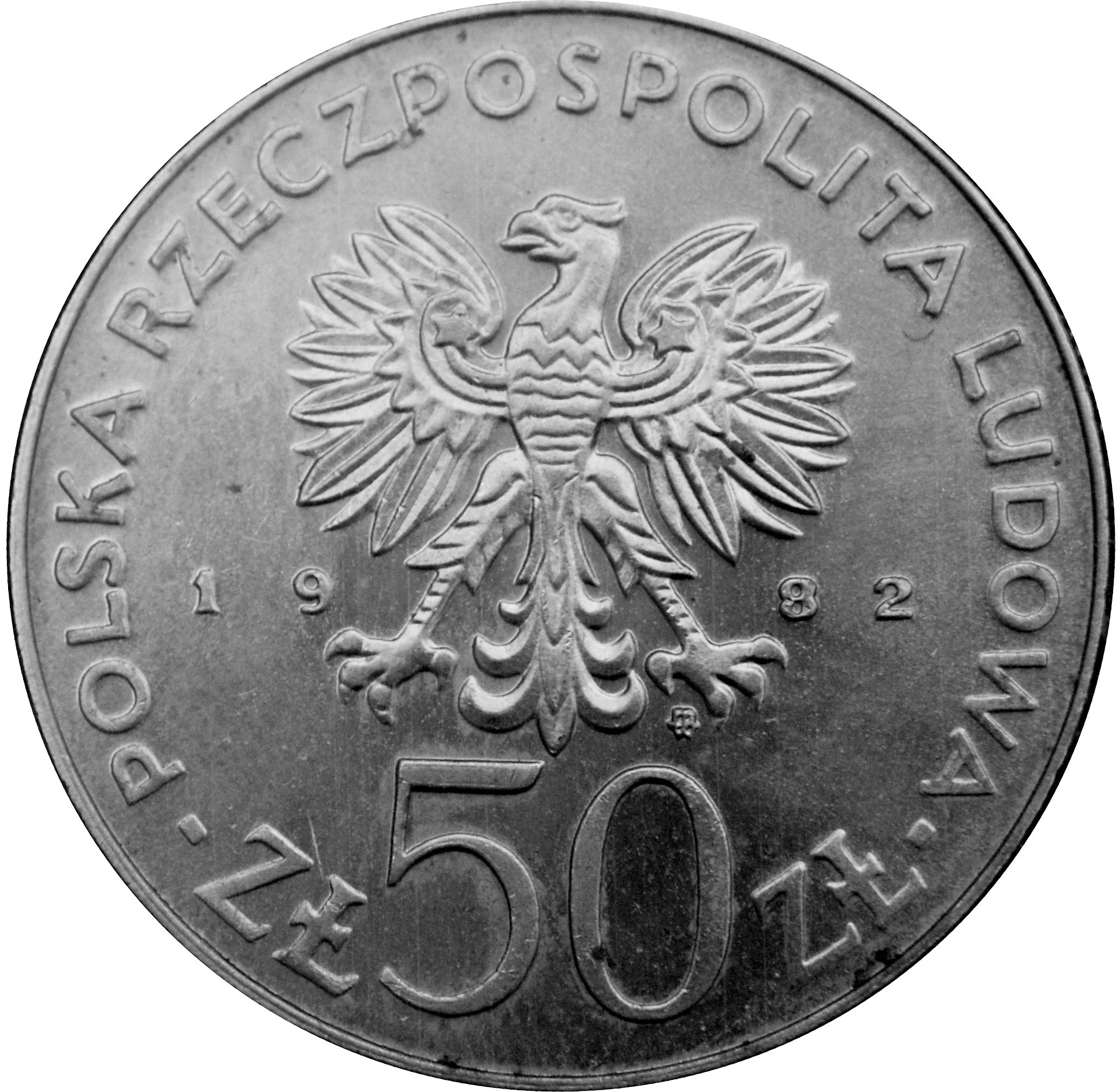
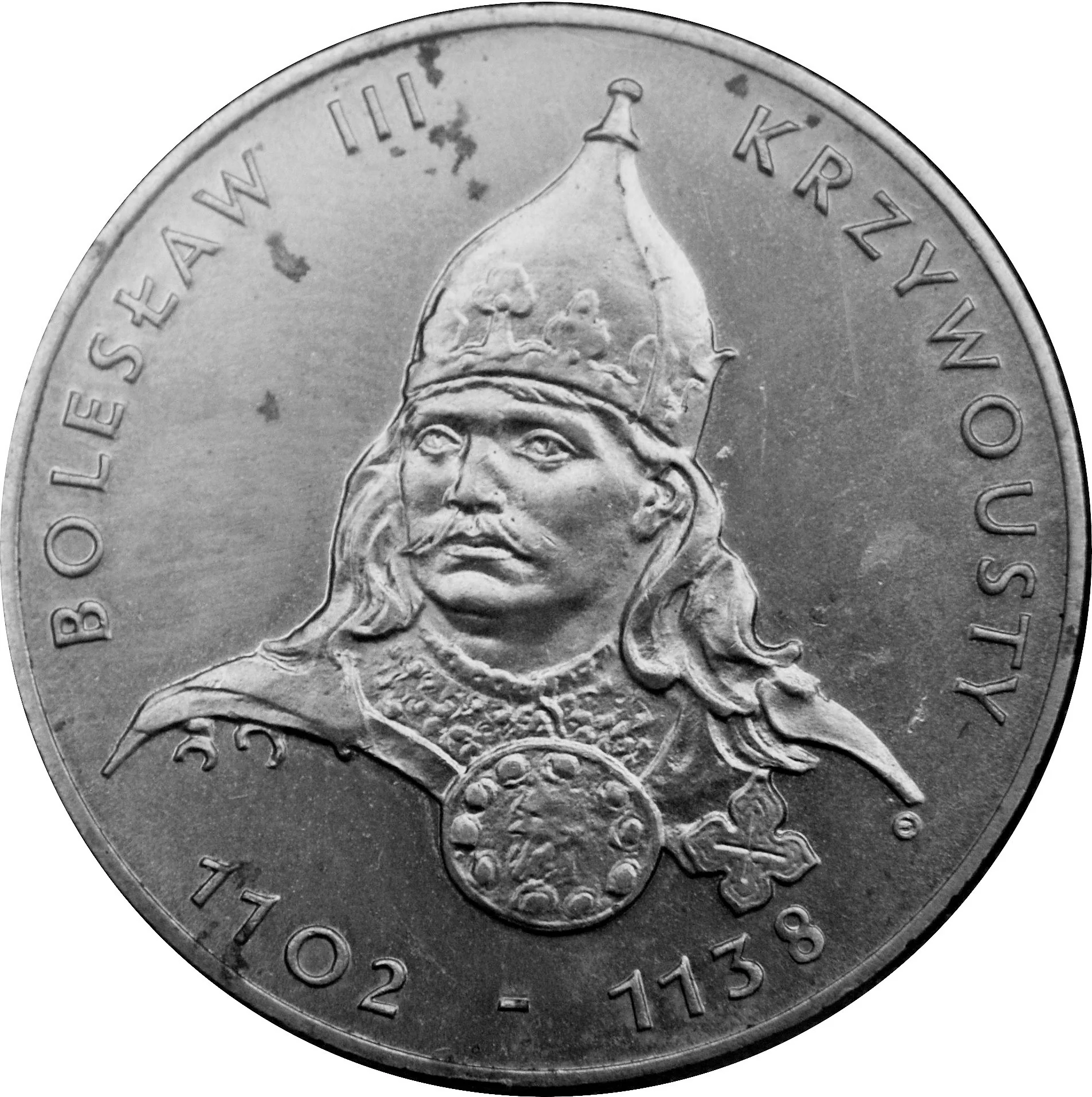
50 zlotys – Poland
Add to wishlist
Poland
Context
Year: 1982
Issuer: Poland
Period:
(1952—1989)
Currency:
(1949—1994)
Demonetization: 1 January 1995
Total mintage: 2,621,100
Material
Diameter: 30.5 mm
Weight: 11.7 g
Thickness: 2 mm
Shape: Round
Composition: Copper-nickel
Technique: Milled
Alignment: Medal alignment
flip
References
Y: #
Numista: #9819
Value
Exchange value: 50 PLZ
Inflation-adjusted value: 213068.70 PLZ
Obverse
Description:
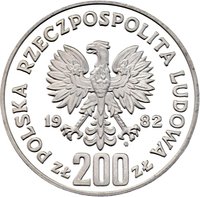
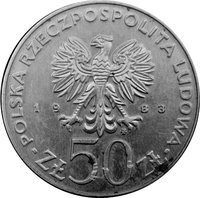
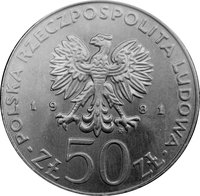
The Polish national coat of arms.
Inscription:
RZECZPOSPOLITA POLSKA LUDOWA
19 82
mw
·ZŁ 50 ZŁ·
19 82
mw
·ZŁ 50 ZŁ·
Translation:
PEOPLE'S REPUBLIC OF POLAND
19 82
mw
·ZŁ 50 ZŁ·
19 82
mw
·ZŁ 50 ZŁ·
Script: Latin
Language: Polish
Designer: Anna Jarnuszkiewicz
Reverse
Description:
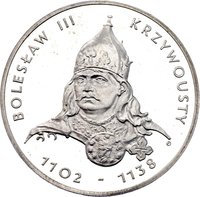
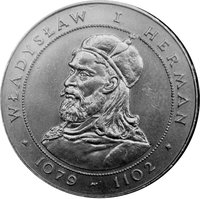
Bolesław III Wrymouth's 2/3.
Inscription:
BOLESŁAW III KRZYWOUSTY
1102-1138
1102-1138
Translation:
BOLESLAW III THE WRYMOUTH
1102-1138
1102-1138
Script: Latin
Language: Polish
Designer: Ewa Olszewska-Borys
Edge
Milled
Mints
| Name | Mark |
|---|---|
| Mint of Poland | (MW) |
Mintings
| Year | Mint Mark | Mintage | Quality | Collection |
|---|---|---|---|---|
| 1982 | MW | 2,616,100 | ||
| 1982 | MW | 5,000 | Proof |
Historical background
In 1982, Poland's currency situation was a direct reflection of the profound economic and political crisis engulfing the nation. The imposition of martial law in December 1981 by the communist regime, aimed at crushing the Solidarity trade union, further isolated the country internationally, leading to severe Western sanctions and a collapse in foreign credit. This exacerbated an already disastrous economic reality characterized by hyperinflation, widespread shortages of basic goods, and a massive foreign debt burden. The official złoty became increasingly worthless, with the government resorting to drastic price hikes for essentials while wages were suppressed, dramatically reducing real incomes and pushing much of the population into poverty.
The economy operated through a dysfunctional dual system. Alongside the official economy, a vast black market flourished where goods could be obtained for hard currencies like the US dollar or through barter. The government itself tacitly acknowledged the dollar's supremacy by operating a chain of state-run Pewex and Baltona shops, where Poles could purchase otherwise unavailable Western and luxury items exclusively with foreign currency. This created a stark social divide between those with access to hard currency (often from remittances from abroad) and those reliant solely on the rapidly depreciating złoty. The official exchange rate set by the government was a meaningless fiction, with a vastly different and highly volatile rate prevailing on the black market.
Monetary policy was powerless to address the core issues, as the crisis was fundamentally rooted in the failures of central planning and the political standoff. Printing money to cover state subsidies for loss-making industries and to placate social unrest only fed the inflationary spiral. There was no meaningful convertibility of the złoty, and attempts at economic reform were stymied by the political priorities of the authoritarian regime. Consequently, the currency chaos of 1982 symbolized the complete erosion of public trust in the state's economic management and highlighted the unsustainable nature of Poland's command economy within a collapsing socialist bloc.
The economy operated through a dysfunctional dual system. Alongside the official economy, a vast black market flourished where goods could be obtained for hard currencies like the US dollar or through barter. The government itself tacitly acknowledged the dollar's supremacy by operating a chain of state-run Pewex and Baltona shops, where Poles could purchase otherwise unavailable Western and luxury items exclusively with foreign currency. This created a stark social divide between those with access to hard currency (often from remittances from abroad) and those reliant solely on the rapidly depreciating złoty. The official exchange rate set by the government was a meaningless fiction, with a vastly different and highly volatile rate prevailing on the black market.
Monetary policy was powerless to address the core issues, as the crisis was fundamentally rooted in the failures of central planning and the political standoff. Printing money to cover state subsidies for loss-making industries and to placate social unrest only fed the inflationary spiral. There was no meaningful convertibility of the złoty, and attempts at economic reform were stymied by the political priorities of the authoritarian regime. Consequently, the currency chaos of 1982 symbolized the complete erosion of public trust in the state's economic management and highlighted the unsustainable nature of Poland's command economy within a collapsing socialist bloc.
Series: Polish Rulers

🌱 Common