

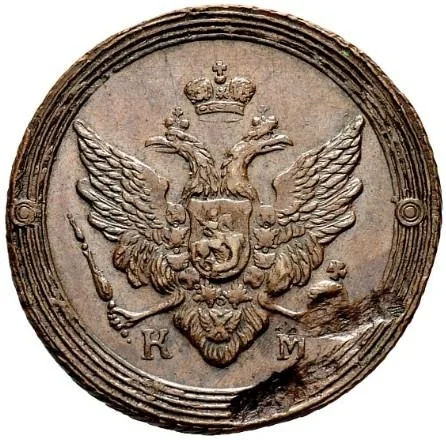
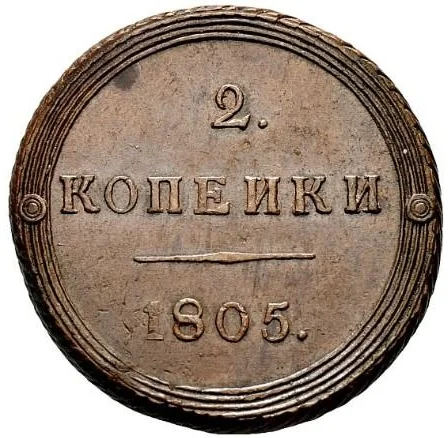
2 kopecks – Russian Empire
Add to wishlist
Russia
Context
Years: 1804–1807
Country: Russia
Issuer: Russian Empire
Ruler: Alexander I
Currency:
(1700—1917)
Demonetized: Yes
Material
References
Numista: #98055
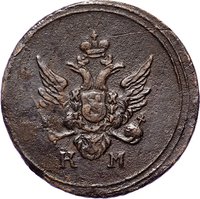
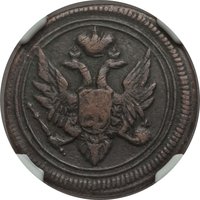
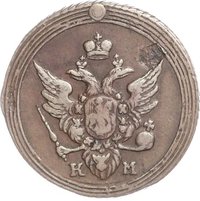
Obverse
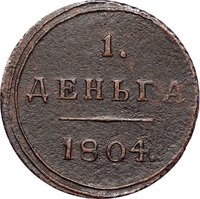
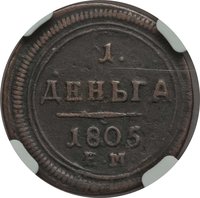
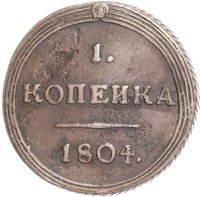
Reverse
Edge
Diagonal reeding
Mintings
| Year | Mint Mark | Mintage | Quality | Collection |
|---|---|---|---|---|
| 1804 | КМ | — | ||
| 1805 | КМ | — | ||
| 1807 | КМ | — |
Historical background
In 1804, the currency system of the Russian Empire was a complex and strained bimetallic system based on the silver ruble and the copper coinage that facilitated everyday trade. The foundational monetary reform of Peter the Great in the early 18th century had established a silver standard, but the state's chronic fiscal needs, especially due to costly wars, led to repeated debasement and the over-issuance of copper coins. By the turn of the 19th century, following the reign of Catherine the Great, a significant disparity existed: while the state accounting and foreign trade were conducted in silver rubles, the domestic economy relied heavily on a devalued and cumbersome copper currency, causing a problematic dual circulation.
The situation was further complicated by the issuance of paper money, known as assignatsii (assignats), introduced in 1769 to finance the Russo-Turkish War. By 1804, these assignats were not fully convertible to specie and had depreciated significantly against the silver ruble. This created a dual exchange rate, where goods and obligations often had separate prices in silver rubles and cheaper paper assignat rubles. The government under Alexander I was aware of the economic dangers of this inflation and the loss of public trust in paper money, but the financial pressures of the Napoleonic Wars made a return to a solid metallic standard impossible.
Consequently, the monetary landscape in 1804 was one of fragile stability, masking underlying weakness. The empire functioned with an unstable trinity of currencies: a theoretical silver standard, a dominant but depreciating paper money for large transactions, and a vital flood of copper for the peasant economy. This instability placed a burden on commerce, complicated state finances, and was a persistent concern for reform-minded officials. The period directly following would see continued strain, leading to the explicit devaluation of the silver ruble in 1810 in relation to the assignat in a desperate attempt to manage the empire's debt and currency crisis.
The situation was further complicated by the issuance of paper money, known as assignatsii (assignats), introduced in 1769 to finance the Russo-Turkish War. By 1804, these assignats were not fully convertible to specie and had depreciated significantly against the silver ruble. This created a dual exchange rate, where goods and obligations often had separate prices in silver rubles and cheaper paper assignat rubles. The government under Alexander I was aware of the economic dangers of this inflation and the loss of public trust in paper money, but the financial pressures of the Napoleonic Wars made a return to a solid metallic standard impossible.
Consequently, the monetary landscape in 1804 was one of fragile stability, masking underlying weakness. The empire functioned with an unstable trinity of currencies: a theoretical silver standard, a dominant but depreciating paper money for large transactions, and a vital flood of copper for the peasant economy. This instability placed a burden on commerce, complicated state finances, and was a persistent concern for reform-minded officials. The period directly following would see continued strain, leading to the explicit devaluation of the silver ruble in 1810 in relation to the assignat in a desperate attempt to manage the empire's debt and currency crisis.
✨ Legendary