

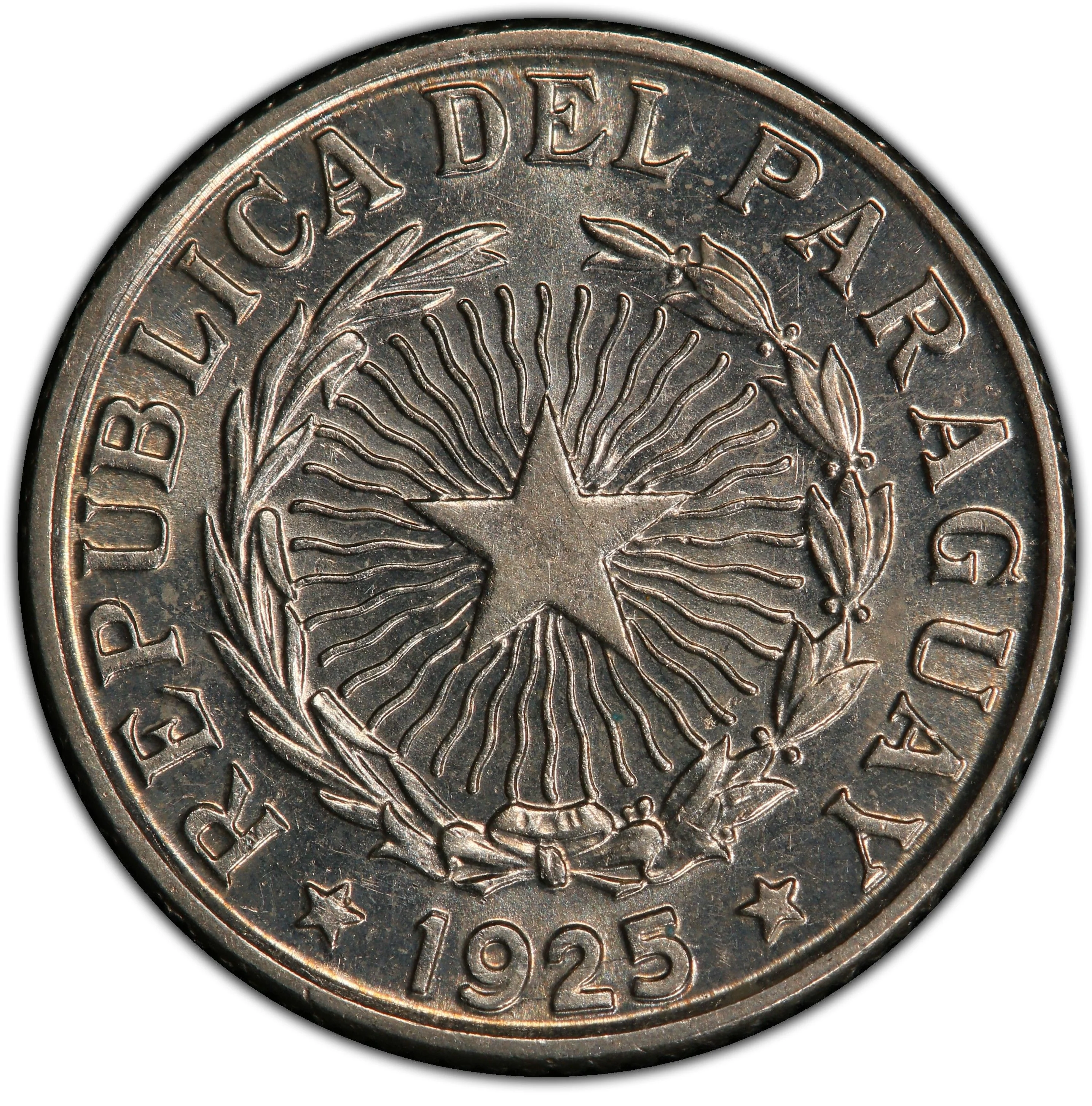
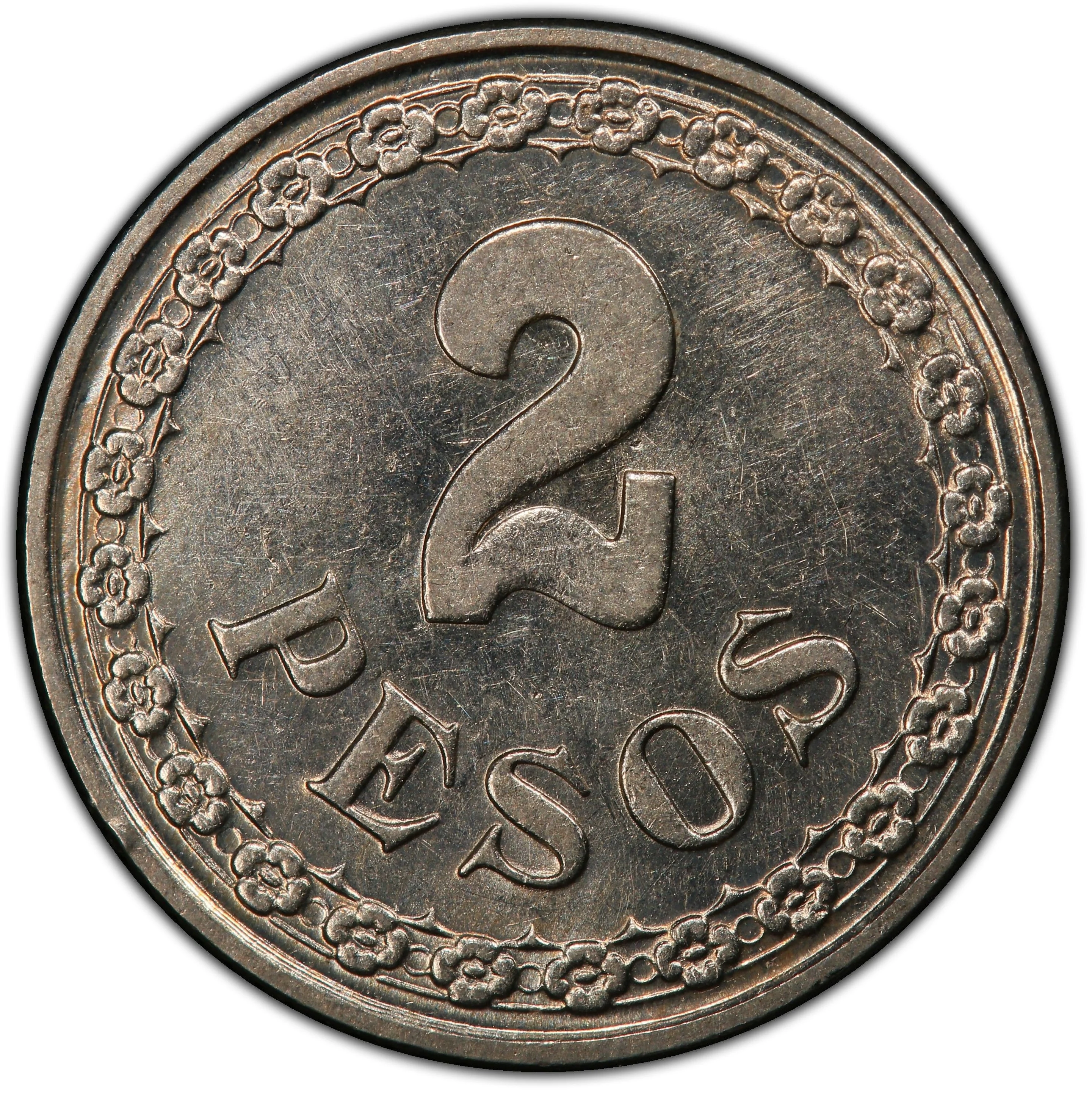
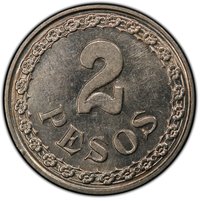
2 Pesos – Paraguay
Paraguay
Context
Material
Diameter: 22.2 mm
Weight: 4 g
Thickness: 1.4 mm
Shape: Round
Composition: Copper-nickel
Technique: Milled
Alignment: Coin alignment
flip
References
KM: #Click to copy to clipboard14
Numista: #9801
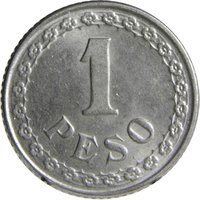
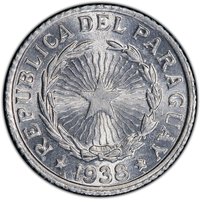
Obverse
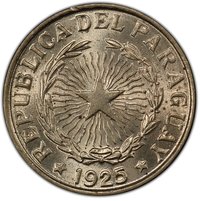
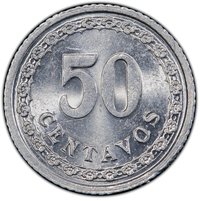
Reverse
Edge
Reeded
Categories
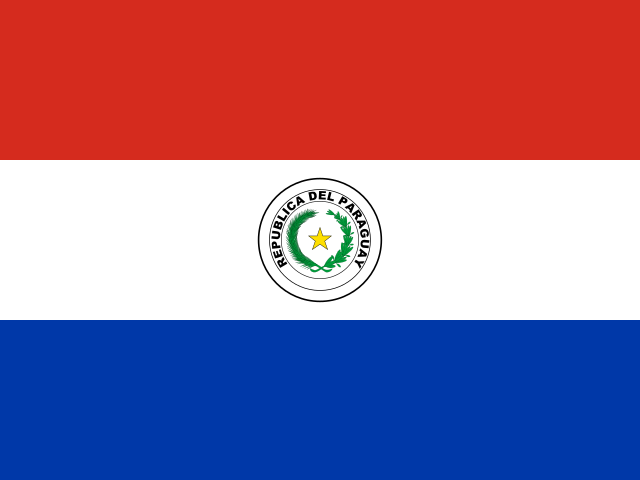
| Symbols> Coat of Arms |
Mints
| Name | Mark |
|---|---|
| Huguenin | — |
Mintings
| Year | Mint Mark | Mintage | Quality | Collection |
|---|---|---|---|---|
| 1925 | — | 2,500,000 |
Historical background
In 1925, Paraguay's currency situation was characterized by instability and fragmentation, a direct legacy of the devastating War of the Triple Alliance (1864-1870). The national currency, the Paraguayan Peso, was not a unified, trusted medium. Instead, the economy operated on a dual system of "peso fuerte" (strong peso) and "peso corriente" (current peso), with the latter suffering from significant depreciation and lack of confidence. More critically, the actual circulating medium was dominated by Argentine Pesos and Gold, which were preferred for major transactions and international trade, underscoring a profound lack of faith in the domestic monetary system.
This monetary disarray was compounded by the absence of a central bank, with currency issuance managed by the Banco de la República del Paraguay and private commercial banks. The government, chronically short of revenue and burdened by foreign debt, frequently resorted to printing money to cover deficits, leading to inflationary pressures. While not hyperinflationary in 1925, this practice eroded purchasing power and perpetuated economic uncertainty. The reliance on foreign currency for stability highlighted the country's economic vulnerability and its dependence on its larger neighbor, Argentina.
The situation in 1925 set the stage for a major monetary reform. The persistent problems of a weak, fragmented currency and inflationary financing ultimately led to the establishment of the Banco Central del Paraguay in 1952. However, in the mid-1920s, the currency landscape remained a clear reflection of a nation still struggling to achieve fiscal discipline and monetary sovereignty in the long shadow of national catastrophe and underdeveloped institutions.
This monetary disarray was compounded by the absence of a central bank, with currency issuance managed by the Banco de la República del Paraguay and private commercial banks. The government, chronically short of revenue and burdened by foreign debt, frequently resorted to printing money to cover deficits, leading to inflationary pressures. While not hyperinflationary in 1925, this practice eroded purchasing power and perpetuated economic uncertainty. The reliance on foreign currency for stability highlighted the country's economic vulnerability and its dependence on its larger neighbor, Argentina.
The situation in 1925 set the stage for a major monetary reform. The persistent problems of a weak, fragmented currency and inflationary financing ultimately led to the establishment of the Banco Central del Paraguay in 1952. However, in the mid-1920s, the currency landscape remained a clear reflection of a nation still struggling to achieve fiscal discipline and monetary sovereignty in the long shadow of national catastrophe and underdeveloped institutions.
🌱 Common