

5 toea – Papua New Guinea
Add to wishlist
Papua New Guinea
Context
Years: 2002–2023
Issuer: Papua New Guinea
Ruler: Charles III
Currency:
(since 1975)
Total mintage: 48,292,000
Material
References
KM: #
Numista: #9795
Value
Exchange value: 0.05 PGK
Obverse
Description:
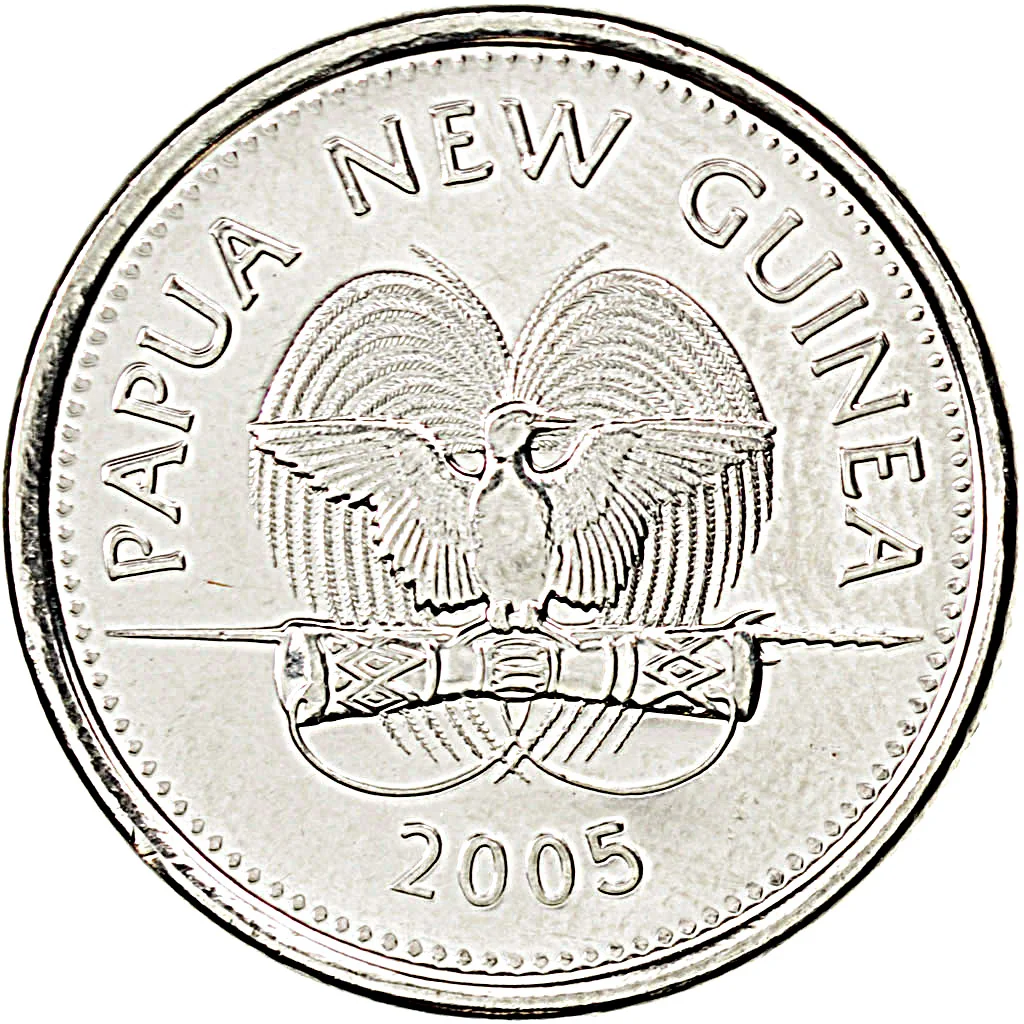
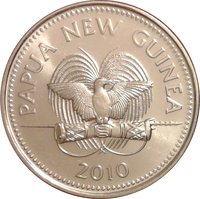
A bird-of-paradise over a spear and Kundu drum.
Inscription:
PAPUA NEW GUINEA
2005
2005
Script: Latin
Reverse
Description:
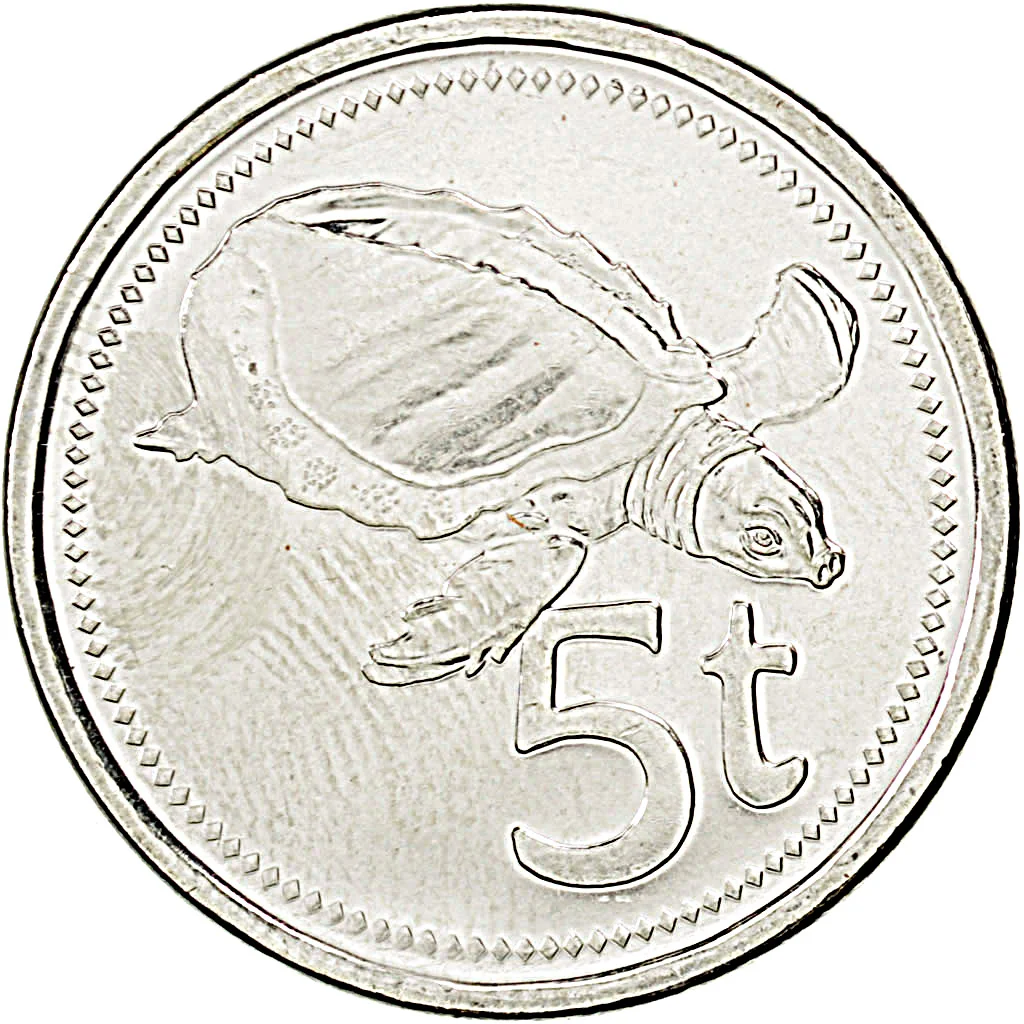
A pig-nosed turtle (*Carettochelys insculpta*), native to northern Australia and southern New Guinea, swimming right.
Inscription:
5t
Script: Latin
Edge
Reeded
Categories
| Animal> Bird |
| Animal> Turtle or tortoise |
| Symbols> Coat of Arms |
| Art> Music |
| Object> Cold weapons |
Mints
| Name | Mark |
|---|---|
| Royal Australian Mint | — |
| Royal Canadian Mint of Winnipeg | — |
Mintings
| Year | Mint Mark | Mintage | Quality | Collection |
|---|---|---|---|---|
| 2002 | — | — | ||
| 2004 | — | — | ||
| 2005 | — | — | ||
| 2009 | — | — | ||
| 2010 | — | — | ||
| 2014 | — | — | ||
| 2015 | — | 5,999,000 | ||
| 2017 | — | — | ||
| 2018 | — | 6,000,000 | ||
| 2020 | — | 18,793,000 | ||
| 2023 | — | 17,500,000 |
Historical background
In 2002, Papua New Guinea's currency, the kina (PGK), operated under a managed float regime, but the year was characterized by significant downward pressure and volatility. The kina's value was heavily influenced by a persistent shortage of foreign exchange (FX), particularly Australian and US dollars, which was a chronic issue stemming from structural economic weaknesses. This scarcity created a substantial gap between the official bank rate and a thriving black market, where businesses and individuals often paid a significant premium to access foreign currency, hampering trade and investment.
The underlying causes of this pressure were multifaceted. Economically, the country was heavily dependent on volatile commodity exports (minerals, oil, and coffee), and 2002 saw periods of low global prices, reducing FX inflows. Furthermore, fiscal discipline was a recurring challenge; government spending often exceeded revenue, contributing to a high public debt burden and eroding international confidence. Political instability, including a contentious general election that year, exacerbated economic uncertainty and discouraged the foreign investment needed to support the currency.
In response, the Bank of Papua New Guinea (BPNG) intervened regularly in the market, using its limited reserves to defend the kina's value and smooth out fluctuations. These efforts aimed to maintain stability but could not resolve the fundamental supply-demand imbalance. Consequently, 2002 highlighted the kina's vulnerability to external shocks and internal governance issues, with the tight FX constraints acting as a major brake on broader economic activity and reflecting the deep-seated challenges of transitioning from a resource-dependent economy to a more stable and diversified one.
The underlying causes of this pressure were multifaceted. Economically, the country was heavily dependent on volatile commodity exports (minerals, oil, and coffee), and 2002 saw periods of low global prices, reducing FX inflows. Furthermore, fiscal discipline was a recurring challenge; government spending often exceeded revenue, contributing to a high public debt burden and eroding international confidence. Political instability, including a contentious general election that year, exacerbated economic uncertainty and discouraged the foreign investment needed to support the currency.
In response, the Bank of Papua New Guinea (BPNG) intervened regularly in the market, using its limited reserves to defend the kina's value and smooth out fluctuations. These efforts aimed to maintain stability but could not resolve the fundamental supply-demand imbalance. Consequently, 2002 highlighted the kina's vulnerability to external shocks and internal governance issues, with the tight FX constraints acting as a major brake on broader economic activity and reflecting the deep-seated challenges of transitioning from a resource-dependent economy to a more stable and diversified one.
🌱 Very Common