

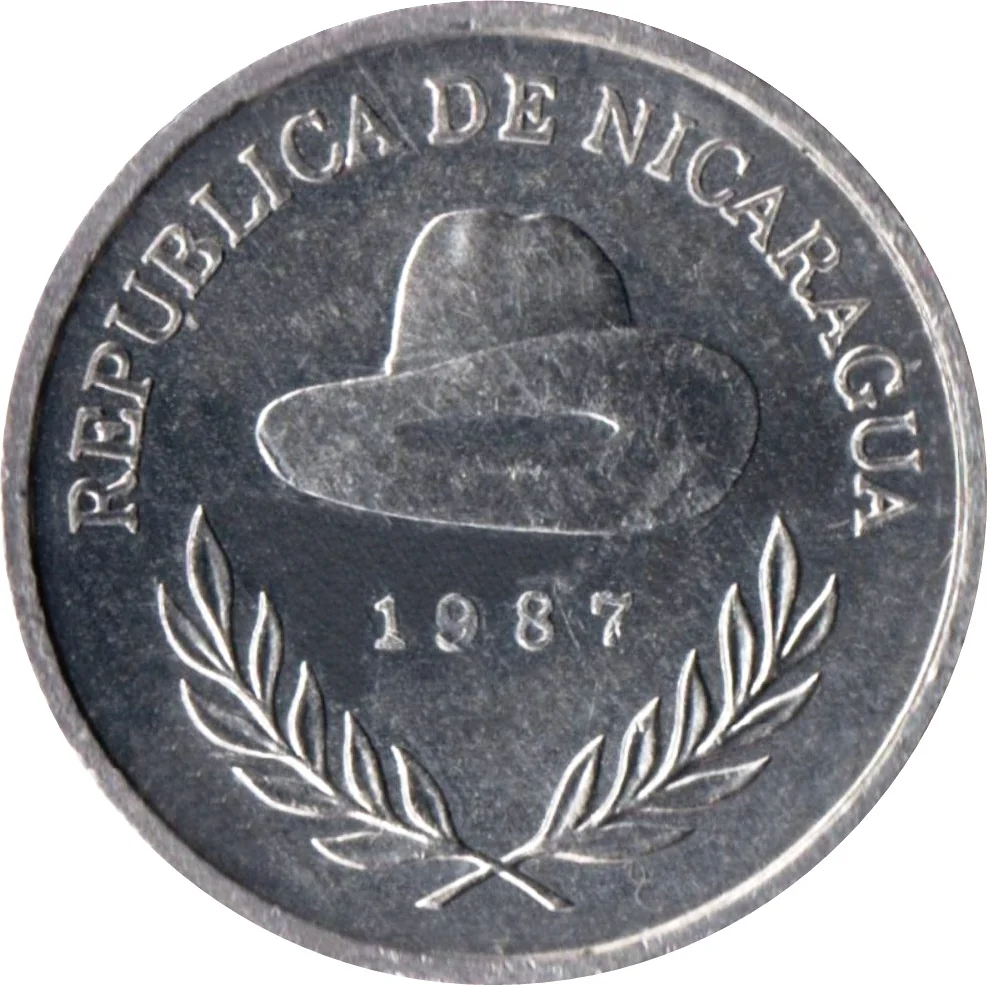
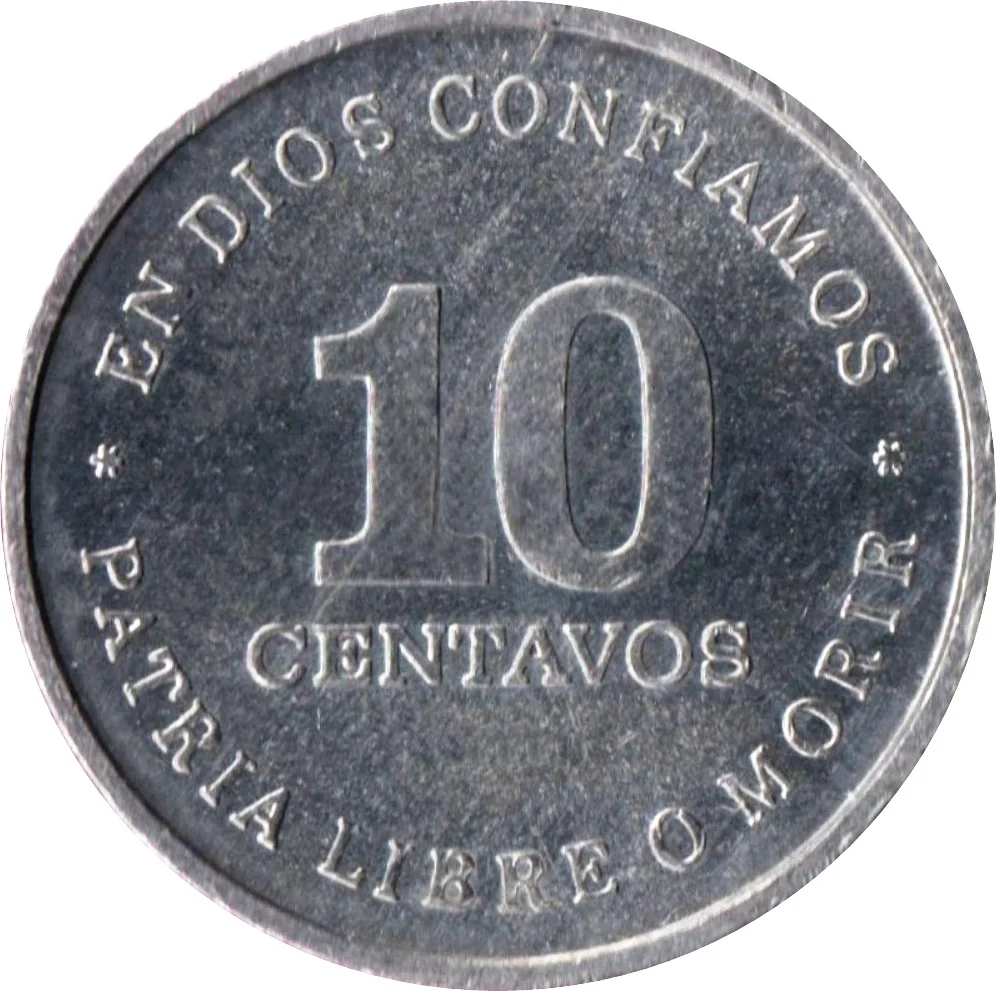
10 centavos – Nicaragua
Add to wishlist
Nicaragua
Context
Year: 1987
Issuer: Nicaragua
Issuing organization: Central Bank of Nicaragua
Period:
(since 1854)
Currency:
(1988—1990)
Demonetization: 30 April 1991
Total mintage: 16,000,000
Material
References
KM: #
Numista: #9770
Value
Exchange value: 0.10 NIC
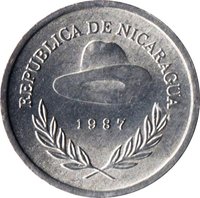
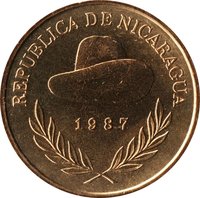
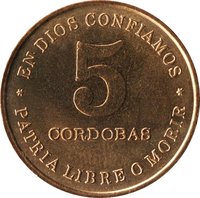
Obverse
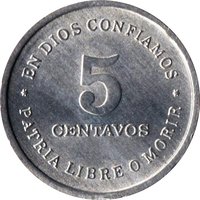
Reverse
Edge
Plain
Mints
| Name | Mark |
|---|---|
| Vereinigte Deutsche Nickelwerke | — |
Mintings
| Year | Mint Mark | Mintage | Quality | Collection |
|---|---|---|---|---|
| 1987 | — | 16,000,000 |
Historical background
In 1987, Nicaragua's currency situation was dire, characterized by hyperinflation and a severely devalued córdoba, a direct consequence of the Contra War and the U.S. economic embargo. The Sandinista government, engaged in a costly military conflict, financed its expenditures primarily through money creation from the central bank, leading to a massive expansion of the money supply. This, combined with a collapse in productive capacity due to the war and disinvestment, resulted in an official inflation rate that would soar to over 13,000% by 1988, effectively destroying the currency's purchasing power and savings.
A complex multi-tier exchange rate system exacerbated the economic distortions. The government maintained an overvalued official rate (used for priority imports like medicine and oil) alongside a wildly divergent parallel black-market rate, which reflected the currency's true, much weaker value. This dual system created severe shortages, fostered a booming black market for dollars, and encouraged corruption as access to cheap official dollars became a lucrative privilege. The economic chaos was so profound that the U.S. dollar began to circulate widely as a preferred medium for large transactions and a store of value, further undermining the national currency.
The crisis culminated in the 1988 economic reforms under President Daniel Ortega. Recognizing the untenable situation, the government introduced a dramatic currency redenomination, lopping five zeros off the old córdoba to create the "new córdoba." However, this technical change, without accompanying fiscal discipline, failed to stabilize the economy. The hyperinflationary spiral continued, setting the stage for the pivotal 1990 elections and the subsequent shift toward neoliberal stabilization policies implemented by the incoming government of Violeta Chamorro.
A complex multi-tier exchange rate system exacerbated the economic distortions. The government maintained an overvalued official rate (used for priority imports like medicine and oil) alongside a wildly divergent parallel black-market rate, which reflected the currency's true, much weaker value. This dual system created severe shortages, fostered a booming black market for dollars, and encouraged corruption as access to cheap official dollars became a lucrative privilege. The economic chaos was so profound that the U.S. dollar began to circulate widely as a preferred medium for large transactions and a store of value, further undermining the national currency.
The crisis culminated in the 1988 economic reforms under President Daniel Ortega. Recognizing the untenable situation, the government introduced a dramatic currency redenomination, lopping five zeros off the old córdoba to create the "new córdoba." However, this technical change, without accompanying fiscal discipline, failed to stabilize the economy. The hyperinflationary spiral continued, setting the stage for the pivotal 1990 elections and the subsequent shift toward neoliberal stabilization policies implemented by the incoming government of Violeta Chamorro.
Series: 1987 series
🌱 Common