

50 dinars – Yugoslavia
Add to wishlist
Context
Years: 1988–1989
Issuer: Yugoslavia
Issuing organization: National Bank of Yugoslavia
Period:
(1963—1992)
Currency:
(1966—1989)
Demonetization: 15 December 1989
Total mintage: 49,972,000
Material
References
KM: #
Numista: #2627
Value
Exchange value: 50 YUD
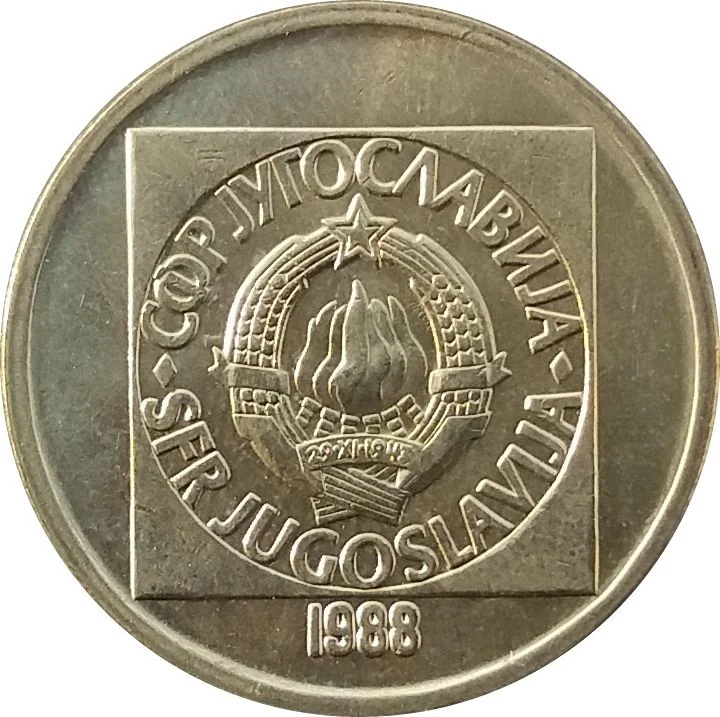
Obverse
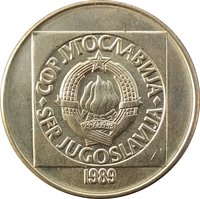
Description:
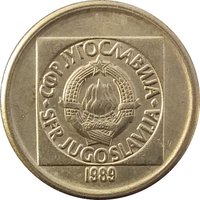
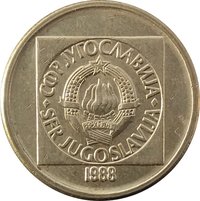
State emblem centered in a square.
Inscription:
СФР JУГОСЛАВИJА
SFR JUGOSLAVIJA
29·XI·1943
1988
SFR JUGOSLAVIJA
29·XI·1943
1988
Translation:
SOCIALIST FEDERAL REPUBLIC OF YUGOSLAVIA
29 NOVEMBER 1943
1988
29 NOVEMBER 1943
1988
Languages: Serbian, Serbo-Croatian
Designer: Dragomir Mileusnić
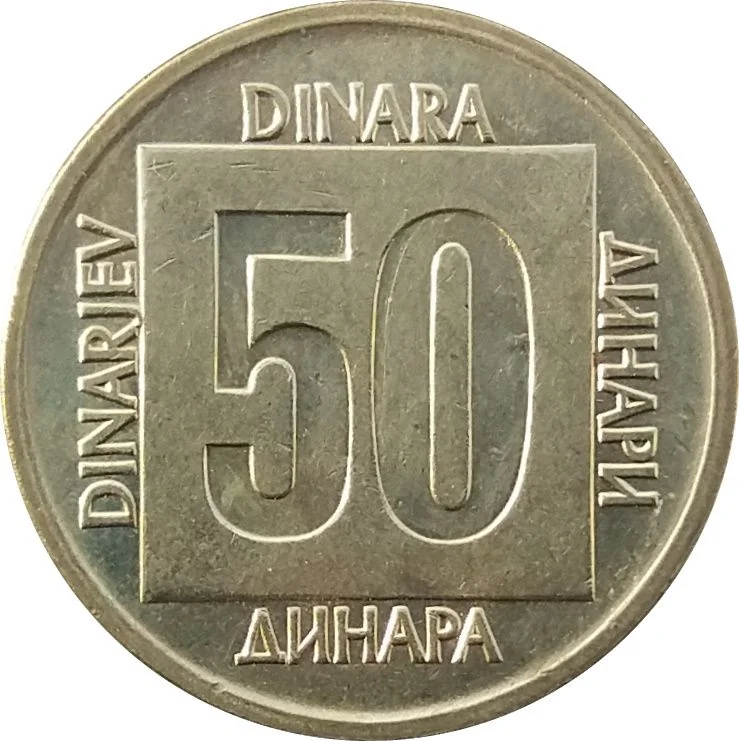
Reverse
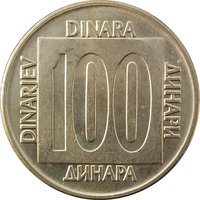
Description:
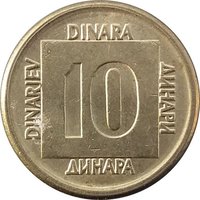
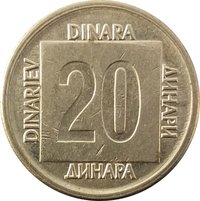
Square denomination, text on all sides.
Inscription:
50
ДИНАРА DINARA DINARJEV ДИНАРИ
ДИНАРА DINARA DINARJEV ДИНАРИ
Translation:
Fifty Dinara Dinara Dinarjev Dinari
Designer: Dragomir Mileusnić
Edge
Plain
Categories
| Symbols> Coat of Arms |
Mints
| Name | Mark |
|---|---|
| Belgrade | — |
Mintings
| Year | Mint Mark | Mintage | Quality | Collection |
|---|---|---|---|---|
| 1988 | — | 46,973,000 | ||
| 1989 | — | 2,999,000 |
Historical background
By 1988, Yugoslavia was in the throes of a profound economic and political crisis, with its currency, the Yugoslav dinar, at the epicenter. Hyperinflation, initially sparked by the oil shocks of the 1970s and exacerbated by massive foreign debt, was spiraling out of control. The federal government's response—printing money to cover deficits, fund inefficient socially-owned enterprises, and service obligations—utterly devalued the dinar. This period saw the bizarre phenomenon of "currency slashing," where zeros were repeatedly removed from banknotes (e.g., the 1987 "novi dinar" worth 10,000 old dinars) in a futile attempt to restore confidence and simplify transactions, only for inflation to immediately render the reforms meaningless.
The currency collapse was both a cause and a symptom of the fracturing Yugoslav federation. Economically, the wealthier northern republics (Slovenia and Croatia) resented subsidizing the poorer south through the federal system, while politically, the central government in Belgrade under the League of Communists was losing authority. As the dinar became increasingly worthless, a barter economy flourished, and citizens desperately sought stable foreign currencies like the Deutsche Mark. The International Monetary Fund (IMF), which had provided loans, demanded harsh austerity measures, including spending cuts and currency devaluation, which further eroded living standards and fueled social unrest and strikes across the country.
This hyperinflationary environment, reaching an annual rate of over 1,200% by the end of 1988, destroyed savings, impoverished the population, and shattered any remaining faith in the federal system. The economic chaos critically undermined the legitimacy of the communist government and intensified nationalist tensions, as republican leaders began to pursue their own economic policies. The dinar's failure was a powerful symbol of the state's inability to function, setting the stage for the political disintegration and conflicts of the 1990s.
The currency collapse was both a cause and a symptom of the fracturing Yugoslav federation. Economically, the wealthier northern republics (Slovenia and Croatia) resented subsidizing the poorer south through the federal system, while politically, the central government in Belgrade under the League of Communists was losing authority. As the dinar became increasingly worthless, a barter economy flourished, and citizens desperately sought stable foreign currencies like the Deutsche Mark. The International Monetary Fund (IMF), which had provided loans, demanded harsh austerity measures, including spending cuts and currency devaluation, which further eroded living standards and fueled social unrest and strikes across the country.
This hyperinflationary environment, reaching an annual rate of over 1,200% by the end of 1988, destroyed savings, impoverished the population, and shattered any remaining faith in the federal system. The economic chaos critically undermined the legitimacy of the communist government and intensified nationalist tensions, as republican leaders began to pursue their own economic policies. The dinar's failure was a powerful symbol of the state's inability to function, setting the stage for the political disintegration and conflicts of the 1990s.
🌱 Very Common