

1 rupee – Nepal
Add to wishlist
Nepal
Context
Years: 1976–1979
Issuer: Nepal
Ruler: Birendra Bir Bikram Shah
Currency:
(since 1932)
Total mintage: 60,058,000
Material
Diameter: 27 mm
Weight: 7.5 g
Thickness: 1.7 mm
Shape: Round
Composition: Copper-nickel
Technique: Milled
Alignment: Medal alignment
flip
References
KM: #
Numista: #26252
Value
Exchange value: 1 NPR
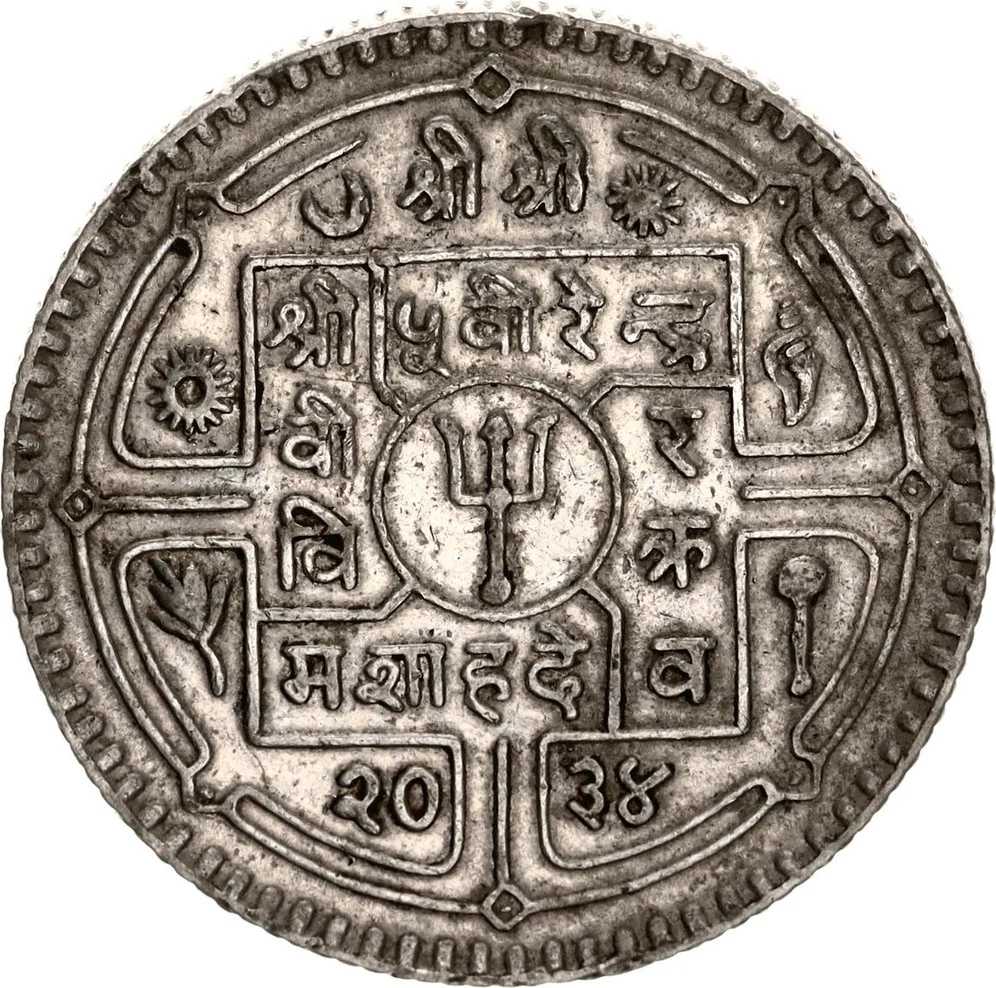
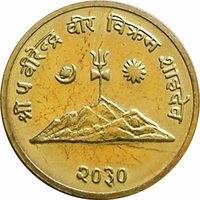
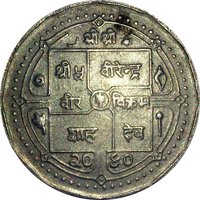
Obverse
Inscription:
श्री श्री
श्री ५ वीरेन्द्र
वी र
वि क्र
म शाहदे व
२०३६
श्री ५ वीरेन्द्र
वी र
वि क्र
म शाहदे व
२०३६
Translation:
Shri Shri
Shri 5 Virendra
Vi Ra
Vi Kra
Ma Shahadeva
2036
Shri 5 Virendra
Vi Ra
Vi Kra
Ma Shahadeva
2036
Script: Devanagari
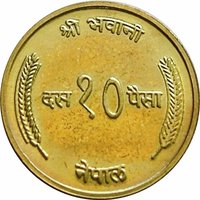
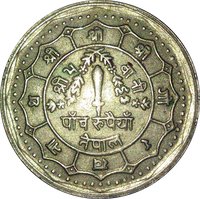
Reverse
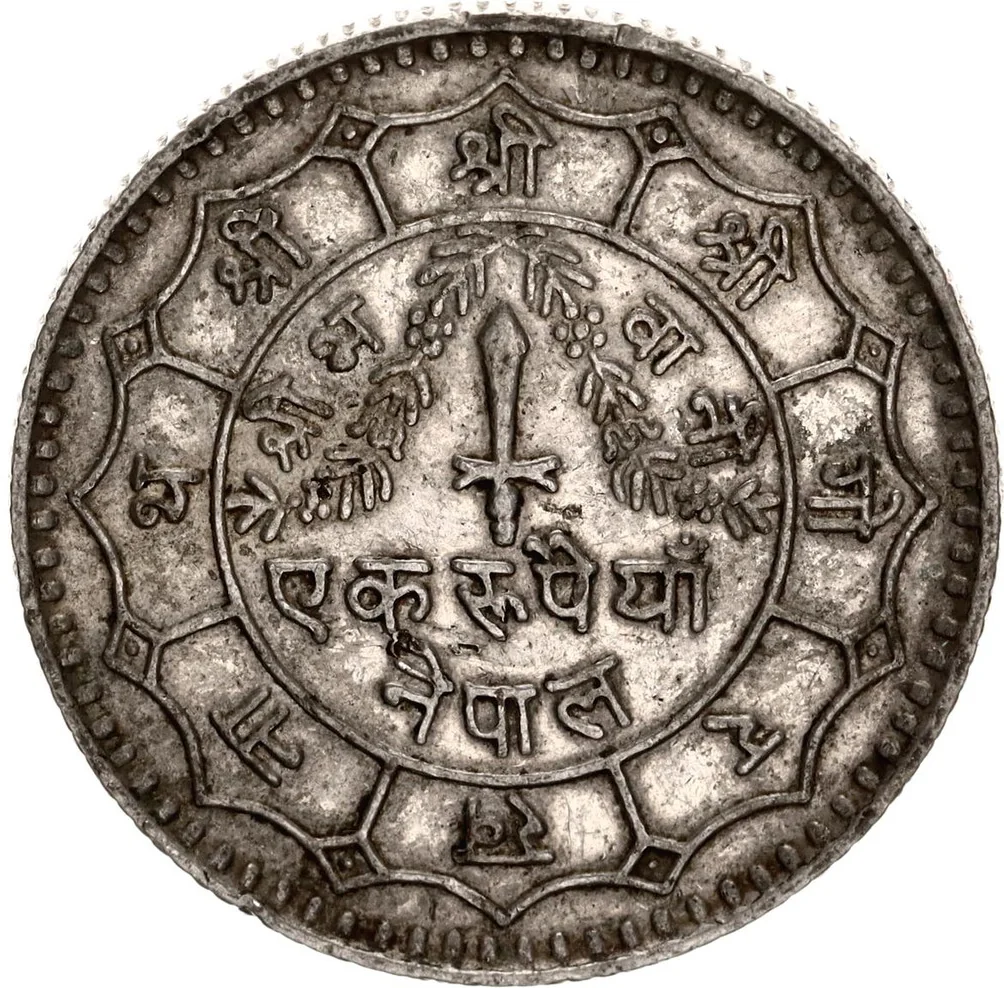
Inscription:
श्री श्री श्री गो र ख ना थ
श्री भवानी
एक रूपैयाँ
नेपाल
श्री भवानी
एक रूपैयाँ
नेपाल
Translation:
Shri Shri Shri Gorakhnath
Shri Bhavani
One Rupee
Nepal
Shri Bhavani
One Rupee
Nepal
Script: Devanagari
Edge
Reeded
Mints
| Name | Mark |
|---|---|
| Mint Division of the Central Bank of Nepal | — |
| Royal Australian Mint | — |
Mintings
| Year | Mint Mark | Mintage | Quality | Collection |
|---|---|---|---|---|
| 1976 | — | 58,000 | ||
| 1977 | — | 30,000,000 | ||
| 1978 | — | — | ||
| 1979 | — | 30,000,000 |
Historical background
In 1976, Nepal’s currency situation was characterized by a fixed exchange rate regime and a dual-currency dependency, heavily influenced by its economic and geographic relationship with India. The Nepalese rupee (NPR) was pegged to the Indian rupee (INR) at a rate of 1:1.25, a parity established in 1960. This formal link facilitated extensive cross-border trade but also meant Nepal’s monetary policy was largely dictated by India’s economic conditions, limiting autonomous control over inflation and money supply. Furthermore, the Indian rupee was legal tender in Nepal and circulated widely, especially in the southern Terai region, reflecting deep economic integration but also a degree of currency substitution that constrained the Nepal Rastra Bank's authority.
Economically, the mid-1970s was a period of planned development under Nepal's Fifth Five-Year Plan (1975-1980), which emphasized agriculture, infrastructure, and import substitution industrialization. The fixed exchange rate provided stability for trade and development projects but came with significant challenges. A growing trade deficit, particularly with India, put pressure on foreign exchange reserves. The economy remained largely agrarian and insular, with limited diversification, making it vulnerable to external shocks transmitted through the currency peg. Remittances were not yet the major force they would become, and tourism was in its infancy, so the balance of payments was a persistent concern for policymakers.
Overall, the currency framework in 1976 offered short-term stability for a developing, landlocked economy but underscored long-term vulnerabilities. The system ensured predictable transaction costs for the dominant trade with India, which was crucial for a nation with limited access to global markets. However, it also highlighted Nepal’s struggle for monetary sovereignty and economic self-reliance, themes that would eventually lead to policy reviews and adjustments in the following decades, including a revaluation of the peg and efforts to demonetize the Indian rupee within its borders to strengthen the domestic financial system.
Economically, the mid-1970s was a period of planned development under Nepal's Fifth Five-Year Plan (1975-1980), which emphasized agriculture, infrastructure, and import substitution industrialization. The fixed exchange rate provided stability for trade and development projects but came with significant challenges. A growing trade deficit, particularly with India, put pressure on foreign exchange reserves. The economy remained largely agrarian and insular, with limited diversification, making it vulnerable to external shocks transmitted through the currency peg. Remittances were not yet the major force they would become, and tourism was in its infancy, so the balance of payments was a persistent concern for policymakers.
Overall, the currency framework in 1976 offered short-term stability for a developing, landlocked economy but underscored long-term vulnerabilities. The system ensured predictable transaction costs for the dominant trade with India, which was crucial for a nation with limited access to global markets. However, it also highlighted Nepal’s struggle for monetary sovereignty and economic self-reliance, themes that would eventually lead to policy reviews and adjustments in the following decades, including a revaluation of the peg and efforts to demonetize the Indian rupee within its borders to strengthen the domestic financial system.
🌱 Very Common