


Obverse
Description:
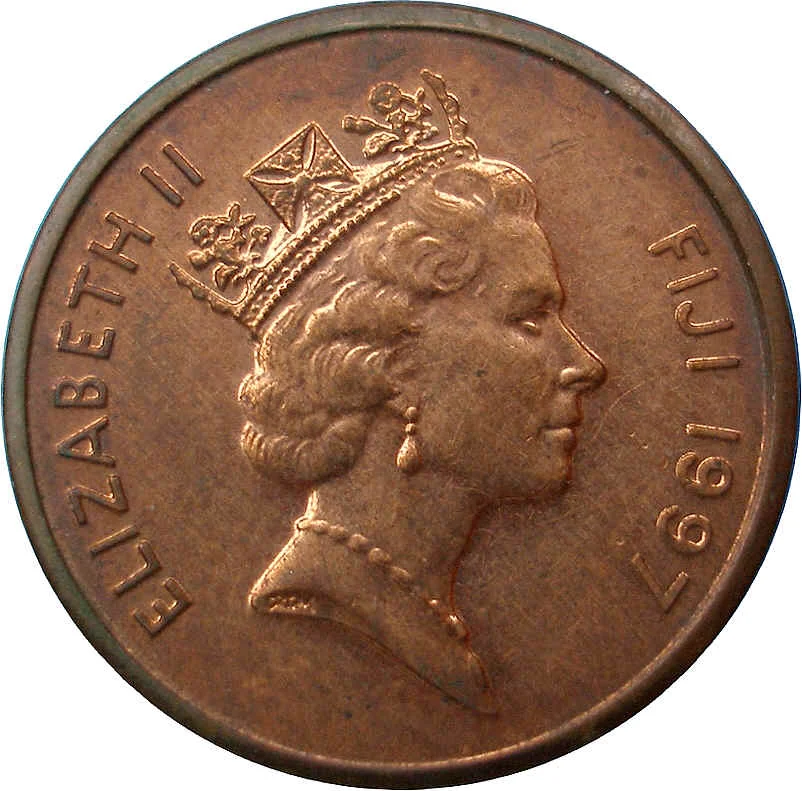
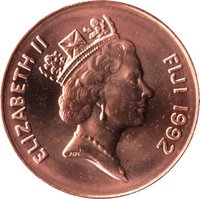
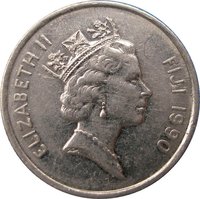
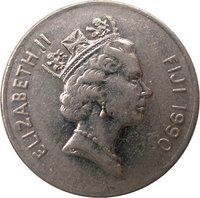
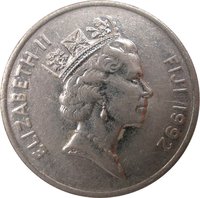
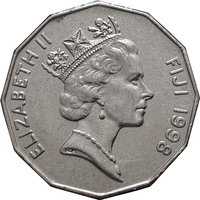
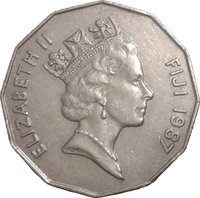
Crowned portrait of Queen Elizabeth II facing right, encircled by legend.
Inscription:
ELIZABETH II FIJI 1997
RDM
RDM
Translation:
ELIZABETH II FIJI 1997
RDM
RDM
Script: Latin
Language: English
Engraver: Raphael David Maklouf
Reverse
Edge
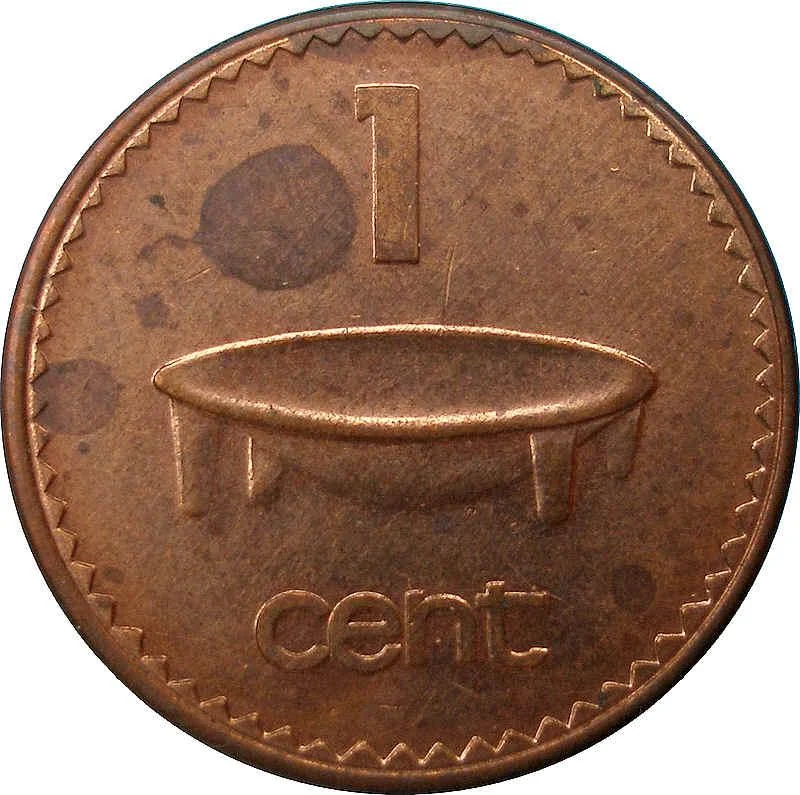
Plain
Mints
| Name | Mark |
|---|---|
| Royal Canadian Mint of Winnipeg | — |
Mintings
| Year | Mint Mark | Mintage | Quality | Collection |
|---|---|---|---|---|
| 1990 | — | 8,500,000 | ||
| 1992 | — | 16,200,000 | ||
| 1994 | — | 7,800,000 | ||
| 1995 | — | 6,000,000 | ||
| 1997 | — | 12,000,000 | ||
| 1999 | — | 14,000,000 | ||
| 2001 | — | — |
Historical background
In 1990, Fiji's currency situation was defined by the operations of the Fiji Dollar (FJD), which had been established as the nation's independent currency in 1969, replacing the Fijian pound. The currency was, and remains, managed by the Reserve Bank of Fiji (RBF), which maintained a managed float exchange rate regime. During this period, the FJD was not pegged to a single currency but was instead influenced by a trade-weighted basket of currencies from Fiji's major trading partners, primarily Australia, New Zealand, the United States, Japan, and the United Kingdom. This system aimed to stabilize the currency's value and support the country's import and export competitiveness.
The economic backdrop of 1990 was one of cautious stabilization following the political instability and coups of 1987, which had caused significant economic disruption and capital flight. The RBF's primary focus was on maintaining foreign reserve adequacy and controlling inflation, which had been a historical challenge. While not in a crisis in 1990, the currency's value was under constant pressure from Fiji's structural trade deficits and the need to finance imports. Tourism and sugar exports were the critical foreign exchange earners, making the currency vulnerable to fluctuations in these sectors and global commodity prices.
Overall, the currency situation in 1990 reflected a period of post-coup economic recovery and careful central bank management. The RBF successfully maintained a relatively stable exchange rate, avoiding the severe devaluations that would later occur in the mid-1990s. The policy emphasis was on rebuilding confidence, ensuring sufficient liquidity for economic activity, and using foreign exchange controls prudently to safeguard reserves, laying a foundation for the economic policies of the subsequent decade.
The economic backdrop of 1990 was one of cautious stabilization following the political instability and coups of 1987, which had caused significant economic disruption and capital flight. The RBF's primary focus was on maintaining foreign reserve adequacy and controlling inflation, which had been a historical challenge. While not in a crisis in 1990, the currency's value was under constant pressure from Fiji's structural trade deficits and the need to finance imports. Tourism and sugar exports were the critical foreign exchange earners, making the currency vulnerable to fluctuations in these sectors and global commodity prices.
Overall, the currency situation in 1990 reflected a period of post-coup economic recovery and careful central bank management. The RBF successfully maintained a relatively stable exchange rate, avoiding the severe devaluations that would later occur in the mid-1990s. The policy emphasis was on rebuilding confidence, ensuring sufficient liquidity for economic activity, and using foreign exchange controls prudently to safeguard reserves, laying a foundation for the economic policies of the subsequent decade.
Series: 1990 Fiji circulation coins
🌱 Very Common