

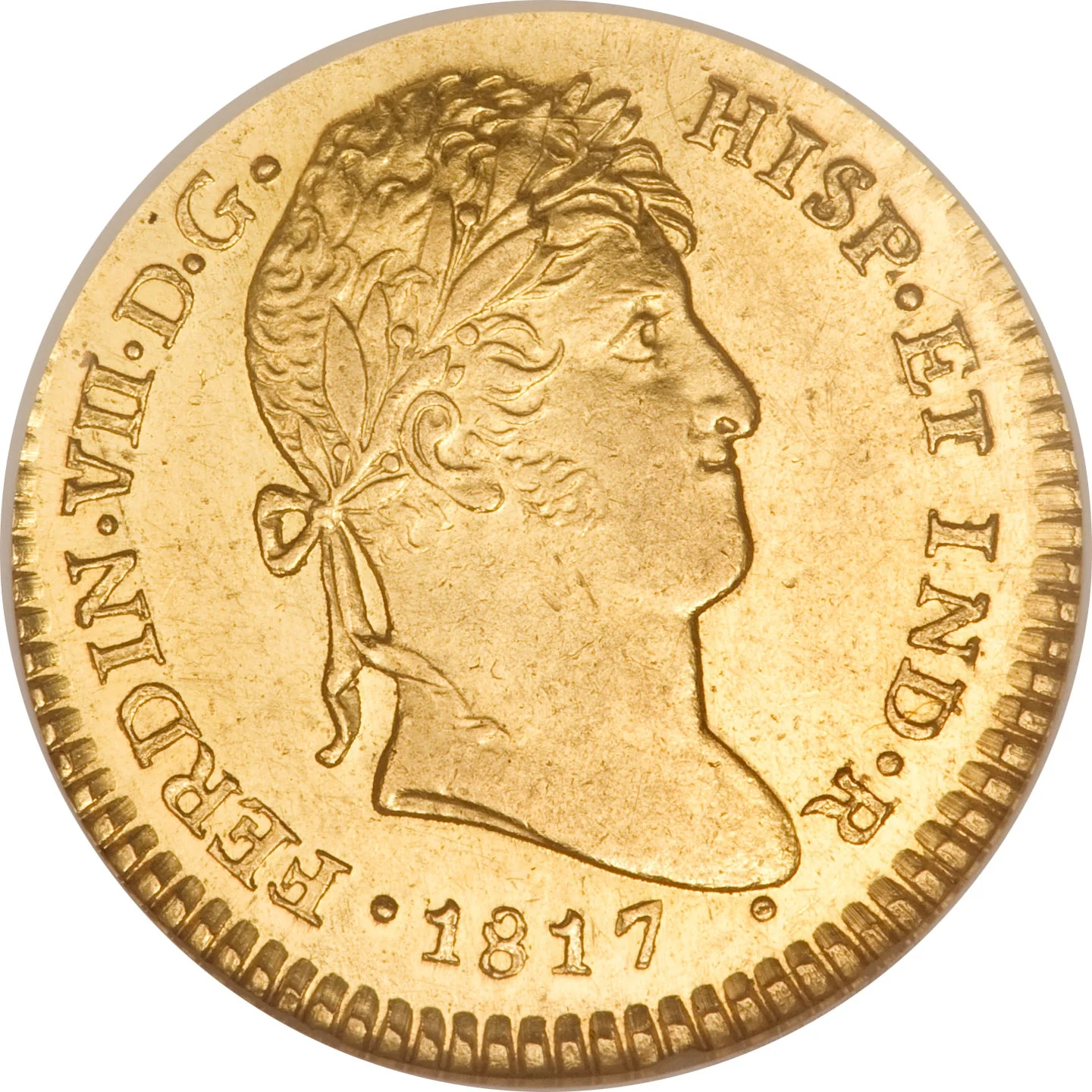
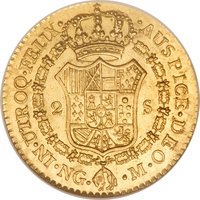
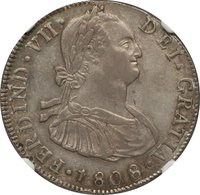
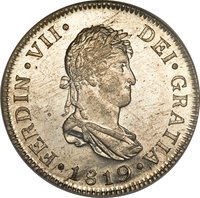
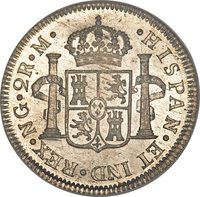
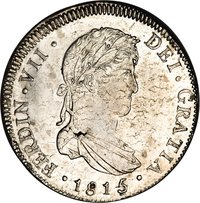
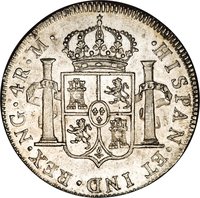
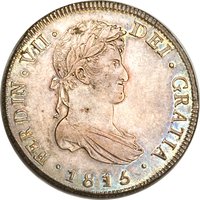
Obverse
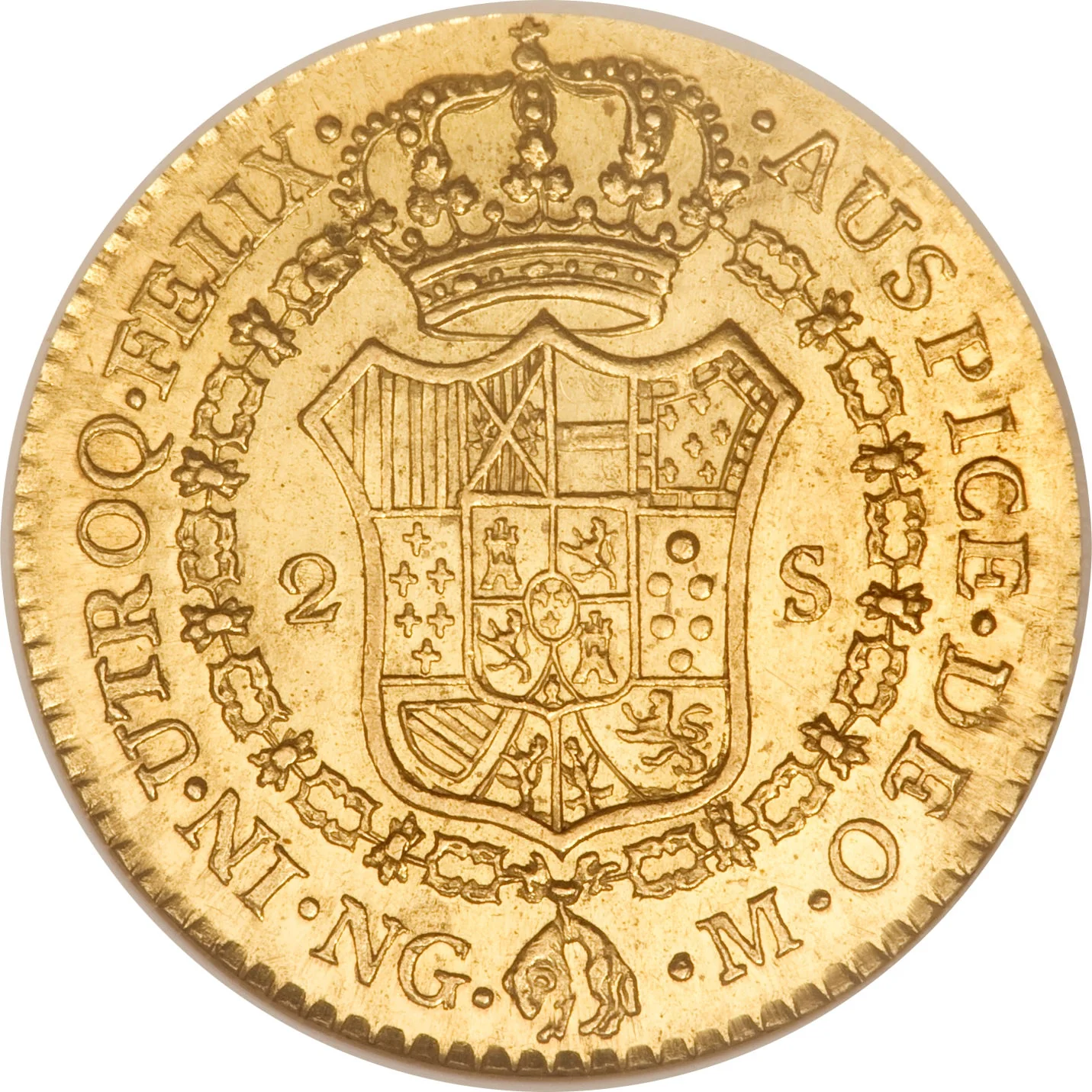
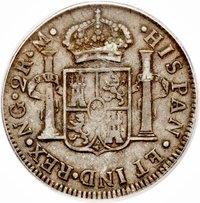
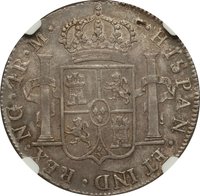
Reverse
Edge
Categories
| Symbols> Coat of Arms |
| Person> Monarch |
Mints
| Name | Mark |
|---|---|
| Casa de Moneda de Guatemala | NG |
Historical background
In 1808, Guatemala, as the Captaincy General of Guatemala within the Spanish Empire, operated under a complex and strained monetary system. The official currency was the Spanish colonial real, with eight reales equaling one silver peso or "piece of eight." However, the economy suffered from a severe shortage of precious metals, particularly small-denomination coins for daily transactions. This scarcity was driven by Guatemala's limited silver production compared to viceroyalties like New Spain (Mexico) or Peru, combined with the Crown's policy of extracting bullion to Spain, which created a persistent drain of specie from the colony.
The currency vacuum was partially filled by a proliferation of unofficial and substitute monies. Cacao beans, used as currency in the pre-Columbian era, still circulated for very small transactions, especially among Indigenous populations. More significantly, due to the lack of official coinage, local merchants and municipal authorities issued tlacos or vales—token-like credit notes, often made of copper or leather—which circulated as promises to pay in real currency. This created a fragmented and unreliable monetary environment, as the value and acceptance of these tokens were highly localized and trust-dependent, leading to frequent disputes and commercial friction.
This monetary instability occurred against the backdrop of the Napoleonic Wars in Europe. The 1808 invasion of Spain and the crisis of legitimacy following the abdication of King Ferdinand VII disrupted transatlantic trade and administrative channels. While the direct impact on Guatemala's currency was not yet catastrophic in 1808, the political shockwaves began to further isolate the colony, exacerbating its existing economic vulnerabilities. The situation laid bare the weaknesses of Spanish imperial economic management and contributed to the growing discontent among local elites, who would soon begin to question colonial fiscal policies in the years leading to independence.
The currency vacuum was partially filled by a proliferation of unofficial and substitute monies. Cacao beans, used as currency in the pre-Columbian era, still circulated for very small transactions, especially among Indigenous populations. More significantly, due to the lack of official coinage, local merchants and municipal authorities issued tlacos or vales—token-like credit notes, often made of copper or leather—which circulated as promises to pay in real currency. This created a fragmented and unreliable monetary environment, as the value and acceptance of these tokens were highly localized and trust-dependent, leading to frequent disputes and commercial friction.
This monetary instability occurred against the backdrop of the Napoleonic Wars in Europe. The 1808 invasion of Spain and the crisis of legitimacy following the abdication of King Ferdinand VII disrupted transatlantic trade and administrative channels. While the direct impact on Guatemala's currency was not yet catastrophic in 1808, the political shockwaves began to further isolate the colony, exacerbating its existing economic vulnerabilities. The situation laid bare the weaknesses of Spanish imperial economic management and contributed to the growing discontent among local elites, who would soon begin to question colonial fiscal policies in the years leading to independence.
Series: 1808 Guatemala circulation coins
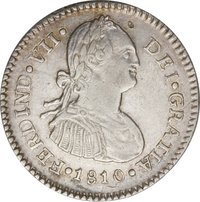
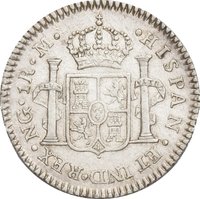
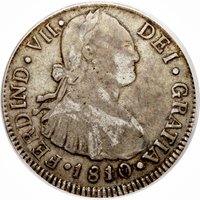
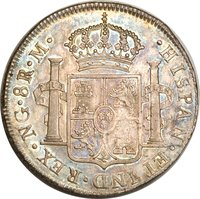
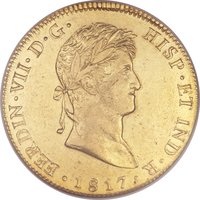
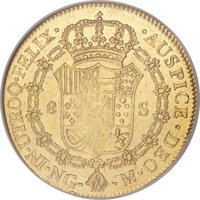
✨ Legendary