

100 forint – Hungary
Add to wishlist
Hungary
Context
Material
Diameter: 29.2 mm
Weight: 9.4 g
Thickness: 1.9 mm
Shape: Round
Composition: Nickel brass
Magnetic: No
Technique: Milled
Alignment: Medal alignment
flip
References
KM: #
Numista: #2607
Value
Exchange value: 100 HUF
Inflation-adjusted value: 1521.26 HUF
Obverse
Description:
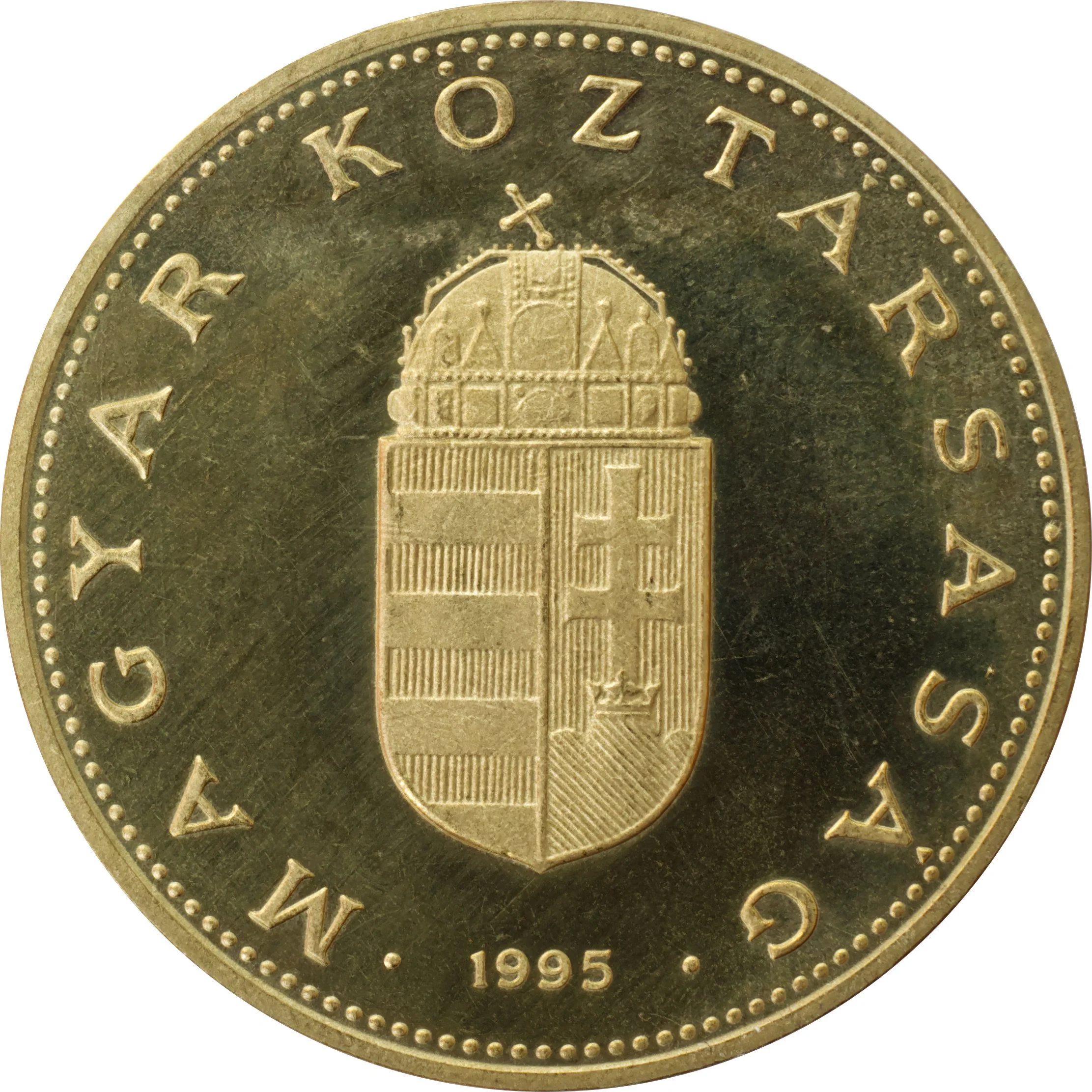
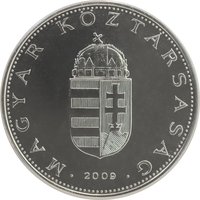
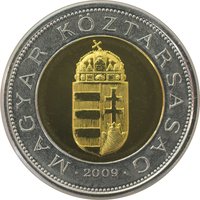
The crowned Hungarian shield (bars on left, double cross on right) with the date below.
Inscription:
MAGYAR KÖZTÁRSASÁG
· 1995 ·
· 1995 ·
Translation:
HUNGARIAN REPUBLIC
· 1995 ·
· 1995 ·
Script: Latin
Language: Hungarian
Engraver: István Kósa
Reverse
Description:
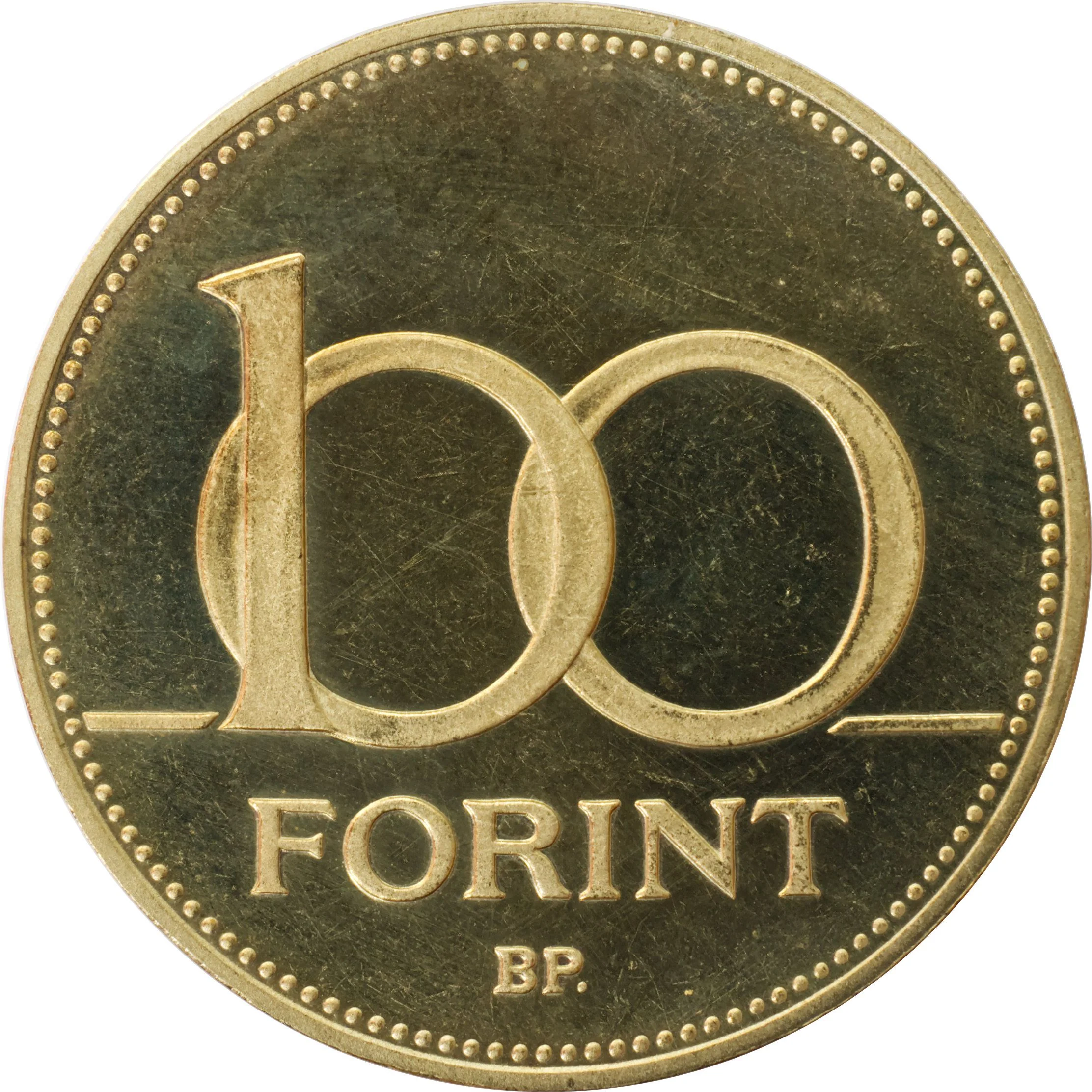
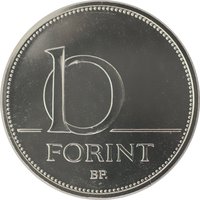
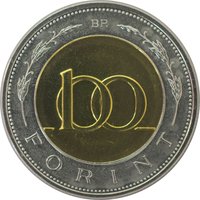
"FORINT" above a line, mintmark below.
Inscription:
100 FORINT BP.
Script: Latin
Engraver: István Bartos
Edge
Smooth with imprints (guilloche)
Mints
| Name | Mark |
|---|---|
| Hungarian mint | BP. |
Mintings
Historical background
In 1992, Hungary was navigating a complex and fragile monetary transition following the political changes of 1989-90. The country operated with a non-convertible forint, its value strictly managed by the National Bank of Hungary within a "crawling peg" system. This mechanism involved small, pre-announced devaluations (roughly 1-2% per month) against a basket of hard currencies, primarily the US Dollar and German Mark. This policy aimed to balance competing goals: maintaining export competitiveness through gradual devaluation while cautiously taming an inherited inflation rate that still hovered around 20-25% annually.
The currency situation was fundamentally constrained by the lack of full convertibility. While some progress had been made—allowing for limited convertibility for current account transactions—strict capital controls remained in place. This created a dual exchange rate system: an official rate for legitimate trade and a much weaker black-market rate for those seeking to move capital abroad. The government and central bank were under significant pressure from international institutions, like the IMF, to accelerate reforms toward full convertibility, but fears of capital flight and currency collapse made authorities exceedingly cautious.
Overall, the 1992 forint was a currency in a state of managed transition, reflecting the broader challenges of shifting from a planned to a market economy. The crawling peg provided stability but was a temporary tool in the face of persistent inflation and pent-up demand for foreign currency. The situation underscored the tension between the need for macroeconomic stabilization and the political and social pressures of a transforming society, setting the stage for more decisive reforms later in the decade.
The currency situation was fundamentally constrained by the lack of full convertibility. While some progress had been made—allowing for limited convertibility for current account transactions—strict capital controls remained in place. This created a dual exchange rate system: an official rate for legitimate trade and a much weaker black-market rate for those seeking to move capital abroad. The government and central bank were under significant pressure from international institutions, like the IMF, to accelerate reforms toward full convertibility, but fears of capital flight and currency collapse made authorities exceedingly cautious.
Overall, the 1992 forint was a currency in a state of managed transition, reflecting the broader challenges of shifting from a planned to a market economy. The crawling peg provided stability but was a temporary tool in the face of persistent inflation and pent-up demand for foreign currency. The situation underscored the tension between the need for macroeconomic stabilization and the political and social pressures of a transforming society, setting the stage for more decisive reforms later in the decade.
Series: 1992 Hungary circulation coins
🌱 Very Common