

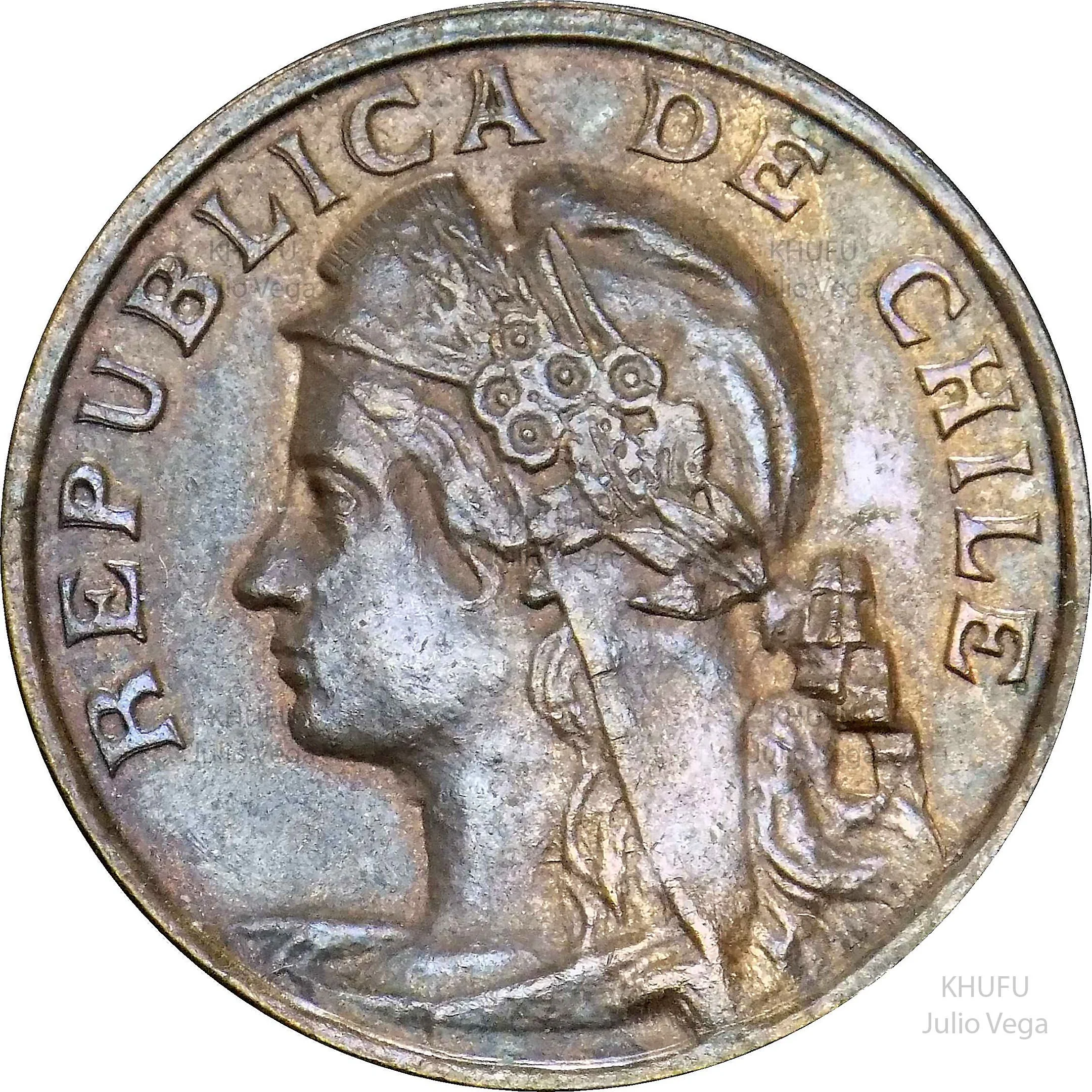
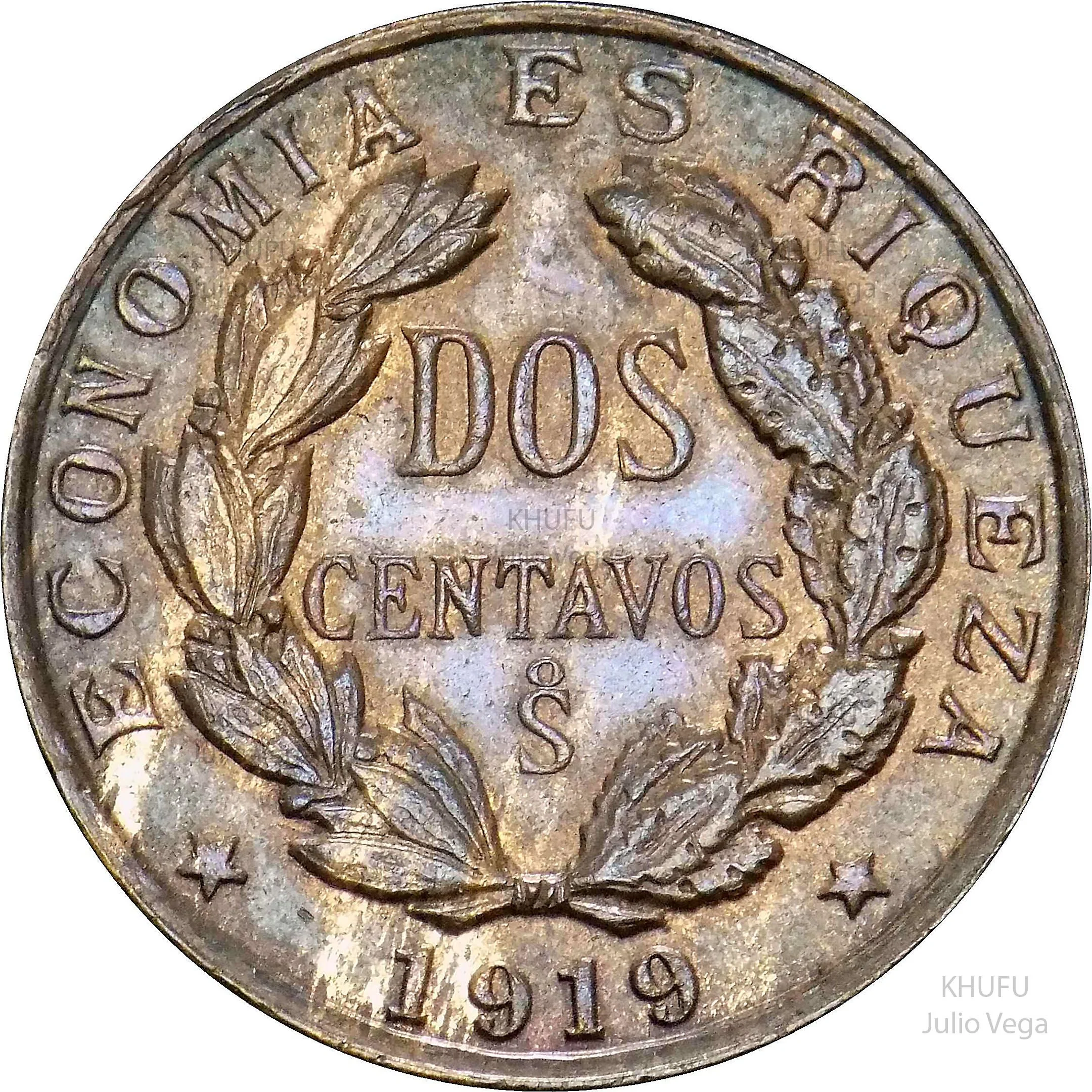
2 Centavos – Chile
Chile
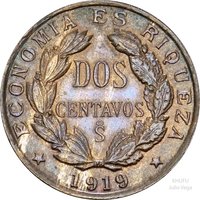
Obverse
Reverse
Edge
Plain
Categories
| Symbol> Allegory |
| Symbol> Phrygian cap |
Mints
| Name | Mark |
|---|---|
| Casa de Moneda de Chile | (So) |
Mintings
| Year | Mint Mark | Mintage | Quality | Collection |
|---|---|---|---|---|
| 1919 | So | 147,000 |
Historical background
In 1919, Chile's currency situation was defined by the strains of the First World War and its aftermath, operating under a gold exchange standard that was under severe pressure. The war had disrupted international trade and finance, leading to a global shortage of gold and foreign exchange. For Chile, a nation heavily dependent on exporting nitrates and copper, this was particularly acute. While the war initially brought a boom and an influx of foreign currency from high nitrate prices, the collapse of the German synthetic nitrate industry post-armistice triggered a sharp decline in Chilean export revenues, creating a balance of payments crisis.
The scarcity of gold and hard currency led to a phenomenon known as the "disappearance of specie." Gold coins and silver pesos were hoarded by the public and banks, vanishing from daily circulation. This forced the government and banks to increasingly rely on paper money (billetes), which was issued by private banks as well as the state-owned Caja de Crédito Hipotecario. The value of this paper currency began to depreciate against gold and stable foreign currencies like the British pound sterling, leading to a de facto divergence between the official gold-backed peso and the circulating paper peso.
Consequently, Chile experienced a significant and troubling inflation in 1919, as the money supply expanded while the supply of goods, hampered by wartime and post-war import difficulties, could not keep pace. The cost of living soared, sparking widespread social unrest and strikes among workers whose wages failed to keep up. This inflationary currency crisis, set against a backdrop of a collapsing nitrate sector and social upheaval, exposed the fragility of the pre-war monetary order and set the stage for major financial reforms in the 1920s, culminating in the creation of the Central Bank of Chile in 1925 to unify currency issuance and restore stability.
The scarcity of gold and hard currency led to a phenomenon known as the "disappearance of specie." Gold coins and silver pesos were hoarded by the public and banks, vanishing from daily circulation. This forced the government and banks to increasingly rely on paper money (billetes), which was issued by private banks as well as the state-owned Caja de Crédito Hipotecario. The value of this paper currency began to depreciate against gold and stable foreign currencies like the British pound sterling, leading to a de facto divergence between the official gold-backed peso and the circulating paper peso.
Consequently, Chile experienced a significant and troubling inflation in 1919, as the money supply expanded while the supply of goods, hampered by wartime and post-war import difficulties, could not keep pace. The cost of living soared, sparking widespread social unrest and strikes among workers whose wages failed to keep up. This inflationary currency crisis, set against a backdrop of a collapsing nitrate sector and social upheaval, exposed the fragility of the pre-war monetary order and set the stage for major financial reforms in the 1920s, culminating in the creation of the Central Bank of Chile in 1925 to unify currency issuance and restore stability.
🌟 Limited