

5 drachmai – Greece
Add to wishlist
Greece
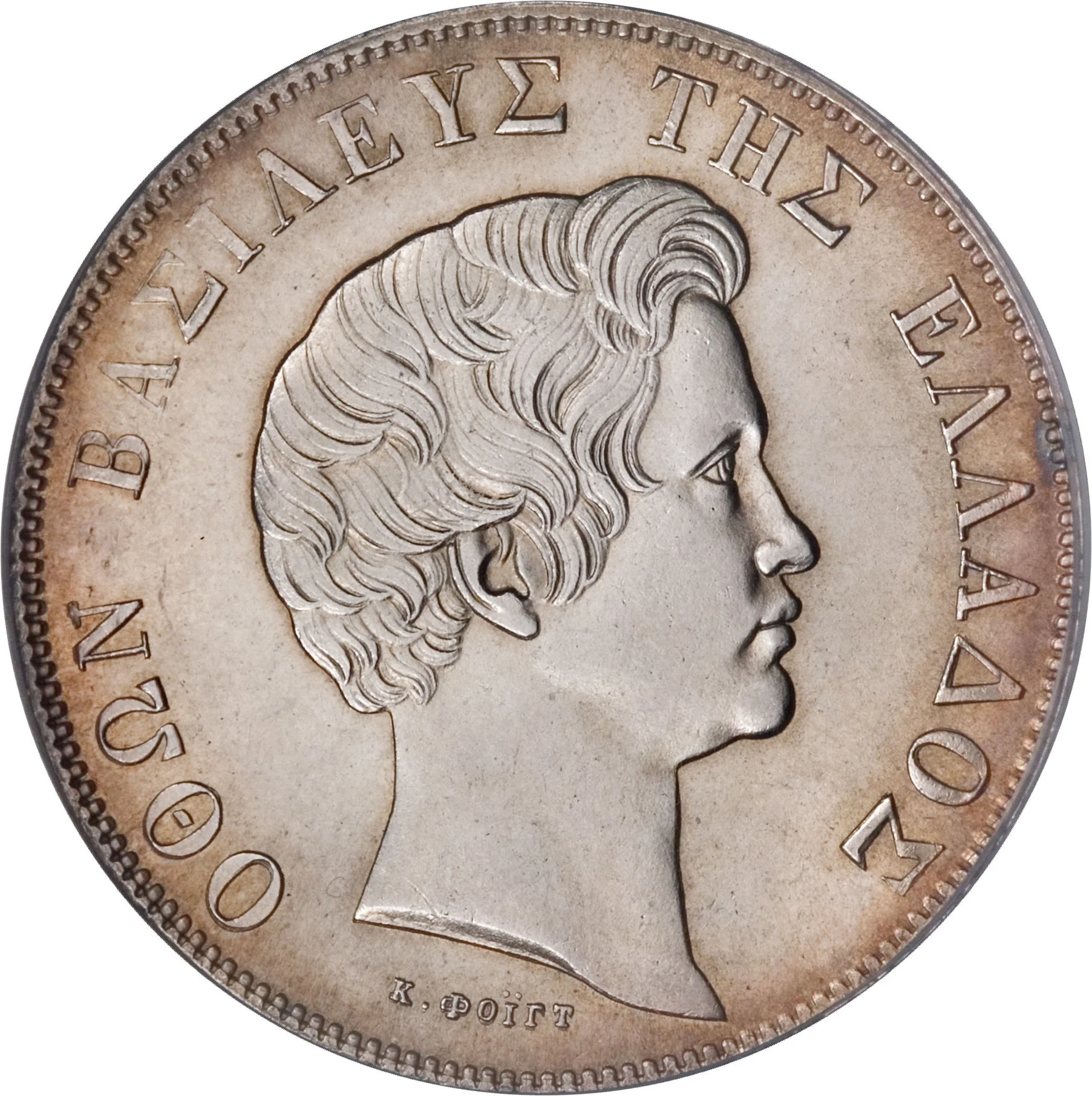
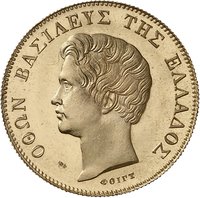
Obverse
Description:
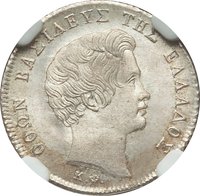
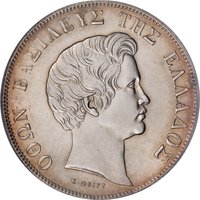
Young King Othon, profile right.
Inscription:
ΟΘΩΝ ΒΑΣΙΛΕΥΣ ΤΗΣ ΕΛΛΑΔΟΣ
Κ. ΦΟΙΓΤ
Κ. ΦΟΙΓΤ
Translation:
OTHO KING OF GREECE
C. VOIGT
C. VOIGT
Script: Greek
Language: Greek
Engraver: Carl Friedrich Voigt
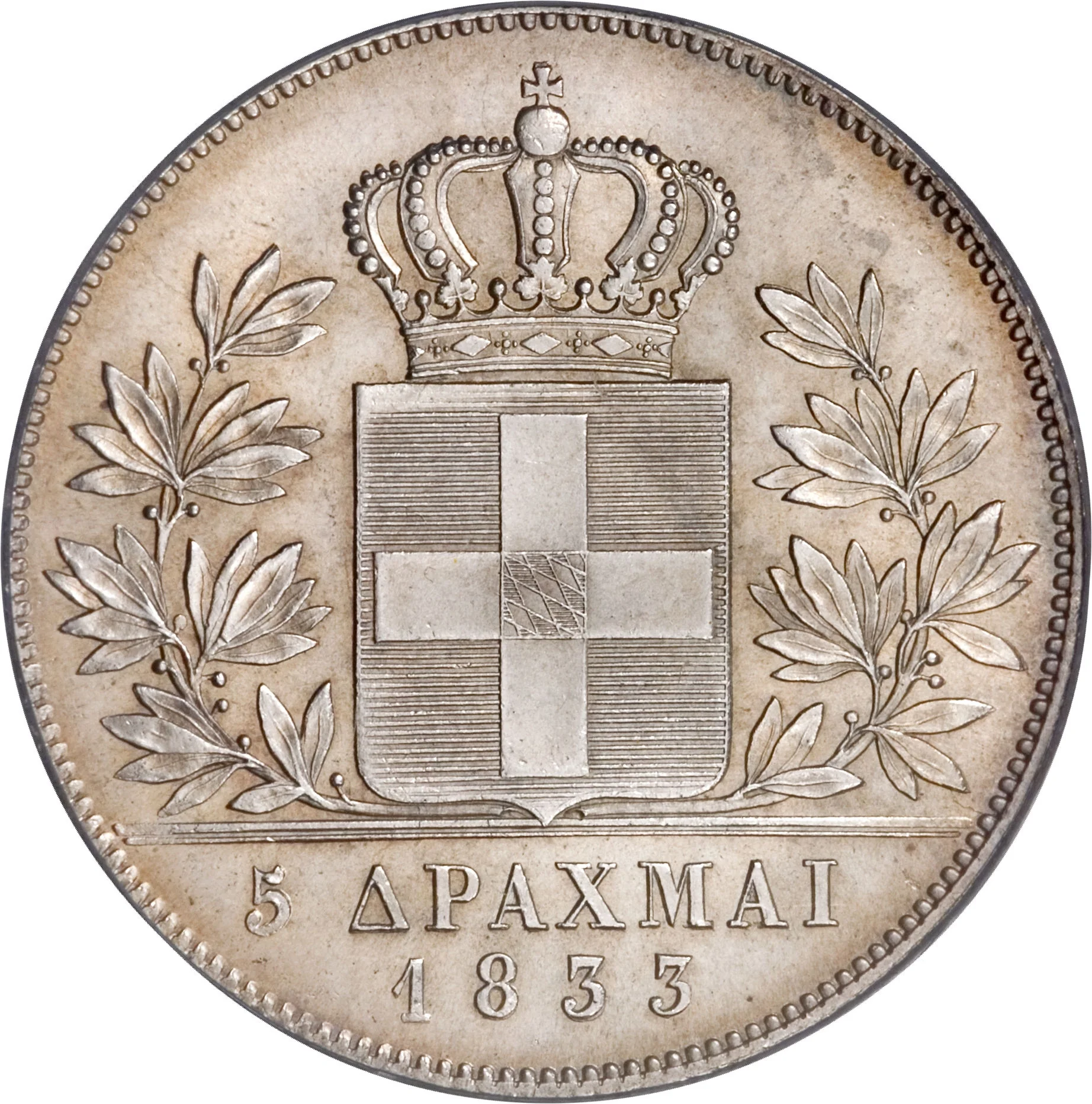
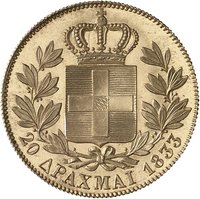
Reverse
Description:
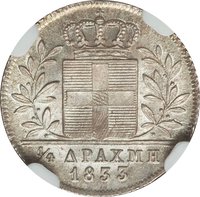
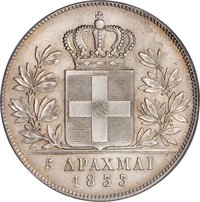
Arms crowned with olive branches, denomination and date beneath.
Inscription:
5 ΔΡΑΧΜΑΙ
1833
1833
Translation:
5 DRACHMAS
1833
1833
Script: Greek
Language: Greek
Engraver: Carl Friedrich Voigt
Edge
Reeded
Mints
| Name | Mark |
|---|---|
| Athens Mint | — |
| Munich | — |
| Monnaie de Paris | A |
Mintings
| Year | Mint Mark | Mintage | Quality | Collection |
|---|---|---|---|---|
| 1833 | — | 378,000 | ||
| 1833 | — | — | Proof | |
| 1833 | A | — | ||
| 1843 | — | 435 | ||
| 1844 | — | — | ||
| 1845 | — | — | ||
| 1846 | — | — |
Historical background
Upon gaining independence from the Ottoman Empire in 1833, Greece inherited a chaotic monetary landscape characterized by a bewildering variety of circulating currencies. The most common were the Ottoman kuruş (piastre) and various European coins, particularly the Spanish dollar and the French franc, alongside a smattering of coins from other trading nations. This system was inefficient and unstable, hindering trade, state finance, and the very process of nation-building, as the new state lacked a uniform symbol of economic sovereignty.
Recognizing this crisis, the newly installed monarchy of King Otto, under the guidance of the Great Powers (Britain, France, and Russia), moved swiftly to establish a modern national currency. The drachma was introduced by royal decree in 1833, directly modeled on the French franc to align Greece with the Latin Monetary Union system. It was a bimetallic system, with silver drachma coins as the primary unit and gold 20-drachma coins (the phoenix, named after the mythical bird on the first provisional coinage) for larger transactions.
However, the 1833 reform was more a declaration of intent than an immediate solution. The government lacked the precious metal reserves to fully replace the old currencies in circulation, meaning foreign and Ottoman coins remained legal tender for years alongside the new drachma. Furthermore, the state's chronic budget deficits, beginning almost immediately, would lead to the issuance of depreciated paper money, setting a pattern of monetary instability that would challenge Greece throughout the 19th century. Thus, while 1833 marked the crucial founding of the modern drachma, its establishment occurred within a fragile economic framework.
Recognizing this crisis, the newly installed monarchy of King Otto, under the guidance of the Great Powers (Britain, France, and Russia), moved swiftly to establish a modern national currency. The drachma was introduced by royal decree in 1833, directly modeled on the French franc to align Greece with the Latin Monetary Union system. It was a bimetallic system, with silver drachma coins as the primary unit and gold 20-drachma coins (the phoenix, named after the mythical bird on the first provisional coinage) for larger transactions.
However, the 1833 reform was more a declaration of intent than an immediate solution. The government lacked the precious metal reserves to fully replace the old currencies in circulation, meaning foreign and Ottoman coins remained legal tender for years alongside the new drachma. Furthermore, the state's chronic budget deficits, beginning almost immediately, would lead to the issuance of depreciated paper money, setting a pattern of monetary instability that would challenge Greece throughout the 19th century. Thus, while 1833 marked the crucial founding of the modern drachma, its establishment occurred within a fragile economic framework.
Series: 1833 Greece circulation coins
🌟 Limited