

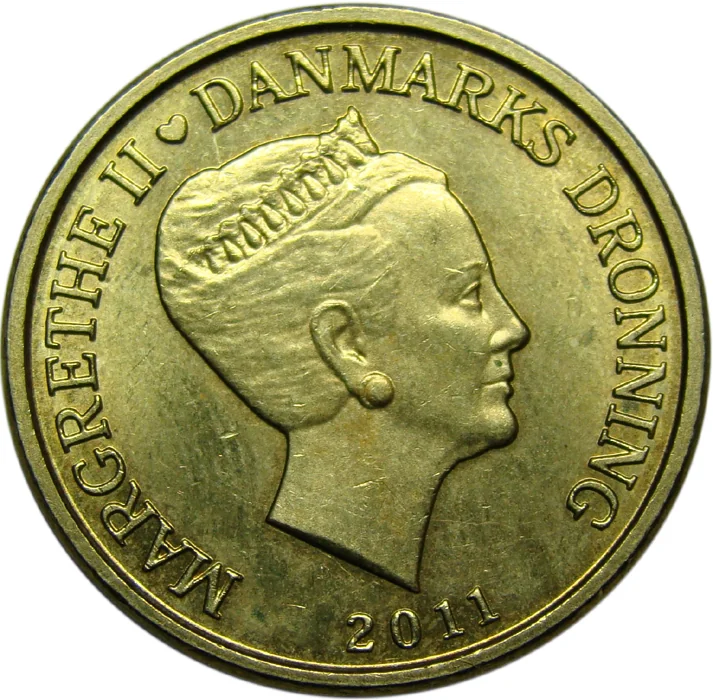
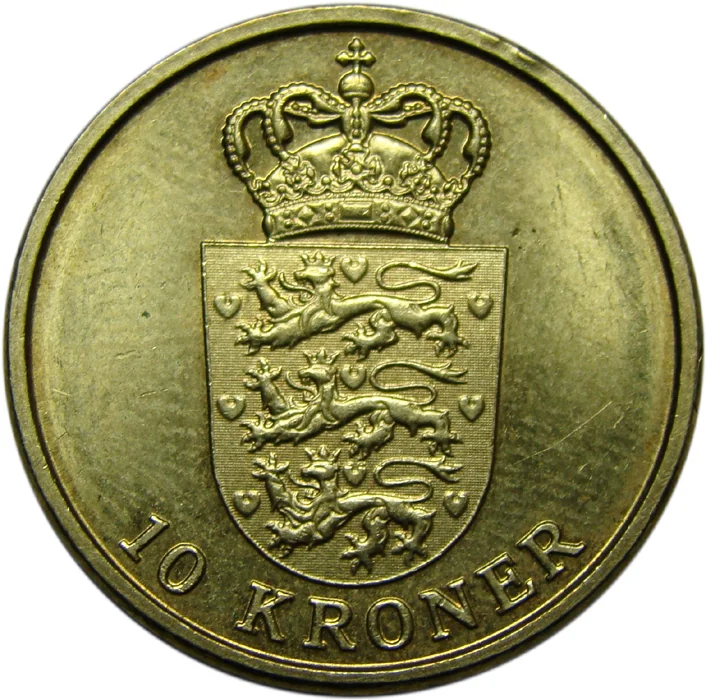
10 kroner – Denmark
Add to wishlist
Denmark
Context
Years: 2011–2012
Issuer: Denmark
Ruler: Margrethe II
Currency:
(since 1873)
Total mintage: 2,362,090
Material
Diameter: 23.35 mm
Weight: 7 g
Thickness: 2.3 mm
Shape: Round
Composition: Aluminium bronze
Magnetic: No
Technique: Milled
Alignment: Medal alignment
flip
References
KM: #
Numista: #26011
Value
Exchange value: 10 DKK
Inflation-adjusted value: 12.76 DKK
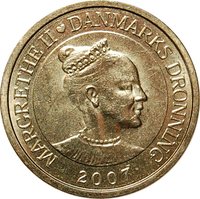
Obverse
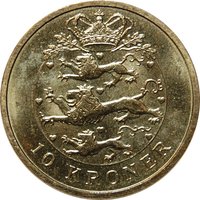
Reverse
Edge
Plain
Mints
| Name | Mark |
|---|---|
| Royal Danish Mint | — |
Mintings
| Year | Mint Mark | Mintage | Quality | Collection |
|---|---|---|---|---|
| 2011 | — | 2,336,000 | ||
| 2011 | — | 1,000 | Proof | |
| 2012 | — | 1,090 | Proof | |
| 2012 | — | 24,000 | In sets |
Historical background
In 2011, Denmark's currency situation was defined by its long-standing and deliberate policy of maintaining a stable exchange rate between the Danish krone (DKK) and the euro. Since 1999, Denmark had participated in the European Exchange Rate Mechanism II (ERM II), pegging the krone to the euro within a narrow band of ±2.25%. This arrangement, known as the "kronepeg," was a cornerstone of Danish economic policy, aimed at ensuring monetary stability, low inflation, and predictability for trade and investment, particularly with its largest trading partner, the Eurozone.
The year 2011, however, presented significant stress tests for this peg. The European sovereign debt crisis was at its peak, creating immense volatility and safe-haven flows in currency markets. While Denmark was not a member of the euro and had a robust fiscal position, the krone faced strong upward pressure as international investors sought perceived safe assets. To maintain the agreed-upon ceiling and prevent the krone from appreciating too strongly, Danmarks Nationalbank (the central bank) was forced to intervene heavily in foreign exchange markets, selling kroner and buying foreign currency. This led to a dramatic increase in its foreign exchange reserves and, crucially, required successive interest rate cuts—even taking its main certificate of deposit rate into negative territory in July—to discourage speculative capital inflows.
By the end of 2011, the policy was deemed a success in its primary objective: the krone peg remained intact and credible. The situation underscored Denmark's unique position—fully integrated into the European single market yet retaining its own currency and monetary policy flexibility. The aggressive defensive actions, particularly the pioneering move into negative interest rates, demonstrated the central bank's unwavering commitment to the fixed exchange rate, a commitment that remained a defining feature of the Danish economy throughout the decade.
The year 2011, however, presented significant stress tests for this peg. The European sovereign debt crisis was at its peak, creating immense volatility and safe-haven flows in currency markets. While Denmark was not a member of the euro and had a robust fiscal position, the krone faced strong upward pressure as international investors sought perceived safe assets. To maintain the agreed-upon ceiling and prevent the krone from appreciating too strongly, Danmarks Nationalbank (the central bank) was forced to intervene heavily in foreign exchange markets, selling kroner and buying foreign currency. This led to a dramatic increase in its foreign exchange reserves and, crucially, required successive interest rate cuts—even taking its main certificate of deposit rate into negative territory in July—to discourage speculative capital inflows.
By the end of 2011, the policy was deemed a success in its primary objective: the krone peg remained intact and credible. The situation underscored Denmark's unique position—fully integrated into the European single market yet retaining its own currency and monetary policy flexibility. The aggressive defensive actions, particularly the pioneering move into negative interest rates, demonstrated the central bank's unwavering commitment to the fixed exchange rate, a commitment that remained a defining feature of the Danish economy throughout the decade.
🌱 Common