

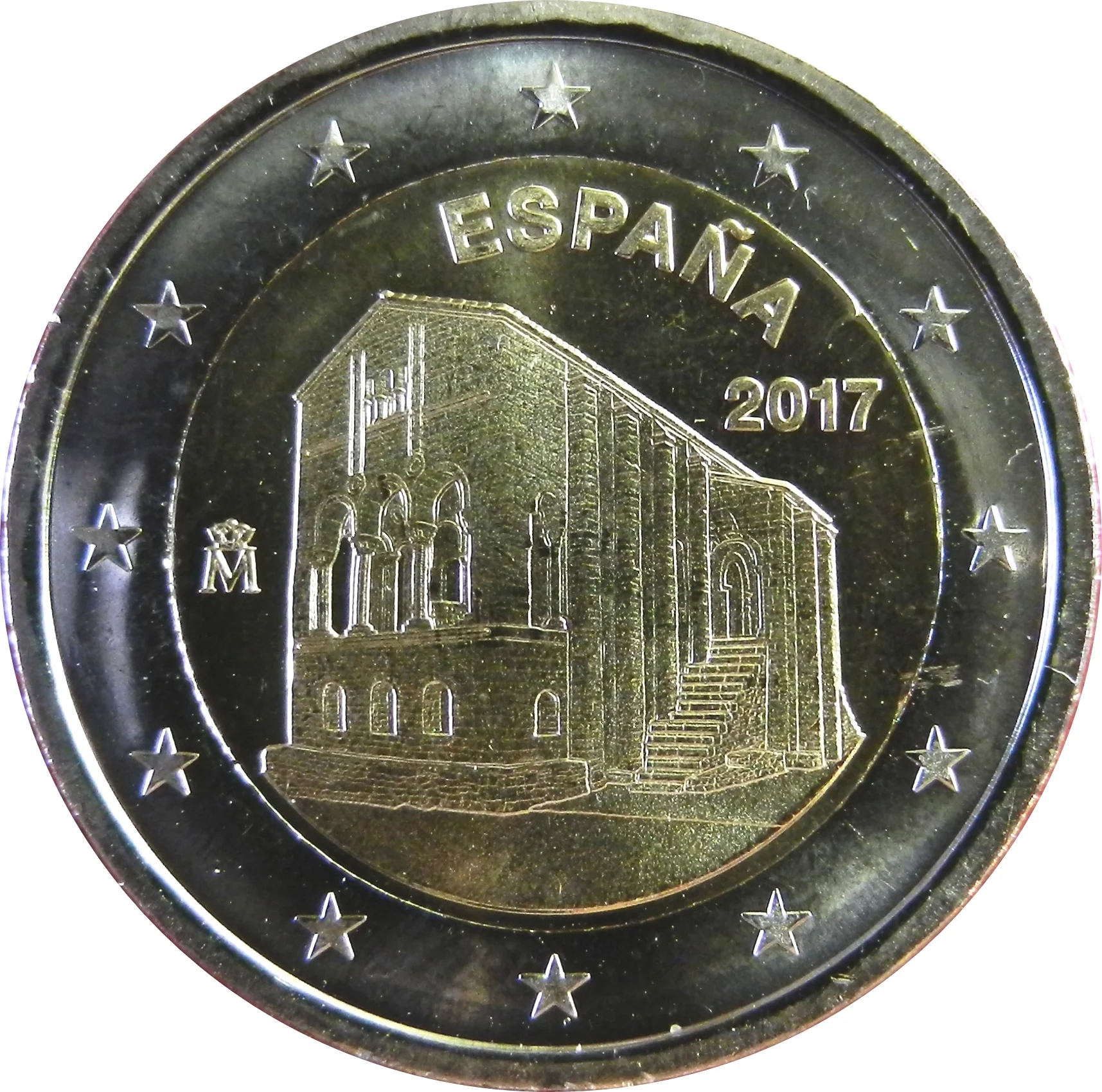
2 euro – Spain
Add to wishlist
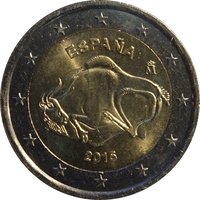
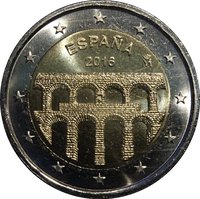
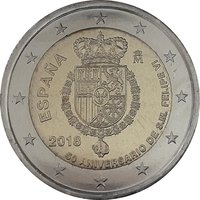
Circulating commemorative coins
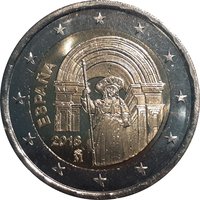
Commemoration: Churches of the Kingdom of Asturias.
Series: UNESCO World Heritage
Spain
Obverse
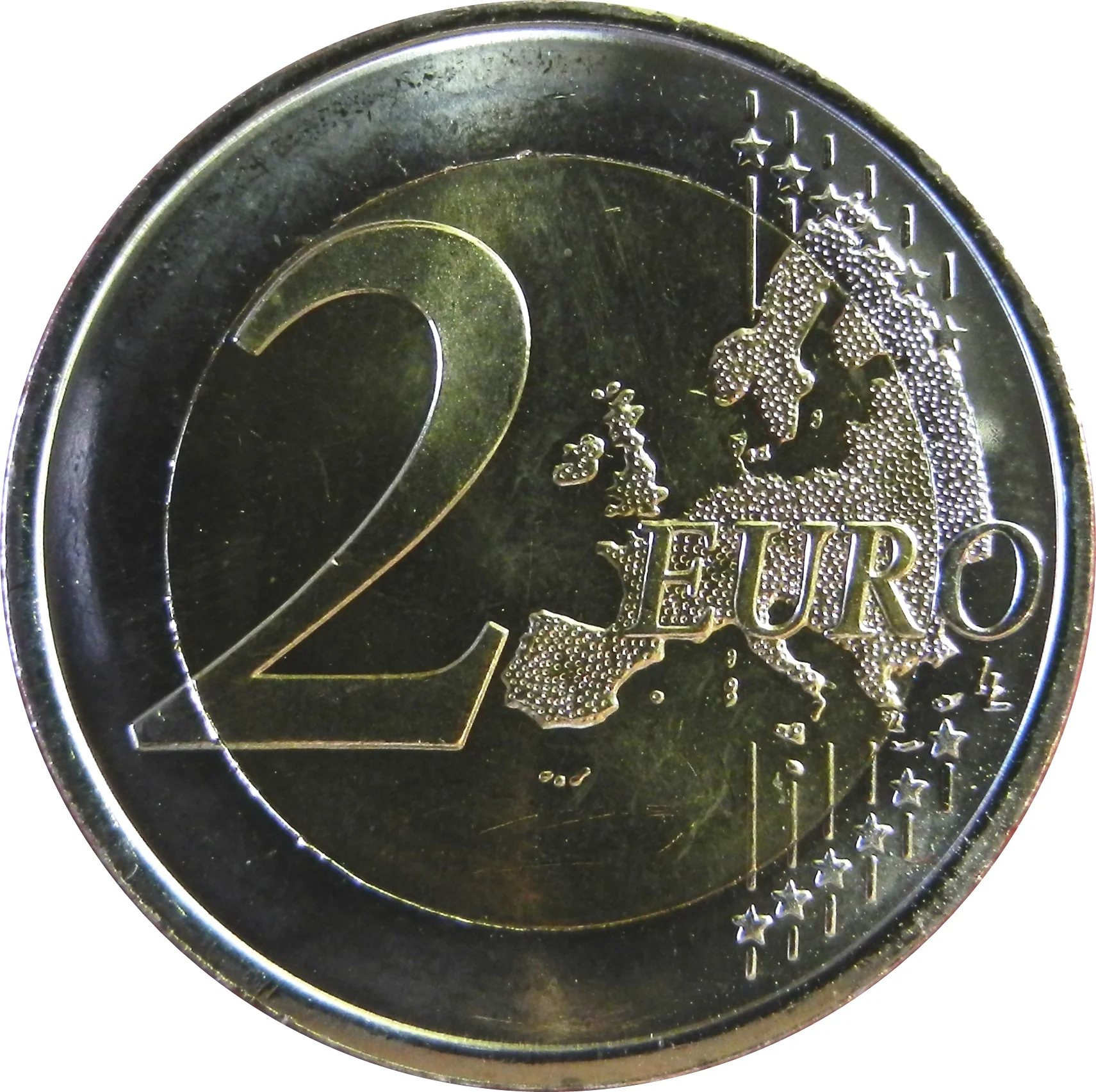
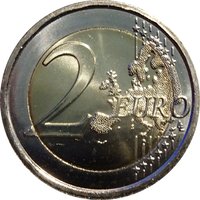
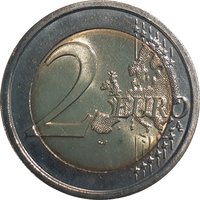
Reverse
Edge
Finely ribbed with edge lettering: six times the sequence "2 * * " alternately upright and inverted
Legend:
2 ** 2 ** 2 ** 2 ** 2 ** 2 **
Categories
| Building> Religious building |
| Map |
Mints
| Name | Mark |
|---|---|
| Royal Mint of Madrid | (M) |
Mintings
| Year | Mint Mark | Mintage | Quality | Collection |
|---|---|---|---|---|
| 2017 | M | 500,000 | ||
| 2017 | M | 22,000 | BU | |
| 2017 | M | 13,000 | Proof |
Historical background
In 2017, Spain was a fully integrated member of the Eurozone, having used the euro as its sole legal tender since 2002. The country's monetary policy was entirely set by the European Central Bank (ECB) in Frankfurt, which focused on maintaining price stability across the entire currency bloc. For Spain, this meant that key decisions on interest rates and quantitative easing were made with the broader Eurozone economy in mind, not specifically Spain's domestic situation. This framework provided stability and eliminated exchange rate risk with its major trading partners, but also meant Spain had no independent monetary tools to address its specific economic challenges.
The year 2017 was marked by continued recovery from the severe financial and sovereign debt crises of 2008-2014. A critical lingering issue was the high level of non-performing loans held by Spanish banks, a legacy of the property market crash. While significant progress had been made through EU-backed banking restructuring, this burden continued to constrain credit growth. Furthermore, Spain's public debt-to-GDP ratio remained elevated at close to 100%, limiting fiscal policy flexibility and keeping the country under the European Commission's corrective arm for excessive deficit procedures, albeit with a path towards compliance.
Politically, the currency situation was indirectly a point of contention. The year saw heightened tensions over Catalan independence, culminating in an illegal referendum and a unilateral declaration of independence in October. Secessionist voices often criticized the euro as a symbol of lost sovereignty and argued for a return to a national currency (a "peseta") as part of a hypothetical new state. However, mainstream economic analysis and the central Spanish government strongly warned that "Euro-exit" would be catastrophic, causing massive capital flight, bank runs, and devaluation. Thus, while the euro itself was not in doubt for the vast majority of Spaniards and their institutions, it became entangled in the nation's deepest constitutional crisis in decades.
The year 2017 was marked by continued recovery from the severe financial and sovereign debt crises of 2008-2014. A critical lingering issue was the high level of non-performing loans held by Spanish banks, a legacy of the property market crash. While significant progress had been made through EU-backed banking restructuring, this burden continued to constrain credit growth. Furthermore, Spain's public debt-to-GDP ratio remained elevated at close to 100%, limiting fiscal policy flexibility and keeping the country under the European Commission's corrective arm for excessive deficit procedures, albeit with a path towards compliance.
Politically, the currency situation was indirectly a point of contention. The year saw heightened tensions over Catalan independence, culminating in an illegal referendum and a unilateral declaration of independence in October. Secessionist voices often criticized the euro as a symbol of lost sovereignty and argued for a return to a national currency (a "peseta") as part of a hypothetical new state. However, mainstream economic analysis and the central Spanish government strongly warned that "Euro-exit" would be catastrophic, causing massive capital flight, bank runs, and devaluation. Thus, while the euro itself was not in doubt for the vast majority of Spaniards and their institutions, it became entangled in the nation's deepest constitutional crisis in decades.
Series: UNESCO World Heritage




Series: Spain 2 euro commemoratives
🌱 Very Common